There was some buzz after one of the later episodes of Season 1 of NBC's "Heroes" regarding its similarity to the classic X-Men story arc "Days of Future Past." But how similar are "the Heroes" to "The X-Men?" Let's see how many Heroes have X-Counterparts:
Hero/Power/X-Man
Claire Bennett /Healing Factor/ Wolverine
Hiro Nakamura /Teleportation /Nightcrawler
Niki Sanders /Combat Ability-Strength/Beast
Nathan Petrelli /Flight /Angel
Peter Petrelli /Absorb others Abilities-Benign /Mimic
Sylar /Absorb others Abilities-Parasitic /Rogue
Matt Parkman /Telepathy /Professor X
Micah Sanders /Technopath /Forge
D.L. Hawkins /Phase through Solid Matter /Shadowcat
Candace Wilmer/Change Appearance/Mystique
Isaac Mendez /See the Future /Destiny
Linderman /Healing Ability /Healer
I recognize that there are only a limited number of powers out there and a lot of mutants in the X-men universe AND that these powers are not exact analogues, however, most of the major Heroes and primary X-men seem to be represented here although Mimic is a secondary character, Healer is a Morlock and Mystique and Destiny are Brotherhood. Are the similarities to close to be ignored? You be the judge.
Sunday, June 03, 2007


Saturday, May 26, 2007
The Ten Most Influential Mainstream Comic Books In History
In no particular order.
1. Saga of the Swamp Thing #21 "The Anatomy Lesson" By Alan Moore, Steven Bisette, John Tottleben and Rick Veitch.

Alan Moore received critical acclaim and his legendary status in graphic novel writing history with his seminal work "Watchmen," but it all started two years earlier when Moore was called upon to save the struggling "Swamp Thing." Moore's take on the character, that he was a monster masquerading as a man rather than a man who had become a monster, revolutionized mainstream comic books, and set the stage for what was to come.

As Moore was doing his part to change the way people thought about comic books, Frank Miller was contributing in his own way. His saga of Batman at 50 brought Batman back from the freewheeling, camped out version of the 60s and 70s and restored the character to his darker roots, without which hit movies like "Batman Begins" and "The Dark Knight" would never have happened.
3. Watchmen #1 "At Midnight All the Agents..." By Alan Moore and Dave Gibbons

The graphic novel Moore is best known for, and recognized as one of TIME's 100 greatest novels of all time, Moore deconstructed super heroes in Watchmen in a way that had never seen before, but has been often imitated since.
4. Giant Size X-Men #1 "Deadly Genesis!" By Len Wein and Dave Cockrum
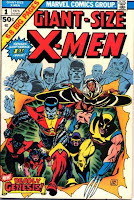
5. Sandman #1 "Sleep of the Just" By Neil Gaiman and Sam Kieth

Where Moore started things, Neil Gaiman took over (literally, in the case of another popular Moore book, "Miracleman"). In Sandman, another struggling DC property, Gaiman made a rich mythology all his own, drawing on sources as far ranging as Crowleyan Mysticism and Chinese Legend.

While Len Wein may have reinvented the superteam with the X-Men, Chris Claremont defined it. The pathos of his stories kept readers rapt for years, particulalrly this one, where he was bold enough to kill off a major character who had been beloved for years. In contrast to most comic book deaths, she actually stayed dead for quite some time too.
7. Action Comics #1 "Superman" by Jerry Siegel and Joe Shuster
 This is really the one that started it all. Although there were costumed crusaders before Superman appeared, Siegel and Shuster's creation truly represented the birth of the costumed superhero.
8. Amazing Fantasy #15 "The Amazing Spider-Man" by Stan Lee and Steve Ditko
 While much of the four color world of Superman was cast in black and white, Spiderman was the first hero to live in a world where life was not perfect, and the problems he evaded when he put on his super-suit and fought crime were still there waiting for him when the mask came off.
9. Detective Comics #27 "The Case of the Chemical Syndicate" by Bill Finger and Bob Kane
 The comic book that spawned a thousand stories, books, T.V. shows and movies, Batman is the archetype of the "human" superhero, one that is pushed to become something better than a mere mortal by circumstance and his own indomitable will.
10. Flash #123 "Flash of Two Worlds" by Gardner Fox and Carmine Infantino

Before the idea of parallel universes became commonplace, the Flash introduced us to the idea of Earth-2, a world that was much like our own, but different in some very significant ways. This concept reshaped the entire D.C. Universe, and perhaps the way we look at our own universe as well.
Two final notes: 1, I apologize for my DC bias. I grew up a DC guy, and I'll always be one. 2. I recognize that many people go into the creation of these books, including inkers, letterers, and colorists, and I honor and respect their contributions, even if I did not have the room to include all of their names here.
Monday, April 30, 2007
Back in the Game
Here's my first successful foray back into big multitable no limit tournaments this year.
http://cardplayer.com/tournaments/results/7431
Hopefully more and better results to follow...
http://cardplayer.com/tournaments/results/7431
Hopefully more and better results to follow...
Saturday, April 21, 2007
Virginia Tech
I don't have too much to say about what happened. I don't know anyone who goes to Virginia Tech, and from what I know about the story, the kid responsible was alone, mentally ill, and needed a lot of help that no one knew to give him or were able to give him.
I do have a lot to say about the issue of gun control, as do many others at this time. One wonders why our government thinks the threat of terrorism is so grave that our freedom of speech and privacy need to be abridged, but our freedom to own the types of weapons terrorists use to inflict their terror must be unfettered. One should wonder about a government that puts the Second Amendment before the First. Here are a few of the main arguments the gun-toters put forth.
If Guns are Outlawed, Only Outlaws Will Have Guns
Interesting that those who propose this argument seem to have forgotten about the Police. Perhaps they are against them too. This argument is so stupid it's mind-boggling. You could say this about any law. "Murder shouldn't be outlawed because it penalizes law abiding citizens who like to hunt gays, since the criminals are going to murder anyway." Having a gun is not going to save you from a psycho or a terrorist attack anyway. The whole point of these things are that they are UNEXPECTED. It's maybe about 10% more likely that you carrying a gun around will save someone's life. It's about 1000% more likely that you carrying a gun around will result in you getting drunk or scared and taking a life by accident, or someone taking that gun and taking your life. More guns, more gun violence. It's simple math.
If Criminals Knew that More People Were Carrying Guns, They Wouldn't Commit Crimes.
Really? Or would a criminal just shoot first so you can't get the drop on him? This argument is like the argument for capital punishment, that fewer criminals would kill if they knew that they might get the needle. I have a newsflash. These people are deranged. They are outside the bounds of civilized society. They don't think like you. That's what makes them CRIMINALS. Applying the logic of a law abiding citizen to a criminal is pointless and bears no weight whatsoever.
The Second Amendment Protects My Right to Bear Arms.
No, it doesn't. The culture of this country protects that right. The Second Amendment states that "A Well-regulated Militia being necessary to the security of a free state, the right to keep and bear arms shall not be infringed." This, for all the 6th grade dropouts out there, is an archaic form of what is known as a CONDITIONAL statement. It's like saying "The pool being full of water, it is okay to dive." Does this mean you have the unfettered ability to dive safely, even when the pool is empty? No. Similarly, does Amendment 2 give you the right to own a Glock even when there's no danger of any Redcoats smashing down your door? Also no.
People can argue that if one of those students or professors had a gun, at least some of the tragedy could have been averted. There's no way to know that. It can't be disputed however, that if Cho DIDN'T have a gun, all of it would have been averted. And that's the bottom line.
I do have a lot to say about the issue of gun control, as do many others at this time. One wonders why our government thinks the threat of terrorism is so grave that our freedom of speech and privacy need to be abridged, but our freedom to own the types of weapons terrorists use to inflict their terror must be unfettered. One should wonder about a government that puts the Second Amendment before the First. Here are a few of the main arguments the gun-toters put forth.
If Guns are Outlawed, Only Outlaws Will Have Guns
Interesting that those who propose this argument seem to have forgotten about the Police. Perhaps they are against them too. This argument is so stupid it's mind-boggling. You could say this about any law. "Murder shouldn't be outlawed because it penalizes law abiding citizens who like to hunt gays, since the criminals are going to murder anyway." Having a gun is not going to save you from a psycho or a terrorist attack anyway. The whole point of these things are that they are UNEXPECTED. It's maybe about 10% more likely that you carrying a gun around will save someone's life. It's about 1000% more likely that you carrying a gun around will result in you getting drunk or scared and taking a life by accident, or someone taking that gun and taking your life. More guns, more gun violence. It's simple math.
If Criminals Knew that More People Were Carrying Guns, They Wouldn't Commit Crimes.
Really? Or would a criminal just shoot first so you can't get the drop on him? This argument is like the argument for capital punishment, that fewer criminals would kill if they knew that they might get the needle. I have a newsflash. These people are deranged. They are outside the bounds of civilized society. They don't think like you. That's what makes them CRIMINALS. Applying the logic of a law abiding citizen to a criminal is pointless and bears no weight whatsoever.
The Second Amendment Protects My Right to Bear Arms.
No, it doesn't. The culture of this country protects that right. The Second Amendment states that "A Well-regulated Militia being necessary to the security of a free state, the right to keep and bear arms shall not be infringed." This, for all the 6th grade dropouts out there, is an archaic form of what is known as a CONDITIONAL statement. It's like saying "The pool being full of water, it is okay to dive." Does this mean you have the unfettered ability to dive safely, even when the pool is empty? No. Similarly, does Amendment 2 give you the right to own a Glock even when there's no danger of any Redcoats smashing down your door? Also no.
People can argue that if one of those students or professors had a gun, at least some of the tragedy could have been averted. There's no way to know that. It can't be disputed however, that if Cho DIDN'T have a gun, all of it would have been averted. And that's the bottom line.
Thursday, April 12, 2007
Kurt Vonnegut, Don Imus, and Me
On April 12th, 1971, I came into this world. On April 12th 2007, I entered a world without the voices of Kurt Vonnegut and Don Imus. Two very different men to be sure, but both with a profound influence on my life.
I vivdly remember listening to "Imus in the Morning" every day as a child while my father drove me to school. Being a kid, I didn't absorb all of the humor, mostly remembering and being amused by the colorful nature of characters like "Moby Worm" and "The Right Reverend Billy Sol Hargus." What I learned though, especially as I grew up and was able to better understand what was going on, was that it was okay, and even preferrable, to voice an opinion, even an irreverent one. Even one that might raise the ire of the establishment. For me, the firing (and presumably retirement) of Don Imus is the end of an era.
This is in no way meant to excuse the statements that got him fired. They were inappropriate and insensitive. They were racist although I do not think he said them AS a racist, meaning I don't think he was in his mind saying "I hate that these black women are succeeding and I need a way to express that." In fact, I don't think there was much going on in his mind at all when he said what he did. Again, that doesn't make it okay. He should be punished. His producer Bernard McGurk should also be punished, since he has made similar and worse statements without penalty, but he is not in the public eye, so he seems to have escaped scrutiny.
I can't help feeling though, that the Imus incident has more to do with its inherent "sexiness" than the quality of the statement. While Imus' referring to black women as "nappy headed hos" is horrible and racist, is it really worse than the way Howard Stern has denigrated women every day for over twenty years, making millions in the process? As long as you don't use code words, as long as it's women and not minorities, go crazy? I think there's some hypocrisy here. I also think the dirty secret is that there is a fine line between bigotry and comedy, that comedians like Sarah Silverman and Lisa Lampinelli (is it more acceptable for women?) make a living parodying stereotypes against blacks and other minorities, becoming caricatures of the racists they lampoon in order to do so. Don Imus, and to a much greater extent, Michael Richards, crossed that line. But I wonder if we can assign the same level of hatred behind a comedian's ill advised words of hurt as to, for example, the alcohol fueled tirade of a Mel Gibson?
Kurt Vonnegut's brand of controversy was more on the level of being labeled an anti-capitalist than of being guilty of any kind of bigotry, which is great for me since the man was one of my heroes (to my girlfriend's chagrin, why that is I'm not exactly sure). I first read "Breakfast of Champions" when I was 14 and was blown away. Although Vonnegut is labeled a science fiction writer, the tenor of his work was far different than the Isaac Asimov and Robert Heinlein I was used to reading. Here was irreverent, thought provoking social commentary. Here were literary devices (including sketches!) that I had never seen used as effectively before. I loathe reading books more than once; it often feels to me like wasted time I could be using to read something new. BoC remains one of the only books I have read more than twice. (The others being Douglas Adams' "Hitchhiker's Trilogy" which I got into the habit as a kid of reading every time I became very ill, as a pick me up.) I devoured the rest of Vonnegut's books and was rarely disappointed, being particularly awed by Cat's Cradle and Bluebeard (interestingly, not as impressed by the favorite of most, including Vonnegut himself, Slaughterhouse Five). Vonnegut, along with authors like Joseph Heller, definitely and conclusively helped to shape the person I am today.
I was fortunate enough to hear Vonnegut speak at Adelphi University years ago. I was delighted to find he was just as charming, smart, funny and thoughtful in person as was reflected in his books. Here was one idol who didn't let me down.
Although Imus and Vonnegut came to very different ends, I think the common lesson they left us with was that it's okay, even preferrable, to express yourself. That it is by sharing our opinions and being willing to hear and integrate the opinions of others, even if we don't like them, that we become a stronger society, and better people. Eventually Imus abused the privilege of the national stage to do this, and Vonnegut's last novel was far from his best, but I prefer to remember them as they were. Entertainers who helped a young man learn to think for himself and demand to be heard.
So it goes...
I vivdly remember listening to "Imus in the Morning" every day as a child while my father drove me to school. Being a kid, I didn't absorb all of the humor, mostly remembering and being amused by the colorful nature of characters like "Moby Worm" and "The Right Reverend Billy Sol Hargus." What I learned though, especially as I grew up and was able to better understand what was going on, was that it was okay, and even preferrable, to voice an opinion, even an irreverent one. Even one that might raise the ire of the establishment. For me, the firing (and presumably retirement) of Don Imus is the end of an era.
This is in no way meant to excuse the statements that got him fired. They were inappropriate and insensitive. They were racist although I do not think he said them AS a racist, meaning I don't think he was in his mind saying "I hate that these black women are succeeding and I need a way to express that." In fact, I don't think there was much going on in his mind at all when he said what he did. Again, that doesn't make it okay. He should be punished. His producer Bernard McGurk should also be punished, since he has made similar and worse statements without penalty, but he is not in the public eye, so he seems to have escaped scrutiny.
I can't help feeling though, that the Imus incident has more to do with its inherent "sexiness" than the quality of the statement. While Imus' referring to black women as "nappy headed hos" is horrible and racist, is it really worse than the way Howard Stern has denigrated women every day for over twenty years, making millions in the process? As long as you don't use code words, as long as it's women and not minorities, go crazy? I think there's some hypocrisy here. I also think the dirty secret is that there is a fine line between bigotry and comedy, that comedians like Sarah Silverman and Lisa Lampinelli (is it more acceptable for women?) make a living parodying stereotypes against blacks and other minorities, becoming caricatures of the racists they lampoon in order to do so. Don Imus, and to a much greater extent, Michael Richards, crossed that line. But I wonder if we can assign the same level of hatred behind a comedian's ill advised words of hurt as to, for example, the alcohol fueled tirade of a Mel Gibson?
Kurt Vonnegut's brand of controversy was more on the level of being labeled an anti-capitalist than of being guilty of any kind of bigotry, which is great for me since the man was one of my heroes (to my girlfriend's chagrin, why that is I'm not exactly sure). I first read "Breakfast of Champions" when I was 14 and was blown away. Although Vonnegut is labeled a science fiction writer, the tenor of his work was far different than the Isaac Asimov and Robert Heinlein I was used to reading. Here was irreverent, thought provoking social commentary. Here were literary devices (including sketches!) that I had never seen used as effectively before. I loathe reading books more than once; it often feels to me like wasted time I could be using to read something new. BoC remains one of the only books I have read more than twice. (The others being Douglas Adams' "Hitchhiker's Trilogy" which I got into the habit as a kid of reading every time I became very ill, as a pick me up.) I devoured the rest of Vonnegut's books and was rarely disappointed, being particularly awed by Cat's Cradle and Bluebeard (interestingly, not as impressed by the favorite of most, including Vonnegut himself, Slaughterhouse Five). Vonnegut, along with authors like Joseph Heller, definitely and conclusively helped to shape the person I am today.
I was fortunate enough to hear Vonnegut speak at Adelphi University years ago. I was delighted to find he was just as charming, smart, funny and thoughtful in person as was reflected in his books. Here was one idol who didn't let me down.
Although Imus and Vonnegut came to very different ends, I think the common lesson they left us with was that it's okay, even preferrable, to express yourself. That it is by sharing our opinions and being willing to hear and integrate the opinions of others, even if we don't like them, that we become a stronger society, and better people. Eventually Imus abused the privilege of the national stage to do this, and Vonnegut's last novel was far from his best, but I prefer to remember them as they were. Entertainers who helped a young man learn to think for himself and demand to be heard.
So it goes...
Saturday, March 31, 2007
Craig's Poker Tip #1: 2-3 offsuit is not a very good hand
Well I played in the Hollywood Park "Sport of Kings" $200 NL HE tournament, my first tournament in awhile and busted out early, but I think there may be something instructional in my donkeyesque play so I figured I'd post about it here.
Apparently the secret is out that one of the keys to success in multi table tournaments is to play super tight early, because the table I sat down at was indeed super tight, although I expected some aggression from the looks of my opponents. In fact, most people folded pre-flop even if there was no raise in the first round. The only sort of exception was the kid directly to my left who looked like he had just stepped off the court of the Ohio State-Georgetown game, who was fairly tight but also pretty aggressive, he would come into any pot for at least 5 times the big blind, any raise he made was usually big enough to end the hand, and he called off a substantial amount of chips with QQ on a board of 8h 3s Ks 7d 8d to a player holding 8s 7s.
In any case, although I had INTENDED to play super tight myself, the table was so rocky that I decided to switch gears and get aggressive. A few sample hands (blinds are 25/25 for all hands):
I have Qs 6s on the button and Jerry Buss makes it $100. Normally I would throw this hand away but I have seen Buss play a lot and felt like I could outplay him after the flop. The flop came Qh 3c 4c. Buss bet another 100 and I called. The turn was Ts. Buss checked, I bet 300, Buss folded.
I have 99 in the SB. One player in middle position limps and I make it 125. Ohio State calls and Middle Position starts seriously sweating me. Finally he makes the call. The flop comes Ace high. I check, Ohio St checks, and MP checks. The turn is a rag and I bet out 300. Ohio St folds quickly and MP starts sweating me again. Finally after about five minutes he mucks JJ face up. "Good laydown," I say as I collect the pot. "Yeah I put you on a big ace, I was considering going all-in pre-flop" he replies.
I have 5s 7d in middle position. I limp and an early position player makes it 100 more. Feeling invincible, I call. The flop comes Kd 6d 9d. He checks and I bet out 300. He mucks JJ (no diamond) face up. "Jacks are a tough hand to play," I offer sympathetically as I rake in the chips.
All this set up my Mike Matusow blow up. Before the tournament started, I overheard an experienced tournament player suggest "sometimes in late position you should play small cards. If they hit, no one expects it, and if the flop comes all low cards, you can be pretty confident it didn't hit an early position raiser."
Why I'm incorporating new advice received 5 minutes before a tournament I don't know, but this is what was going through my mind when an early position player who hadn't played any hands raised to 150 and I was staring down at 2 3 off suit in the Cutoff. I called, and Ohio St. called behind me. The flop came 2 4 T of mixed suits. Early Position bet 150 which I was positive was a continuation bet. I called (maybe I should have raised), and Ohio St. called. The turn was a 5, and Early Position checked. I was confident I had him beat and bet 1000 (I meant to bet 600, a 500 chip and a 100 chip, but I had just made change for somebody and had an extra 500 chip which I didn't realize and threw two 500 chips in instead). Unfortunately I forgot a cardinal tournament rule which is that even if you've got a dead read on the guy in front of you, you can't act on it if you don't know what the guy behind you will do. Ohio St. Hollywooded it a bit to try to get Early Position to call, then called all-in and turned over A3 for the wheel. No A or 6 came to save me and I was crippled. I went on tilt after that and finally moved in with A4 suited vs AJ which held up to knock me out.
It seems like there are a few good lessons here:
Playing garbage cards is not so dangerous because of the pre-flop cost, but because of the cost post-flop if you can't get away from the hand.
2-3 off suit is not a strong hand (Thank you Donkeytest.com!)
No matter how good your read is on the player in front of you, if someone is behind you you can't make a move based on that read.
Don't get overconfident early in a tournament even if you take down a few pots.
Sooner or later someone who is playing tight will wake up with a big hand.
Perhaps people have others, I'd love to hear.
Apparently the secret is out that one of the keys to success in multi table tournaments is to play super tight early, because the table I sat down at was indeed super tight, although I expected some aggression from the looks of my opponents. In fact, most people folded pre-flop even if there was no raise in the first round. The only sort of exception was the kid directly to my left who looked like he had just stepped off the court of the Ohio State-Georgetown game, who was fairly tight but also pretty aggressive, he would come into any pot for at least 5 times the big blind, any raise he made was usually big enough to end the hand, and he called off a substantial amount of chips with QQ on a board of 8h 3s Ks 7d 8d to a player holding 8s 7s.
In any case, although I had INTENDED to play super tight myself, the table was so rocky that I decided to switch gears and get aggressive. A few sample hands (blinds are 25/25 for all hands):
I have Qs 6s on the button and Jerry Buss makes it $100. Normally I would throw this hand away but I have seen Buss play a lot and felt like I could outplay him after the flop. The flop came Qh 3c 4c. Buss bet another 100 and I called. The turn was Ts. Buss checked, I bet 300, Buss folded.
I have 99 in the SB. One player in middle position limps and I make it 125. Ohio State calls and Middle Position starts seriously sweating me. Finally he makes the call. The flop comes Ace high. I check, Ohio St checks, and MP checks. The turn is a rag and I bet out 300. Ohio St folds quickly and MP starts sweating me again. Finally after about five minutes he mucks JJ face up. "Good laydown," I say as I collect the pot. "Yeah I put you on a big ace, I was considering going all-in pre-flop" he replies.
I have 5s 7d in middle position. I limp and an early position player makes it 100 more. Feeling invincible, I call. The flop comes Kd 6d 9d. He checks and I bet out 300. He mucks JJ (no diamond) face up. "Jacks are a tough hand to play," I offer sympathetically as I rake in the chips.
All this set up my Mike Matusow blow up. Before the tournament started, I overheard an experienced tournament player suggest "sometimes in late position you should play small cards. If they hit, no one expects it, and if the flop comes all low cards, you can be pretty confident it didn't hit an early position raiser."
Why I'm incorporating new advice received 5 minutes before a tournament I don't know, but this is what was going through my mind when an early position player who hadn't played any hands raised to 150 and I was staring down at 2 3 off suit in the Cutoff. I called, and Ohio St. called behind me. The flop came 2 4 T of mixed suits. Early Position bet 150 which I was positive was a continuation bet. I called (maybe I should have raised), and Ohio St. called. The turn was a 5, and Early Position checked. I was confident I had him beat and bet 1000 (I meant to bet 600, a 500 chip and a 100 chip, but I had just made change for somebody and had an extra 500 chip which I didn't realize and threw two 500 chips in instead). Unfortunately I forgot a cardinal tournament rule which is that even if you've got a dead read on the guy in front of you, you can't act on it if you don't know what the guy behind you will do. Ohio St. Hollywooded it a bit to try to get Early Position to call, then called all-in and turned over A3 for the wheel. No A or 6 came to save me and I was crippled. I went on tilt after that and finally moved in with A4 suited vs AJ which held up to knock me out.
It seems like there are a few good lessons here:
Playing garbage cards is not so dangerous because of the pre-flop cost, but because of the cost post-flop if you can't get away from the hand.
2-3 off suit is not a strong hand (Thank you Donkeytest.com!)
No matter how good your read is on the player in front of you, if someone is behind you you can't make a move based on that read.
Don't get overconfident early in a tournament even if you take down a few pots.
Sooner or later someone who is playing tight will wake up with a big hand.
Perhaps people have others, I'd love to hear.
Friday, March 09, 2007
Passivity Pays?
I ran into a guy I used to know from New York the other day, and as often happens in such situations, I ended up in a random poker game at 3 AM. I lost $40 in the usual way, (1) I get Q6, limp, flop Q 6 3, I move all in, get called by AQ, turn is an A;(2) I get AK, someone bets, someone raises, I go all-in, get called by Td9d(!) board comes T 7 A 3 T, etc.) But what was interesting was what happened with one player, who I'll call Player "X".
Player X could have been right out of a classic sitcom. You know him, he's the guy who comes to the game saying "oh, I just learned how to play and what beats what." He's the guy who never seems to know when it's his turn to act. He's the guy who sends the cards flying whenever he tries to shuffle. And he's the guy who walks off with everyone's chips.
What was particularly interesting though, was the strategy he used to win all the chips, which was this. He never raised. Ever. Even if he had a monster and was last to act on the river, he did not raise. If he was the first to act, he would never bet. He was pretty much the classic calling station, letting everyone do the betting for him.
This had a twofold effect. First, before anyone caught on, he won massive pots by showing weakness all through the hand, then picking off huge bluffs on the river. Since he took a long time to call and then never raised, no one put him on the flopped flush or two pair or full house that he often seemed to have when someone tried to move him off the pot on the river.
Second, once everyone caught on, no one knew how to play him. Anytime he would call a bet, anyone else who was in the hand would slow down, knowing the call could mean he just had no idea where he was in the hand, or it could mean he had a monster. On one hand, three queens flopped, and the two people in against this player both made full houses, and neither of them would put in a chip, quite certain Player X had the fourth queen, even when he checked on the river. Using this "strategy" this player amassed over $100 in a 50 cent/$1 no limit game with a $20 initial buy-in.
Who says you need to be aggressive to win at No Limit?
Player X could have been right out of a classic sitcom. You know him, he's the guy who comes to the game saying "oh, I just learned how to play and what beats what." He's the guy who never seems to know when it's his turn to act. He's the guy who sends the cards flying whenever he tries to shuffle. And he's the guy who walks off with everyone's chips.
What was particularly interesting though, was the strategy he used to win all the chips, which was this. He never raised. Ever. Even if he had a monster and was last to act on the river, he did not raise. If he was the first to act, he would never bet. He was pretty much the classic calling station, letting everyone do the betting for him.
This had a twofold effect. First, before anyone caught on, he won massive pots by showing weakness all through the hand, then picking off huge bluffs on the river. Since he took a long time to call and then never raised, no one put him on the flopped flush or two pair or full house that he often seemed to have when someone tried to move him off the pot on the river.
Second, once everyone caught on, no one knew how to play him. Anytime he would call a bet, anyone else who was in the hand would slow down, knowing the call could mean he just had no idea where he was in the hand, or it could mean he had a monster. On one hand, three queens flopped, and the two people in against this player both made full houses, and neither of them would put in a chip, quite certain Player X had the fourth queen, even when he checked on the river. Using this "strategy" this player amassed over $100 in a 50 cent/$1 no limit game with a $20 initial buy-in.
Who says you need to be aggressive to win at No Limit?
Tuesday, February 27, 2007
Did Somebody Say Democracy?
There's a story on the AP wire today about the fight to get a North Dakota anti-cohabitation law off the books. Basically, the law says that it is illegal for a man and a woman to live together unless they are married (presumably this means that two homosexuals can shack up with impunity). This in itself is not that big a deal. It's just one of those "wacky laws" that everyone ignores but no one wants to waste government man hours to change.
What makes it interesting is the following quote, by Senator Tim Mathern:
"I think the majority of people think they ought to be married if they're living together."
Maybe that's true, and maybe it's not. It depends on who the majority of the people are. The majority of the couple's neighbors? The majority of the state? The country? The world? I'm guessing the majority of people don't even know about this (until they read this blog of course). The point, however, is that when I was in school, we were always taught that the beauty of American democracy is that majority rules, but minority rights are protected. Meaning, essentially, if the majority of people think a man and a woman living together ought to be married, then they can get married to someone they want to live with, and leave the minority who don't agree alone.
This concept seems to have been totally lost in the current political climate, which seems to suggest that if the majority of the people think that something is morally wrong, then it is wrong for everyone. That pretty much goes against everything America stands for. What grates on me about social conservatives is that whereas I'd like to believe that for most people, if they are asked whether they want someone they don't know to be happy, and it doesn't affect the interviewee one way or the other, the person asked would say yes, or at least not care. In the case of social conservatives, they actually want people they don't know to be unhappy when it doesn't affect them, and feel like good Christians when they espouse this attitude.
I have news for these people. If you want someone to suffer, especially when their happiness comes at no cost to you, you are not a good Christian. In fact, I would go so far as to say you are not a very good person.
If you want people you don't know to be prohibited from getting married, or to be forced to get married, whether it's because they're gay, or black, or they live together, or they're communists, or whatever, you are not a good person. You are in fact, a bigot.
If you would rather see a clump of microscopic cells that cannot think, feel or sense anything go in the garbage rather than be used for scientific research to save millions of pepole who can think, feel, and sense everything, you are not a good person.
If you think people of a certain race or religion should incur additional police scrutiny for no other reason than that race or religion, you are espousing an attitude that is positively unamerican, according to the first amendment.
Some might argue that this "live and let live" attitude is a slippery slope. They say, for example, cannot we extrapolate from this that people who think slavery is wrong shouldn't own slaves, and leave the slave holders alone? If it's okay to abort an eight month old fetus, why not a two day old baby?
I personally do not think it's okay to abort an eight month old fetus. I think a mother has a right to expel her fetus at any time, but if the fetus is viable, every effort should be made to save it. However the issue is not about personal feelings. It's about respecting both the majority and the minority opinion, and I think it gets down to what is in dispute. Nearly everyone can agree at this time that slavery is wrong, and at the very least it is not in dispute that slaves are human beings whose rights are infringed upon. Even if the first part is in dispute, the second is not, and the rights of human beings to be protected should rule. In the case of abortion, everyone can agree that the mother is a human being whose rights should be protected, whereas the rights of the fetus in this case is what is in dispute. Again, the rights of human beings must be protected.
By the way, the couple who are the subject of this piece are in their 80s and in ill health. Even the hardest hearted among us can't possibly want these people to be unhappy, can they?
What makes it interesting is the following quote, by Senator Tim Mathern:
"I think the majority of people think they ought to be married if they're living together."
Maybe that's true, and maybe it's not. It depends on who the majority of the people are. The majority of the couple's neighbors? The majority of the state? The country? The world? I'm guessing the majority of people don't even know about this (until they read this blog of course). The point, however, is that when I was in school, we were always taught that the beauty of American democracy is that majority rules, but minority rights are protected. Meaning, essentially, if the majority of people think a man and a woman living together ought to be married, then they can get married to someone they want to live with, and leave the minority who don't agree alone.
This concept seems to have been totally lost in the current political climate, which seems to suggest that if the majority of the people think that something is morally wrong, then it is wrong for everyone. That pretty much goes against everything America stands for. What grates on me about social conservatives is that whereas I'd like to believe that for most people, if they are asked whether they want someone they don't know to be happy, and it doesn't affect the interviewee one way or the other, the person asked would say yes, or at least not care. In the case of social conservatives, they actually want people they don't know to be unhappy when it doesn't affect them, and feel like good Christians when they espouse this attitude.
I have news for these people. If you want someone to suffer, especially when their happiness comes at no cost to you, you are not a good Christian. In fact, I would go so far as to say you are not a very good person.
If you want people you don't know to be prohibited from getting married, or to be forced to get married, whether it's because they're gay, or black, or they live together, or they're communists, or whatever, you are not a good person. You are in fact, a bigot.
If you would rather see a clump of microscopic cells that cannot think, feel or sense anything go in the garbage rather than be used for scientific research to save millions of pepole who can think, feel, and sense everything, you are not a good person.
If you think people of a certain race or religion should incur additional police scrutiny for no other reason than that race or religion, you are espousing an attitude that is positively unamerican, according to the first amendment.
Some might argue that this "live and let live" attitude is a slippery slope. They say, for example, cannot we extrapolate from this that people who think slavery is wrong shouldn't own slaves, and leave the slave holders alone? If it's okay to abort an eight month old fetus, why not a two day old baby?
I personally do not think it's okay to abort an eight month old fetus. I think a mother has a right to expel her fetus at any time, but if the fetus is viable, every effort should be made to save it. However the issue is not about personal feelings. It's about respecting both the majority and the minority opinion, and I think it gets down to what is in dispute. Nearly everyone can agree at this time that slavery is wrong, and at the very least it is not in dispute that slaves are human beings whose rights are infringed upon. Even if the first part is in dispute, the second is not, and the rights of human beings to be protected should rule. In the case of abortion, everyone can agree that the mother is a human being whose rights should be protected, whereas the rights of the fetus in this case is what is in dispute. Again, the rights of human beings must be protected.
By the way, the couple who are the subject of this piece are in their 80s and in ill health. Even the hardest hearted among us can't possibly want these people to be unhappy, can they?
Wednesday, February 14, 2007
CAA? ICM? William Morris? Who Will Be the Lucky Winner?
I've been selected as a finalist for the 2006 Scriptapalooza TV Awards, in the 1 hour spec category.
ScriptapaloozaTV.com
My second time as a Scriptapalooza TV Finalist, and yet, still no agent. Where are you guys? Get me while I'm hot!
ScriptapaloozaTV.com
My second time as a Scriptapalooza TV Finalist, and yet, still no agent. Where are you guys? Get me while I'm hot!
Tuesday, February 13, 2007
Turning the Other Cheek
There's a new trend popping up on television shows these days; the Conservative as victim. Aaron Sorkin's "West Wing of Late Night Sketch Comedy" Studio 60 on the Sunset Strip, features a character named Harriet Hayes, who is (in theory) creative, artistic, good spirited, funny, and *gasp* a fundamentalist Christian. She faces persecution from all sides, whether it's from Christian groups who accuse her of not being Christian enough, to people on the street who unfairly accuse her of being a soulless bigot, to her own colleagues, who have to bite their tongue to keep from mocking her (in their eyes) neanderthal religious views.
In a recent episode of Law and Order, Charlotte Ross plays a thinly veiled Ann Coulter who is the victim of a homicide attempt. At the same time that we are meant to revile her hate filled speech, we are consistently reminded that extremism from the other side of the political spectrum is just as dangerous.
What's this all about? Has the hopelessly left leaning Hollywood machine which controls all dramatic media finally come around? Is this an olive branch in response to the recent power shift in Congress? Or are writers just running out of victims to save in their dramas?
I'm not sure. For one, I think it is dangerous to assume that everyone in the television industry are liberals to begin with. I think it does make sense that there are a lot of liberals in Hollywood and the television world, simply because the left wing has always been more protective of the right to creative expression than the right. However any talk of "liberal media" of any kind tends to degenerate into ad hominem arguments and anti-semitism.
That having been said, there is some extent to which these representatives of the right are shills. While Harriet Hayes is portrayed as thoughtful, kind, funny (she does funny voices anyway) and intelligent, in the end, verbal jousts with her Jewish, rationalist boss Matt Albie always seem to leave her at a loss for words. Charlotte Ross' character may be a victim, but she is also unapologetically bigoted, belligerent, and much more interested in being inflammatory in order to sell books than in bringing people together through rational argument.
The problem is, so is the real Ann Coulter. The problem is, people whose credo is to put faith over reason are not ever going to win a rational argument convincingly. I applaud the efforts of these television producers to present a wide range of viewpoints, but I suspect that most people who identify as Christians or Conservatives will not identify with these characters, and in fact will see liberal puppet masters pulling the strings.
I personally do not object to the portrayals I have mentioned. As someone on the left side of the political spectrum, they ring true to me. However, if the television powers that be really wish to bring the entire political spectrum under one big umbrella of television watching consumers, I think there are other ways. I think they can present Christians who identify as Christians because they are nice even to people who are jerks (which would put them at odds with the current "Christian" administration). I think they can present Conservatives who believe that an overly active Federal Government stunts the ability of individuals to grow and succeed in the business of their choice and thereby undermines capitalism (also putting them at odds with the current administration).
Maybe those portrayals are not dramatic or interesting enough. On the other hand, maybe it's a crawl before they can walk situation. Portrayals of minorities on television went from non-existent, to stereotypical, to (at least in some cases) realistic. Perhaps portrayals of Conservatives will go the same way. In the meantime, I guess we can all sit back and enjoy the show.
In a recent episode of Law and Order, Charlotte Ross plays a thinly veiled Ann Coulter who is the victim of a homicide attempt. At the same time that we are meant to revile her hate filled speech, we are consistently reminded that extremism from the other side of the political spectrum is just as dangerous.
What's this all about? Has the hopelessly left leaning Hollywood machine which controls all dramatic media finally come around? Is this an olive branch in response to the recent power shift in Congress? Or are writers just running out of victims to save in their dramas?
I'm not sure. For one, I think it is dangerous to assume that everyone in the television industry are liberals to begin with. I think it does make sense that there are a lot of liberals in Hollywood and the television world, simply because the left wing has always been more protective of the right to creative expression than the right. However any talk of "liberal media" of any kind tends to degenerate into ad hominem arguments and anti-semitism.
That having been said, there is some extent to which these representatives of the right are shills. While Harriet Hayes is portrayed as thoughtful, kind, funny (she does funny voices anyway) and intelligent, in the end, verbal jousts with her Jewish, rationalist boss Matt Albie always seem to leave her at a loss for words. Charlotte Ross' character may be a victim, but she is also unapologetically bigoted, belligerent, and much more interested in being inflammatory in order to sell books than in bringing people together through rational argument.
The problem is, so is the real Ann Coulter. The problem is, people whose credo is to put faith over reason are not ever going to win a rational argument convincingly. I applaud the efforts of these television producers to present a wide range of viewpoints, but I suspect that most people who identify as Christians or Conservatives will not identify with these characters, and in fact will see liberal puppet masters pulling the strings.
I personally do not object to the portrayals I have mentioned. As someone on the left side of the political spectrum, they ring true to me. However, if the television powers that be really wish to bring the entire political spectrum under one big umbrella of television watching consumers, I think there are other ways. I think they can present Christians who identify as Christians because they are nice even to people who are jerks (which would put them at odds with the current "Christian" administration). I think they can present Conservatives who believe that an overly active Federal Government stunts the ability of individuals to grow and succeed in the business of their choice and thereby undermines capitalism (also putting them at odds with the current administration).
Maybe those portrayals are not dramatic or interesting enough. On the other hand, maybe it's a crawl before they can walk situation. Portrayals of minorities on television went from non-existent, to stereotypical, to (at least in some cases) realistic. Perhaps portrayals of Conservatives will go the same way. In the meantime, I guess we can all sit back and enjoy the show.
Monday, February 05, 2007
Super Bowl Wrapup
Well, the big game has come and gone, and a few observations can be made:
The Game:
I remember for years people complaining about what a blowout the Super Bowl always is and how it's not worth watching, except for the commercials. The final score (Colts 29-Bears 17) may not have been close, and the game was a bit ugly (the NFL managed to make sure that there was no rain during the Super Bowl for 40 years and now we know why) but for more than three quarters the two teams were separated by no more than a touchdown (with conversion).
The AFC Dominance:
This makes 8 out of the last 10 Bowls going to the AFC. They've got a long way to go though, prior to that, the NFC won a whopping 15 of 16 Bowls. These things are always streaky; 11 of the first 15 went to the AFC.
The Winners:
Good for Peyton for finally getting his ring, but couldn't you feel a little sting behind Dan Marino's smile at the post game wrapup?
The Losers:
Lots of credit to Lovie Smith, since it seemed like these Bears got to the Super Bowl through smoke and mirrors a lot of the time. I'd like to note though, that now my NEW YORK JETS share a perfect winning percentage in the Super Bowl with only the 49ers, Buccaneers and Ravens.
The Halftime Show:
I took a nap, but my girlfriend tells me Prince should have danced more.
The Commentary:
No complaints, Phil Simms is a class act.
The Commercials:
Ah, the infamous commercials. Every year, the fans complain that the commercials "aren't as good as they used to be." But I'm not sure they've ever been as good as they used to be. I think every year, there have been one or two groundbreaking commercials (Thanks Mean Joe, Apple Computers, etc.) that people remember as representing a slew of brilliant ads. The fact is I think most of the ads have become more disappointing the greater the hype. Also, the years when the games themselves were so abysmal probably cast the commercials in a better light.
That having been said I actually thought this was a pretty good year for commercials. The Robert Goulet commercial had me laughing my ass off (you've got to give someone props for going to Robert Goulet and saying "OK, in the end, you'll be crawling away like Spider Man on the ceiling" and to Bob for saying "Sure, why not?"), but maybe a lot of today's viewers don't know who Robert Goulet is. The Bud Light hitchhiker commercial similarly had me in stitches. I'm not sure how I feel about these talking animal commercials, since they seem like an original idea that has been beaten to death, but people seem to love them, so what can I say? If we can just put the talking babies to rest though, that would be great.
Well, time to put away our football hats for another season (after the Pro Bowl of course). Good luck to all the guys who don't have a clue what to do with their Sundays for the next 6 months. May I suggest starting a blog?
The Game:
I remember for years people complaining about what a blowout the Super Bowl always is and how it's not worth watching, except for the commercials. The final score (Colts 29-Bears 17) may not have been close, and the game was a bit ugly (the NFL managed to make sure that there was no rain during the Super Bowl for 40 years and now we know why) but for more than three quarters the two teams were separated by no more than a touchdown (with conversion).
The AFC Dominance:
This makes 8 out of the last 10 Bowls going to the AFC. They've got a long way to go though, prior to that, the NFC won a whopping 15 of 16 Bowls. These things are always streaky; 11 of the first 15 went to the AFC.
The Winners:
Good for Peyton for finally getting his ring, but couldn't you feel a little sting behind Dan Marino's smile at the post game wrapup?
The Losers:
Lots of credit to Lovie Smith, since it seemed like these Bears got to the Super Bowl through smoke and mirrors a lot of the time. I'd like to note though, that now my NEW YORK JETS share a perfect winning percentage in the Super Bowl with only the 49ers, Buccaneers and Ravens.
The Halftime Show:
I took a nap, but my girlfriend tells me Prince should have danced more.
The Commentary:
No complaints, Phil Simms is a class act.
The Commercials:
Ah, the infamous commercials. Every year, the fans complain that the commercials "aren't as good as they used to be." But I'm not sure they've ever been as good as they used to be. I think every year, there have been one or two groundbreaking commercials (Thanks Mean Joe, Apple Computers, etc.) that people remember as representing a slew of brilliant ads. The fact is I think most of the ads have become more disappointing the greater the hype. Also, the years when the games themselves were so abysmal probably cast the commercials in a better light.
That having been said I actually thought this was a pretty good year for commercials. The Robert Goulet commercial had me laughing my ass off (you've got to give someone props for going to Robert Goulet and saying "OK, in the end, you'll be crawling away like Spider Man on the ceiling" and to Bob for saying "Sure, why not?"), but maybe a lot of today's viewers don't know who Robert Goulet is. The Bud Light hitchhiker commercial similarly had me in stitches. I'm not sure how I feel about these talking animal commercials, since they seem like an original idea that has been beaten to death, but people seem to love them, so what can I say? If we can just put the talking babies to rest though, that would be great.
Well, time to put away our football hats for another season (after the Pro Bowl of course). Good luck to all the guys who don't have a clue what to do with their Sundays for the next 6 months. May I suggest starting a blog?
Saturday, February 03, 2007
Political Philosophy
You know when the terrorists win? When we happily hand over our civil liberties to authoritarian leaders because of fear, when we turn innocent people into pariahs and diminish our own humanity to avoid an ethereal foe, THATS when the terrorists win.
Also when I get dealt KK on the button and the big blind gets AA.
Also when I get dealt KK on the button and the big blind gets AA.
Tuesday, January 30, 2007
360 Degree Spin
So Fox News is taking shots at Anderson Cooper, calling him the Paris Hilton of T.V. news. What a shock. Long before Geraldo was playing in a sandbox giving out troop positions, Anderson Cooper was taking his own camera to war torn areas, putting his own life at risk to get real stories with no promise of reward.
But it's no suprise that Fox used this tactic, since it is the classic Right Wing move of accusing the enemy of what you yourself are guilty of before they have the chance to accuse you (like calling judges who refuse to put Christian values over the law of the land "activists" for example). The last time I remember seeing this was a clip of the aformentioned Jerry Rivers on Papa Bear Bill O'Reilly's show accusing John Stewart of "showing pictures of old ladies slipping on ice and laughing." Have we so soon forgotten Al Capone's vault or any of the other sensationalist "exposes" Rivera has put on in a desperate attempt to recapture the magic of the Willowbrook story, the one good story that made his career over thirty years ago?
In reality, Fox News is the Paris Hilton of T.V. news. Disgustingly rich, overexposed, inexplicably popular, and a public embarrassment.
But it's no suprise that Fox used this tactic, since it is the classic Right Wing move of accusing the enemy of what you yourself are guilty of before they have the chance to accuse you (like calling judges who refuse to put Christian values over the law of the land "activists" for example). The last time I remember seeing this was a clip of the aformentioned Jerry Rivers on Papa Bear Bill O'Reilly's show accusing John Stewart of "showing pictures of old ladies slipping on ice and laughing." Have we so soon forgotten Al Capone's vault or any of the other sensationalist "exposes" Rivera has put on in a desperate attempt to recapture the magic of the Willowbrook story, the one good story that made his career over thirty years ago?
In reality, Fox News is the Paris Hilton of T.V. news. Disgustingly rich, overexposed, inexplicably popular, and a public embarrassment.
Wednesday, January 24, 2007
Nostradamus I'm Not
It occurs to me that the blogosphere is a great spot to make predictions. I've made some good ones in the past (gas prices are going down as a result of the current U.S. administration's collusion with oil manufacturers to make things look better during election season and will go back up as soon as the election is over) and not so good ones (in 1990 "Mark McGwire will one day be the all time home run king." Barry who?). In any case, it's time to get another one out there, for all to see.
Hillary Rodham Clinton is your 44th President of the United States.
Not such a bold prediction, you say? Well, while some agree that she is the Democratic front runner, you will find just as many if not more people who will tell you she is unelectable. Why? Three reasons: She is a woman. She is a Clinton. And she is a liberal.
To take these points one by one:
She is a woman. There are more women in this country than men, and they are allowed to vote. Some will argue that many women, especially conservative women, hate Hillary. Maybe. But maybe what they say when their authoritarian Republican husbands are around, and what they do behind the protective sheath of the voting booth are two different things entirely.
She is a Clinton. This is actually a huge asset. People quickly forget what a political juggernaut Bill Clinton is. The Clintons have been hanging back and saving their good ammo for the big fight, battling with their off hand up until now. The Clintons are smart, politically savvy, and can be quite charming (yes, Hillary too). When they get back on the big stage, they're going to make big trouble for any opposition.
She is a Liberal. Thanks to the current administration, terms like Conservative and Liberal have lost all their meaning. Certainly George W. Bush, who favors big businesses over small ones and government intervention in people's private affairs, is no conservative, and while wanting affordable health care for all citizens may be seen as the first step towards a Communist state by some, I'm betting a lot of others (sick, old, poor people for starters) think it's a pretty good idea.
There's a lot of talk about Barack Hussein Obama as a potential 2008 President. I think Obama's campaign does have a lot of potential: For 2016. An African American (not to mention one whose name bears uncomfortable similarities to our Mid East foes, just silly semantics of course, but don't imagine that matters to FOX News) with as little experience as Obama has in the big political arena just isn't ready for the Oval Office, no matter how eloquent he is.
In 2008, it's Hillary. You heard it here first.
Hillary Rodham Clinton is your 44th President of the United States.
Not such a bold prediction, you say? Well, while some agree that she is the Democratic front runner, you will find just as many if not more people who will tell you she is unelectable. Why? Three reasons: She is a woman. She is a Clinton. And she is a liberal.
To take these points one by one:
She is a woman. There are more women in this country than men, and they are allowed to vote. Some will argue that many women, especially conservative women, hate Hillary. Maybe. But maybe what they say when their authoritarian Republican husbands are around, and what they do behind the protective sheath of the voting booth are two different things entirely.
She is a Clinton. This is actually a huge asset. People quickly forget what a political juggernaut Bill Clinton is. The Clintons have been hanging back and saving their good ammo for the big fight, battling with their off hand up until now. The Clintons are smart, politically savvy, and can be quite charming (yes, Hillary too). When they get back on the big stage, they're going to make big trouble for any opposition.
She is a Liberal. Thanks to the current administration, terms like Conservative and Liberal have lost all their meaning. Certainly George W. Bush, who favors big businesses over small ones and government intervention in people's private affairs, is no conservative, and while wanting affordable health care for all citizens may be seen as the first step towards a Communist state by some, I'm betting a lot of others (sick, old, poor people for starters) think it's a pretty good idea.
There's a lot of talk about Barack Hussein Obama as a potential 2008 President. I think Obama's campaign does have a lot of potential: For 2016. An African American (not to mention one whose name bears uncomfortable similarities to our Mid East foes, just silly semantics of course, but don't imagine that matters to FOX News) with as little experience as Obama has in the big political arena just isn't ready for the Oval Office, no matter how eloquent he is.
In 2008, it's Hillary. You heard it here first.
Sunday, January 07, 2007
Hooray for Hollywood
I've been a bit busy to blog these days, but here's a mention of me in the Hollywood Reporter:
http://www.hollywoodreporter.com/hr/content_display/film/news/e3i5b2bddf1415bc8d79b6e5bee98bac1a6
Read carefully, it's in there...
http://www.hollywoodreporter.com/hr/content_display/film/news/e3i5b2bddf1415bc8d79b6e5bee98bac1a6
Read carefully, it's in there...
Friday, October 06, 2006
Because I said so!
Like many Americans, although far fewer since the advent of things like reality television, I have been enjoying the Major League Baseball Playoffs. It's exciting stuff, with the Detroit Tigers holding their own against the Evil Empire, and the Mets and Dodgers mixing it up in the National League.
One thing that I always see and never understand is arguing. A guy is called safe when the fielder is sure he tagged him out, or is called out when the runner knows the other guy missed the tag. The player yells at the umpire, the umpire yells back, the manager gets involved, and things either calm down or someone gets ejected.
Someone, anyone, tell me WHY. Never in the history of major league baseball has a call been changed because a player argued. The call is made, the guy is out or safe, and it's over. It's DONE. Yet every year, hundreds of players and managers get into it with the ump.
Why do they do it? To blow off steam? What would a manager do, I wonder, if an umpire listened attentively to the manager's arguments, nodded thoughtfully, and said "you know, now that I think about it, you're right. SAFE!"
Most likely the manager would stand there in stunned silence while the manager of the opposing team and all his players charged out of the dugout screaming at the fickle ump.
For that matter, why does the umpire engage the manager or player at all? He's under no obligation to explain himself and we all know the call is going to stand. Why doesn't the umpire just walk back to his position, yell "play ball!" and be done with it?
I suppose these guys fight because posturing is a part of baseball, and it gives the fans something to get worked up about during all the slow moments. This is probably why there are so many brutal fights during soccer games, since there are about 100 times as many slow moments.
I propose they organize a replay system like the one they have in football. Give each manager three challenges he can use during the game. If he doesn't like a call, he can send it to replay. If he doesn't, he can shut his mouth and stay in the dugout.
That'll never happen. Baseball is about tradition, and there's nothing more traditional than two guys yelling at each other over a stupid game with no resolution anywhere in sight.
One thing that I always see and never understand is arguing. A guy is called safe when the fielder is sure he tagged him out, or is called out when the runner knows the other guy missed the tag. The player yells at the umpire, the umpire yells back, the manager gets involved, and things either calm down or someone gets ejected.
Someone, anyone, tell me WHY. Never in the history of major league baseball has a call been changed because a player argued. The call is made, the guy is out or safe, and it's over. It's DONE. Yet every year, hundreds of players and managers get into it with the ump.
Why do they do it? To blow off steam? What would a manager do, I wonder, if an umpire listened attentively to the manager's arguments, nodded thoughtfully, and said "you know, now that I think about it, you're right. SAFE!"
Most likely the manager would stand there in stunned silence while the manager of the opposing team and all his players charged out of the dugout screaming at the fickle ump.
For that matter, why does the umpire engage the manager or player at all? He's under no obligation to explain himself and we all know the call is going to stand. Why doesn't the umpire just walk back to his position, yell "play ball!" and be done with it?
I suppose these guys fight because posturing is a part of baseball, and it gives the fans something to get worked up about during all the slow moments. This is probably why there are so many brutal fights during soccer games, since there are about 100 times as many slow moments.
I propose they organize a replay system like the one they have in football. Give each manager three challenges he can use during the game. If he doesn't like a call, he can send it to replay. If he doesn't, he can shut his mouth and stay in the dugout.
That'll never happen. Baseball is about tradition, and there's nothing more traditional than two guys yelling at each other over a stupid game with no resolution anywhere in sight.
Sunday, September 17, 2006
You Wanna Know What You're Playing For? To Sell Doritos, Most Likely
The Survivor saga continues. The latest is that several sponsors have pulled out, not wanting their products to be affiliated with what Mark Burnett dubs as "a social experiment." This is the most hypocritical thing I can imagine. If you think for an intstant that these advertisers do not have massive, highly paid departments dedicated to segregating people by race, to figuring out what black people will buy and how much, to knowing when Asians are watching t.v. and which shows, you are kidding yourself.
In fact, maybe that's the problem. Maybe the advertisers don't know who they are marketing to on Survivor. Are they to show some African American room mates enjoying a cold beer, or the Japanese couple who can't eat just one potato chip? Seems like these things shouldn't really matter, but they do, a lot more to the advertisers than to the people behind Survivor.
I've seen the first episode and it's relatively benign. There's a bit where the African American group talks about their duty to "represent," and in fact, they seem to be the closest knit group, until they lose the immunity challenge, at which point, like all good Survivor participants, they turn on each other like wild dogs. There's the fact that the Asian group doesn't feel like a group distinguished by race at all; a great point that might enlighten a lot of people. Asia is a big continent, and the "Asian tribe" has Koreans, Phillipinos, and Vietnamese in the mix. It's the equivalent to mixing the Latino tribe with the Caucasian tribe since they are all technically "American," as in, hailing from the Americas. For that matter, I didn't notice any Egyptians or Afrikaaners in the African American tribe either. At any rate, there was certainly nothing on the order of one tribe expressing any kind of racial hatred for any other, or the show presenting a particular tribe to appear more lazy, or conniving, or hostile than any other.
I for one, am curious to see how it develops, and I applaud Mark Burnett for not being afraid of the "P.C. Police," when deciding to try something new, although I grant it is easier in the modern era, where the almighty dollar seems to trump any kind of cultural sensitivity. I'm a little disappointed that the tribes are not split evenly according to gender; some tribes are 3/5ths men, the others 3/5ths women. Perhaps the next twist will be to segregate tribes by race AND sex, with eight tribes competing to survive. As long as everyone in the group is ready with a big smile when they win their reward of a new (Insert Brand Name Product Here), and they make sure the product logo is facing the camera, I'm sure the advertisers will come around.
In fact, maybe that's the problem. Maybe the advertisers don't know who they are marketing to on Survivor. Are they to show some African American room mates enjoying a cold beer, or the Japanese couple who can't eat just one potato chip? Seems like these things shouldn't really matter, but they do, a lot more to the advertisers than to the people behind Survivor.
I've seen the first episode and it's relatively benign. There's a bit where the African American group talks about their duty to "represent," and in fact, they seem to be the closest knit group, until they lose the immunity challenge, at which point, like all good Survivor participants, they turn on each other like wild dogs. There's the fact that the Asian group doesn't feel like a group distinguished by race at all; a great point that might enlighten a lot of people. Asia is a big continent, and the "Asian tribe" has Koreans, Phillipinos, and Vietnamese in the mix. It's the equivalent to mixing the Latino tribe with the Caucasian tribe since they are all technically "American," as in, hailing from the Americas. For that matter, I didn't notice any Egyptians or Afrikaaners in the African American tribe either. At any rate, there was certainly nothing on the order of one tribe expressing any kind of racial hatred for any other, or the show presenting a particular tribe to appear more lazy, or conniving, or hostile than any other.
I for one, am curious to see how it develops, and I applaud Mark Burnett for not being afraid of the "P.C. Police," when deciding to try something new, although I grant it is easier in the modern era, where the almighty dollar seems to trump any kind of cultural sensitivity. I'm a little disappointed that the tribes are not split evenly according to gender; some tribes are 3/5ths men, the others 3/5ths women. Perhaps the next twist will be to segregate tribes by race AND sex, with eight tribes competing to survive. As long as everyone in the group is ready with a big smile when they win their reward of a new (Insert Brand Name Product Here), and they make sure the product logo is facing the camera, I'm sure the advertisers will come around.
Wednesday, September 06, 2006
Crocodile Hunter No More
Steve Irwin, television's fabled Crocodile Hunter, has been killed at 44. As you might have guessed, he was killed by a poisonous animal. Ironically, experts are suggesting that this was a fluke, that Irwin was killed by one of the least dangerous of the animals he performed with, the stingray, and that in fact if the stingray had struck anywhere but Irwin's heart, he would probably be alive today. Nevertheless, I contend that Irwin should be alive today, for this simple reason. He is a father.
Irwin has two small children; Bindi, 8 and Bob, 3, who achieved fame a couple of years ago when Irwin seemed poised to feed poor Bob to a crocodile. (In fact, he was only taking Bob in to accompany him on his visit with the croc, a move that still earned him heavy criticism from the media.) If you are single, you should certainly have the right to risk your life in whatever way you want, as long as it does not endanger the lives of others. Even if you are married and your spouse knows what they are getting into, I think it's okay. But those kids didn't sign up to grow up without a father. Perhaps the family prepared them for this eventuality, but I doubt it. If it was discussed with Bindi at all it was probably to say something like "what daddy does is dangerous for most people, but he is well trained and always in control of what he is doing, so he is perfectly safe." After all, that's what he told the public after he risked his son's life.
People praise Irwin for his brave attempts to promote the welfare of animals, but in the end, his death was a result of his own selfishness. It would be different if Irwin needed to do the job in order to provide for his family, or if there were an important life goal that he had not met. But given his frequent television appearances it is likely that Irwin was already fairly wealthy, and if his goal was to work with and promote awareness of dangerous animals, well, he had handled hundreds of poisionous animals on television and communicated that message all over the world for years. Some will say that he was doing so much for conservation that he had to heroically continue to risk his life in order to keep such efforts alive. Personally, I didn't send any money to reptile rescue during his career, did you?
Even if it is the case that Irwin did a tremendous amount to raise animal awareness, he could have done plenty more behind the scenes, trading on his name and knowledge of the animal world for years to come, all the while making sure his two children grew up with two parents.
I suspect those children will be traumatized for some time. I'd be surprised if you saw them wading even in a swimming pool any time soon. Being killed at 44 in a freak accident is a tragedy to be sure. But so is neglecting your children.
Irwin has two small children; Bindi, 8 and Bob, 3, who achieved fame a couple of years ago when Irwin seemed poised to feed poor Bob to a crocodile. (In fact, he was only taking Bob in to accompany him on his visit with the croc, a move that still earned him heavy criticism from the media.) If you are single, you should certainly have the right to risk your life in whatever way you want, as long as it does not endanger the lives of others. Even if you are married and your spouse knows what they are getting into, I think it's okay. But those kids didn't sign up to grow up without a father. Perhaps the family prepared them for this eventuality, but I doubt it. If it was discussed with Bindi at all it was probably to say something like "what daddy does is dangerous for most people, but he is well trained and always in control of what he is doing, so he is perfectly safe." After all, that's what he told the public after he risked his son's life.
People praise Irwin for his brave attempts to promote the welfare of animals, but in the end, his death was a result of his own selfishness. It would be different if Irwin needed to do the job in order to provide for his family, or if there were an important life goal that he had not met. But given his frequent television appearances it is likely that Irwin was already fairly wealthy, and if his goal was to work with and promote awareness of dangerous animals, well, he had handled hundreds of poisionous animals on television and communicated that message all over the world for years. Some will say that he was doing so much for conservation that he had to heroically continue to risk his life in order to keep such efforts alive. Personally, I didn't send any money to reptile rescue during his career, did you?
Even if it is the case that Irwin did a tremendous amount to raise animal awareness, he could have done plenty more behind the scenes, trading on his name and knowledge of the animal world for years to come, all the while making sure his two children grew up with two parents.
I suspect those children will be traumatized for some time. I'd be surprised if you saw them wading even in a swimming pool any time soon. Being killed at 44 in a freak accident is a tragedy to be sure. But so is neglecting your children.
Friday, August 25, 2006
The Tribe Has Spoken....
The word is out. In the latest edition of Survivor, the tribes are going to be separated according to race. This is causing quite an uproar. Those involved with the show have been asked if this is simply a publicity stunt.
Of course it's a publicity stunt. The whole point of reality t.v. is that it is one giant publicity stunt. But as with most things, this one isn't going to live up to the hype. Here's why.
1. They're all American.
While of course race distinctions exist in the United States, these people are still all Americans, with a common language and a common culture. If you really want some fireworks, get a tribe of Communist Chinese, a tribe of Iraqi Shiites, a tribe of Taliban, and a tribe of Bush supporters, none of whom speak the same language. Then you'll see some serious action.
2. It won't last.
The way this game works these days is that tribes are mixed up and merged at a moment's notice. Tribes that have been separated according to age or gender have only remained segregated for a few episodes at least. These tribes may last a bit longer but by the time it gets really good, the tribes will probably not be recognizable as "racial tribes."
3. Survivor is racist already.
If you've ever seen Survivor, black contestants are inevitably portrayed as lazy, petulant, non team players who can't swim. Throw in an occasional Zen master or female participant who can't stop using sex to get what she wants, and you've got all the elements for a nice stereotype stew. With tribes evenly divided according to race, every group should have a lazy player, an overachiever, a sexpot, etc. and race should be much LESS of a factor than in earlier games.
So although I'm hoping for an exciting season, I'm not too worried about this new element. After all, when you're a native insect at a reward challenge, one human mouth is as unpleasant as any other.
Of course it's a publicity stunt. The whole point of reality t.v. is that it is one giant publicity stunt. But as with most things, this one isn't going to live up to the hype. Here's why.
1. They're all American.
While of course race distinctions exist in the United States, these people are still all Americans, with a common language and a common culture. If you really want some fireworks, get a tribe of Communist Chinese, a tribe of Iraqi Shiites, a tribe of Taliban, and a tribe of Bush supporters, none of whom speak the same language. Then you'll see some serious action.
2. It won't last.
The way this game works these days is that tribes are mixed up and merged at a moment's notice. Tribes that have been separated according to age or gender have only remained segregated for a few episodes at least. These tribes may last a bit longer but by the time it gets really good, the tribes will probably not be recognizable as "racial tribes."
3. Survivor is racist already.
If you've ever seen Survivor, black contestants are inevitably portrayed as lazy, petulant, non team players who can't swim. Throw in an occasional Zen master or female participant who can't stop using sex to get what she wants, and you've got all the elements for a nice stereotype stew. With tribes evenly divided according to race, every group should have a lazy player, an overachiever, a sexpot, etc. and race should be much LESS of a factor than in earlier games.
So although I'm hoping for an exciting season, I'm not too worried about this new element. After all, when you're a native insect at a reward challenge, one human mouth is as unpleasant as any other.
Friday, August 11, 2006
All That Glitters Is Gold
Jamie Gold is the 2006 World Series of Poker Champion. This fact continues a somewhat eerie 21st Century tradition, as the last four WSOP champions have now been named Gold, Moneymaker, Hachem (a Hebrew word for The Almighty), and Raymer (German for "clearer" or "cleaner" as in, "cleaning you out"). If your name is not Joe Silver or Tommy Cash, you probably should not even consider entering next year.
Gold took a massive chip lead to the final table, making for what I suspect will have been a typical Pay Per View event, that is to say, massively overhyped, ultimately disappointing and of only marginal interest. My personal rooting interest was for David Einhorn, who pledged if he won to give the 12 million dollar first prize to charity. This is a good way for any poker player to get me on their side. If I can't get that 12 million, I would much rather have Parkinson's researchers get it than some smart-assed 23 year old kid with a good Internet connection on a lucky streak, or some loud mouthed egomaniac who overrates his own talent and/or bad luck by leaps and bounds. Still, I have no reason to hate Jamie Gold just yet, he seems to be a self made success with little pretention. Then again, I reserve judgment until I see him in the flesh on ESPN.
The biggest surprise for me was the appearance of Allen Cunningham at the final table. Not because I think he lacks talent, he is an enormously gifted tournament player, but because he clearly has it. I was so sure that with the stacks of weak players willing to put their tournament lives on the line the first time they get a nine high flush draw going crashing into each other, the donkeys would generate such enormous chip counts that pros playing proper strategy would not be able to keep up. For the most part, I was right, however, Cunningham could easily have proven me wrong. I guess pros can get lucky too.
What will be interesting now will be to see what is next. Gold seems to be a rising star in Hollywood. Will he put this victory on the shelf as a treasured but tangential moment, or will he toss aside his Hollywood aspirations for the poker tour? Will he go the other way, using his WSOP victory as fuel for his Hollywood cache? And what will his legacy be? Chris Moneymaker seems to have fulfilled his promise as an amateur who got lucky, financing his poker career with his PokerStars sponsorship, but Greg Raymer and Joe Hachem have already proven worthy to be among the ranks of professionals. Will Gold shine as WSOP champ, or will he be a flash in the pan? Time will tell.
Gold took a massive chip lead to the final table, making for what I suspect will have been a typical Pay Per View event, that is to say, massively overhyped, ultimately disappointing and of only marginal interest. My personal rooting interest was for David Einhorn, who pledged if he won to give the 12 million dollar first prize to charity. This is a good way for any poker player to get me on their side. If I can't get that 12 million, I would much rather have Parkinson's researchers get it than some smart-assed 23 year old kid with a good Internet connection on a lucky streak, or some loud mouthed egomaniac who overrates his own talent and/or bad luck by leaps and bounds. Still, I have no reason to hate Jamie Gold just yet, he seems to be a self made success with little pretention. Then again, I reserve judgment until I see him in the flesh on ESPN.
The biggest surprise for me was the appearance of Allen Cunningham at the final table. Not because I think he lacks talent, he is an enormously gifted tournament player, but because he clearly has it. I was so sure that with the stacks of weak players willing to put their tournament lives on the line the first time they get a nine high flush draw going crashing into each other, the donkeys would generate such enormous chip counts that pros playing proper strategy would not be able to keep up. For the most part, I was right, however, Cunningham could easily have proven me wrong. I guess pros can get lucky too.
What will be interesting now will be to see what is next. Gold seems to be a rising star in Hollywood. Will he put this victory on the shelf as a treasured but tangential moment, or will he toss aside his Hollywood aspirations for the poker tour? Will he go the other way, using his WSOP victory as fuel for his Hollywood cache? And what will his legacy be? Chris Moneymaker seems to have fulfilled his promise as an amateur who got lucky, financing his poker career with his PokerStars sponsorship, but Greg Raymer and Joe Hachem have already proven worthy to be among the ranks of professionals. Will Gold shine as WSOP champ, or will he be a flash in the pan? Time will tell.
Subscribe to:
Posts (Atom)