Sunday, December 30, 2007

Jerry, Where Art Thou?

It's been nearly six months since Jerry Yang won the World Series of Poker.


Since then, there's been no sign of him. Sure, he hasn't had any big tournament success since then, but Jamie Gold didn't have any major cashes in his first six months and it seems like his name and face were everywhere.

Now, of course, circumstances were a bit different. Gold was involved in a massive lawsuit involving the right to his winnings. But this did not affect the fact that Gold has appeared on numerous televised poker programs featuring celebrity pros, such as Poker After Dark and High Stakes Poker, while Yang is nowhere to be seen. A Google search of Yang turns up mostly links to the guy who owns Yahoo:

Yahoo Champion----------Poker Champion

So where is Yang? Is it simply too soon? I don't think so. The word was that Yang was going to be an "Ambassador of Poker." He was going to usher in a new era of poker that would wash clean the stain of Gold's lawsuit-tainted victory.


But I think maybe people like the taint. They like their poker champions with a little edge. Either that, or maybe the poker boom is finally coming to a head. With U.S. restrictions on Internet poker and nearly five years since Chris Moneymaker's historic victory, maybe the bloom is off the poker rose.

Time will tell. In the meantime, I'm playing in a tournament next week.

Wednesday, December 26, 2007

Monday, December 24, 2007

Evil for Dummies

Last night, as I prepared to slip off to Slumberland with visions of sugarplums dancing in my head, I suggested to my girlfriend "why don't we watch a pleasant Christmas show to fall asleep to?" Purposefully aiming the remote, she responded: "How about MOST EVIL?"
MOST EVIL is a gratuitous program on the Discovery Channel wherein Dr. Michael Stone fetishises serial killers by placing them on a scale which he has the audacity refer to as a "scientific tool," his MOST EVIL scale.

The only scientific tool anywhere near this scale is the guy who invented it. Calling a scale of evil a scientific tool is like calling One-Mississippi, Two-Mississippi a scientific time measurement. There is no conceivable diagnostic value in deciding that Charles Manson is a 15 and the Reverend Jim Jones is a 22. Stone offers no suggestions for treatment of those on the scale, and it's clear that the designations are fairly arbitrary and mostly speak to how strong the ego is of the subject (if you got other people to kill for you, you score high. If you killed for someone else, you score lower).

Will Smith, Basically a Good Person

In an atrocious example of yellow journalism, Hollywood.com attempted to stir up some trouble last week by printing that Will Smith thought that Hitler was a good person. This is of course not what he said. He essentially said that no one with any modicum of sanity wakes up in the morning planning to do evil, or thinking they are evil. This wild, politically incorrect idea was first suggested by well-known close-minded bigot Socrates. So Will, why don't you go hang out with your own kind at any Philosophy department in the country if you love Hitler so much?
That last bit was sarcasm. The fact is, people all think what they are doing is right and good. That's why we have those terms. Does it seem more likely that Saddam Hussein woke up in the morning thinking that he was evil and George Bush was good, that he wanted the dark forces to win like he was some kind of desert Sith Lord? Or did he probably think that a white infidel was evil for threatening his and his people's way of life? If he didn't think he was evil, did this make him a good person? Obviously not.


Labeling others as evil is just a way for us to feel superior. Feeling superior is not a good starting point if you are trying to understand others who behave in a way you don't care for. This does not mean that people cannot commit horrible acts and be deserving of punishment for it. It's even okay to hate them. But calling them evil is just howling at the moon, and I think that was Will's point, and it's a good one. Take note, Dr. Stone.

Thursday, December 20, 2007

The True Meaning of Christmas

At this time of year, as people rush around trying to finish off their last minute Christmas shopping, I think it's important for all of us to remember the true meaning of Christmas.

Christmas, as Sol Invictus, has been a pagan ritual for thousands of years celebrating the winter solstice. Why is the winter solstice so important? It represents the time that the Earth's orbit begins to bring the Northern hemisphere closer to the sun; in effect, the days get longer again. For ancient peoples, this represented the Sun God's reemergence, hence, the celebration of Sol Invictus: "the unconquered sun." In later years, Jesus ("the unconquered son?") fit neatly into the pantheon of gods whose rebirth was signified by the solstice.

The point being that it's okay to get psyched about Christmas because of the presents. Christmas is a celebration of new life and rebirth, "the sun will come out tomorrow," as it were. Save your whining about peace on Earth and goodwill towards men for Easter.

Christmas is also a good time for us to remember Odin. Odin, the Norse God who was All-father to folks like Thor and Baldur, also liked to fly through the air on his eight-legged horse. Did he give presents to all the good little boys and girls? One can only look to the skies and wonder.

Friday, December 14, 2007

Users are Losers

So, the Mitchell report is out, and it turns out that....wait for it....a bunch of baseball players use steroids. Hard to believe, I know, but it's true. The biggest revelation the report revealed?
No one cares.

No one I know, anyway. I mean once you get past the fact that the best player in the game, the best slugger of all time, went from looking

like this:


To like this:


What else is there? So a bunch of names came out. There are probably a bunch more that didn't, and who knows, maybe even one or two on the list are wrongly accused. The point is, America has gotten far beyond the point of being so naive about its national pasttime as to believe that its players are moral paragons. We know they cheat, we sort of hope our favorites don't, but we watch them anyway. I don't think there's a name on that list that shocked anyone, and if there is, there shouldn't be. If Major League Baseball thinks steroids are a problem that should be corrected, they should fix it, with better and more frequent tests and harsher penalties. Naming names is boring. Besides that, it's fascist.

Wednesday, December 12, 2007

Golden Touch Dice Control Revolution!

Golden Touch Dice Control Revolution! is a system for beating Craps promoted by gambling authority Frank Scoblete.

I have nothing interesting to say on the subject of Craps. It's a casino table game which can be a lot of fun if you have money to burn and don't mind a lot of people around you screaming.

I just love saying "Golden Touch Dice Control Revolution! Doesn't it sound like the name of a Japanese Game Show?

Sunday, December 09, 2007

Show Me the Money

I signed with The Gage Group on Thursday. My agent, Josh Orenstein, is a smart guy who always seems to be hustling and has a lot of stuff going on, so I'm pretty sure we're going to make a bunch of money together once this strike ends.

If it ever ends....

Anyway if someone happens to stumble upon this blog and wants to hire me for something, contact him.

Once this wretched strike ends....

Wednesday, December 05, 2007

Casino Games that Sound Dirty But Are Not

1. Three Way Action

2. Around the World

3. Big Split Poker

4. Double Exposure

5. Flip It

Saturday, November 10, 2007

Strike!

So as of last Monday, the Writer's Guild is on strike. Although I am not currently a member of the guild, I had hoped to be one soon, so this is still bad for me. To me this is reminiscent of one of those TV or movie scenes where the executive slides a piece of paper over to the hapless worker and says "this is what I am prepared to offer you" then cackles with glee as the worker opens the paper to find a big fat zero written on it.

The worst was the New York Times article which referred to the Rockefeller Center picketers being just like real picketers except "instead of hard hats and work boots they sported fancy scarves and arty glasses," or something to that effect. I guess journalists somehow consider themselves superior as writers to screen and television writers. I look forward to seeing you pull on your work boots and tool belt when your union strikes.

The fact is that when labor knuckles, all workers lose, whether it's Hollywood screenwriters, baseball players, sanitation workers or fry cooks. In almost every case, whatever labor wants, it's inevitably about one percent or less of what management is getting, despite the fact that labor does all the work (hence "labor"). The writers are asking for very little, just a small piece, ANY piece, of the new media pie. Considering that there is no new media without them and that the producers are offering nothing, does that really make them worthy of derision?

By the way, has everyone heard about "Aqua Dots?" They are this new candy imported by the Chinese that contain the date rape drug. Aren't the Chinese scoring enough points with us without making Christmas come early for American pedophiles? It seems to me like we didn't have these many problems with the Chinese when Clinton was in office.

Thursday, September 20, 2007

Poker Guide for Tourists

If you're planning to play live poker, you should expect to find different types of players at different types of games. Of course, every game will have their share of nice guys and jerks, but certain types seem to gravitate more to some games than others. To wit:

7 card Stud: This game tends to consist of elderly players waiting to die.

Omaha: Omaha seems to attract the most wretched refuse of poker playing society. Omaha players always seem to be looking for a fight, whether it's with other players or the dealer, and often display some of the sourest pusses you've ever seen. A fun tactic Omaha players seem to enjoy is lying to the dealer about the strength of their hand. Omaha hands are already the toughest in poker to read, plus the dealer has to make sure that the pot is split properly, which if there are side pots and quartering, can be extremely difficult to do correctly, so for a player to announce they have a straight or a nut low when they know they don't really adds to the fun. And of course, the players will not hesitate to berate the dealer mercilessly if he/she makes any mistake.

Limit Hold'em: I've actually found limit players to be among the most pleasant of poker players. Life or death (by way of your entire stack) does not hinge on the turn of every card, so it's a much more relaxed atmosphere. These players are much happier to chat with you and enjoy playing the game.

No Limit: This game, being the most popular, attracts the biggest mix of players. There are some very nice players in the NL game, and some miserable SOBs as well. Many NL players want you to think they are professionals (generally the ones who really aren't) and a lot of them look around as if they are waiting for a bigger game, especially if they've just lost a huge pot in this one. On the other hand, this game also has players who very quietly and patiently collect everyone's chips.

Tournament: I find that a lot of tournament players have something to prove. That is, they want everyone to know that they're not the dead money at the table, somebody else is. This can be characterized by wild, inappropriate aggression or a lot of big table talk. Tournaments are also where you will find the most Internet wizards, skinny kids who are barely old enough to shave and calculate every move seemingly perfectly as they push chips into the pot and build their stacks, mostly unfazed by the occasional, inevitable bad beat.

Tuesday, August 28, 2007

High Stakes

If any of you out there are poker fans (if there is anyone out there) you owe it to yourself to check out High Stakes Poker. I had a previous post that explained why:

http://craigshappyplace.blogspot.com/2006/07/tournament-poker-is-for-sissies.html

This season, season 4, the players came up with a brilliant innovation that should have the producers kissing their collective feet. Unlike the usual prop bets that no one outside of the game can appreciate, they came up with an ingenious one that drove the action like crazy. It was this: Anyone who wins with "The Hammer" (7-2) gets $500 from each player.


The most brilliant thing about this is that the amount won from each player was less than one big blind, but every player is willing to put thousands at risk in order to win the prop. Think of an arrangement in your $5/$10 game where everyone has to pay you eight bucks if you win with 7-2, so every player ends up risking $200 or $300 in order to collect a $60 or $70 bounty.

I also enjoyed when Phil Hellmuth says "Mike, explain to the viewers at home what it means to 'buy the button,'" when it was clear that Phil didn't know and there were probably about a hundred thousand "viewers at home" who knew exactly what was going on.

Tuesday, August 07, 2007

Do Pink's Hot Dogs Contain Peyote?

There's a very famous Hot Dog stand on La Brea in Los Angeles called Pink's. No matter when you go, any day of the week, day or night, there is a line down the block for this place's specialty sausages, hot dogs and other assorted junk foods. Now I don't want to slander anybody, but I just want to point out that I (and others) find myself experiencing strange, vivid dreams after a night at Pink's, and even immediately after ingesting one of their spicy sausage dogs find myself feeling in somewhat of an altered state.

Think about it. What could REALLY make someone stand in line for two hours to get a stinkin hot dog?

Friday, July 06, 2007

Here She Is.....

Miss New Jersey has a problem.

Apparently some unflattering photos of her have surfaced and some blackmailers are attempting to use them to extort her.

These are far from the guys in Tony Soprano's crew trying to pull off this caper. Would you really want to brag about using photos you pulled off the Internet (Facebook, to be exact) to try to blackmail MISS FREAKIN JERSEY? Is there any reason to believe Miss New Jersey even has any money?

She's not standing for it, inspiring beauty pageant contestants with checkered pasts everywhere. "Go ahead," she defiantly cries, "show my Girls Gone Wild tryout to the world. See if I care!" It's an admirable stand, and it brings up an interesting point. As of this moment I'm calling for Smut Unrestricted Beauty Peagants.

They have this in Body building, some contests are tested for steroids, and some aren't. Sure in the drug free competitions you see what heights the body can attain naturally, but for the real musclebound behemoths, you've got to go to the steroid guys.

I say it should be the same for beauty pageants. Did you ever see a beauty pageant winner and think, "gee, with all the incredibly beautiful actresses, musicians, supermodels and athletes out there, this is the best of the best?" More to the point, did you ever think "oh, there was a beauty pageant?"

Beauty pageants used to mean something in this country. Now, no one cares. Some may argue that this is due to a moving away from sexism and objectification of women in this country, but both Donald Trump and I say, "pshaw!" The Donald was happy to forgive his current crown holder, Tara Conner, her indiscretions, and he's got the right idea. Other competitions have changed with the times. The Olympics started allowing pros to generate ratings, and it's time for Beauty Pageants to follow suit. Let's allow the most ethically bankrupt contestants possible. Give me your Meth heads, your dominatrices, your prostitutes, your huddled heroin addicts yearning to be free. THEN you'll see a beauty pageant worth watching, one in which the winner can hold her smutty head up high with pride.

Tuesday, June 12, 2007

Arrivederci Tony

So the final episode of the Sopranos has come and gone, and the virtual watercooler has been buzzing non-stop. First, the theories. I've heard three popular theories about the meaning of the final scene.

1) Life goes on for Tony, but what a life! The building tension of this scene tells us how Tony lives his existence and how he will continue to do so until he ends up either whacked or in jail, that is, constantly on the lookout for enemies, even during something as mundane as a family dinner outing.

2) The sudden ending of the scene represents Tony getting whacked, probably by the guy who just headed to the bathroom, as a bit of a Godfather homage.

3) The sudden ending of the scene means that we, the audience, have been whacked.

I like the first theory a lot. It fits. Tony's existence has been alternatively glamorized and made to repulse us. In the end, Tony doesn't change, and therefore nothing in his life does, hence the final song lyrics "Don't stop--" as in, perhaps, don't stop looking over your shoulder, even when spending quality time with your "real" family.

The second theory just doesn't make any sense. There's no reason to assume that anyone has it in for Tony right now. It's politically expedient based on the episode for New York to keep Tony right where he is, and he has a good relationship with the Feds too. In fact, other than the fact that the core of his casa nostra family has been decimated, Tony has emerged pretty much on top, with his position as Capo di Tutti Capi secure, his daughter looking at a bright future as a sleazy lawyer and his whiny bratty son finding his perfect niche as a future whiny bratty movie producer (anyone notice the irony of Tony pushing his son into the Hollywood life that Christopher longed for but Tony would never let him have?)

The third theory is just stupid. We've been whacked? This show has never broken the fourth wall in any way before, why start now?

All in all, I think the finale was satisfying not in spite of the abrupt ending, but because of it. The bottom line is nearly all series finales are unsatisfying if the series was of high quality, because no matter how you slice it, it's over. Might as well cut it off in the middle to show that nothing ever really ends. In fact

Sunday, June 03, 2007

Are NBC's HEROES the X-Men?

There was some buzz after one of the later episodes of Season 1 of NBC's "Heroes" regarding its similarity to the classic X-Men story arc "Days of Future Past." But how similar are "the Heroes" to "The X-Men?" Let's see how many Heroes have X-Counterparts:

Hero/Power/X-Man
Claire Bennett /Healing Factor/ Wolverine
Hiro Nakamura /Teleportation /Nightcrawler
Niki Sanders /Combat Ability-Strength/Beast
Nathan Petrelli /Flight /Angel
Peter Petrelli /Absorb others Abilities-Benign /Mimic
Sylar /Absorb others Abilities-Parasitic /Rogue
Matt Parkman /Telepathy /Professor X
Micah Sanders /Technopath /Forge
D.L. Hawkins /Phase through Solid Matter /Shadowcat
Candace Wilmer/Change Appearance/Mystique
Isaac Mendez /See the Future /Destiny
Linderman /Healing Ability /Healer

I recognize that there are only a limited number of powers out there and a lot of mutants in the X-men universe AND that these powers are not exact analogues, however, most of the major Heroes and primary X-men seem to be represented here although Mimic is a secondary character, Healer is a Morlock and Mystique and Destiny are Brotherhood. Are the similarities to close to be ignored? You be the judge.

Saturday, May 26, 2007

The Ten Most Influential Mainstream Comic Books In History

In no particular order.


1. Saga of the Swamp Thing #21 "The Anatomy Lesson" By Alan Moore, Steven Bisette, John Tottleben and Rick Veitch.


Alan Moore received critical acclaim and his legendary status in graphic novel writing history with his seminal work "Watchmen," but it all started two years earlier when Moore was called upon to save the struggling "Swamp Thing." Moore's take on the character, that he was a monster masquerading as a man rather than a man who had become a monster, revolutionized mainstream comic books, and set the stage for what was to come.


2. The Dark Knight Returns #1 "The Dark Knight Returns" By Frank Miller


As Moore was doing his part to change the way people thought about comic books, Frank Miller was contributing in his own way. His saga of Batman at 50 brought Batman back from the freewheeling, camped out version of the 60s and 70s and restored the character to his darker roots, without which hit movies like "Batman Begins" and "The Dark Knight" would never have happened.

3. Watchmen #1 "At Midnight All the Agents..." By Alan Moore and Dave Gibbons


The graphic novel Moore is best known for, and recognized as one of TIME's 100 greatest novels of all time, Moore deconstructed super heroes in Watchmen in a way that had never seen before, but has been often imitated since.

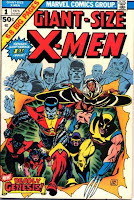
4. Giant Size X-Men #1 "Deadly Genesis!" By Len Wein and Dave Cockrum


The X-Men are arguably the most popular superhero group of all time, and it all started with this "reinvention of the super team in the mid 70s, which gave us Wolverine, years before Hugh Jackman ever graced a camera lens.

5. Sandman #1 "Sleep of the Just" By Neil Gaiman and Sam Kieth


Where Moore started things, Neil Gaiman took over (literally, in the case of another popular Moore book, "Miracleman"). In Sandman, another struggling DC property, Gaiman made a rich mythology all his own, drawing on sources as far ranging as Crowleyan Mysticism and Chinese Legend.

6. Uncanny X-Men #137 "The Fate of the Phoenix" by Chris Claremont and John Byrne


While Len Wein may have reinvented the superteam with the X-Men, Chris Claremont defined it. The pathos of his stories kept readers rapt for years, particulalrly this one, where he was bold enough to kill off a major character who had been beloved for years. In contrast to most comic book deaths, she actually stayed dead for quite some time too.

7. Action Comics #1 "Superman" by Jerry Siegel and Joe Shuster

This is really the one that started it all. Although there were costumed crusaders before Superman appeared, Siegel and Shuster's creation truly represented the birth of the costumed superhero.

8. Amazing Fantasy #15 "The Amazing Spider-Man" by Stan Lee and Steve Ditko

While much of the four color world of Superman was cast in black and white, Spiderman was the first hero to live in a world where life was not perfect, and the problems he evaded when he put on his super-suit and fought crime were still there waiting for him when the mask came off.

9. Detective Comics #27 "The Case of the Chemical Syndicate" by Bill Finger and Bob Kane

The comic book that spawned a thousand stories, books, T.V. shows and movies, Batman is the archetype of the "human" superhero, one that is pushed to become something better than a mere mortal by circumstance and his own indomitable will.

10. Flash #123 "Flash of Two Worlds" by Gardner Fox and Carmine Infantino

Before the idea of parallel universes became commonplace, the Flash introduced us to the idea of Earth-2, a world that was much like our own, but different in some very significant ways. This concept reshaped the entire D.C. Universe, and perhaps the way we look at our own universe as well.

Two final notes: 1, I apologize for my DC bias. I grew up a DC guy, and I'll always be one. 2. I recognize that many people go into the creation of these books, including inkers, letterers, and colorists, and I honor and respect their contributions, even if I did not have the room to include all of their names here.

Monday, April 30, 2007

Back in the Game

Here's my first successful foray back into big multitable no limit tournaments this year.

http://cardplayer.com/tournaments/results/7431

Hopefully more and better results to follow...

Saturday, April 21, 2007

Virginia Tech

I don't have too much to say about what happened. I don't know anyone who goes to Virginia Tech, and from what I know about the story, the kid responsible was alone, mentally ill, and needed a lot of help that no one knew to give him or were able to give him.

I do have a lot to say about the issue of gun control, as do many others at this time. One wonders why our government thinks the threat of terrorism is so grave that our freedom of speech and privacy need to be abridged, but our freedom to own the types of weapons terrorists use to inflict their terror must be unfettered. One should wonder about a government that puts the Second Amendment before the First. Here are a few of the main arguments the gun-toters put forth.

If Guns are Outlawed, Only Outlaws Will Have Guns

Interesting that those who propose this argument seem to have forgotten about the Police. Perhaps they are against them too. This argument is so stupid it's mind-boggling. You could say this about any law. "Murder shouldn't be outlawed because it penalizes law abiding citizens who like to hunt gays, since the criminals are going to murder anyway." Having a gun is not going to save you from a psycho or a terrorist attack anyway. The whole point of these things are that they are UNEXPECTED. It's maybe about 10% more likely that you carrying a gun around will save someone's life. It's about 1000% more likely that you carrying a gun around will result in you getting drunk or scared and taking a life by accident, or someone taking that gun and taking your life. More guns, more gun violence. It's simple math.

If Criminals Knew that More People Were Carrying Guns, They Wouldn't Commit Crimes.

Really? Or would a criminal just shoot first so you can't get the drop on him? This argument is like the argument for capital punishment, that fewer criminals would kill if they knew that they might get the needle. I have a newsflash. These people are deranged. They are outside the bounds of civilized society. They don't think like you. That's what makes them CRIMINALS. Applying the logic of a law abiding citizen to a criminal is pointless and bears no weight whatsoever.

The Second Amendment Protects My Right to Bear Arms.

No, it doesn't. The culture of this country protects that right. The Second Amendment states that "A Well-regulated Militia being necessary to the security of a free state, the right to keep and bear arms shall not be infringed." This, for all the 6th grade dropouts out there, is an archaic form of what is known as a CONDITIONAL statement. It's like saying "The pool being full of water, it is okay to dive." Does this mean you have the unfettered ability to dive safely, even when the pool is empty? No. Similarly, does Amendment 2 give you the right to own a Glock even when there's no danger of any Redcoats smashing down your door? Also no.

People can argue that if one of those students or professors had a gun, at least some of the tragedy could have been averted. There's no way to know that. It can't be disputed however, that if Cho DIDN'T have a gun, all of it would have been averted. And that's the bottom line.

Thursday, April 12, 2007

Kurt Vonnegut, Don Imus, and Me

On April 12th, 1971, I came into this world. On April 12th 2007, I entered a world without the voices of Kurt Vonnegut and Don Imus. Two very different men to be sure, but both with a profound influence on my life.

I vivdly remember listening to "Imus in the Morning" every day as a child while my father drove me to school. Being a kid, I didn't absorb all of the humor, mostly remembering and being amused by the colorful nature of characters like "Moby Worm" and "The Right Reverend Billy Sol Hargus." What I learned though, especially as I grew up and was able to better understand what was going on, was that it was okay, and even preferrable, to voice an opinion, even an irreverent one. Even one that might raise the ire of the establishment. For me, the firing (and presumably retirement) of Don Imus is the end of an era.

This is in no way meant to excuse the statements that got him fired. They were inappropriate and insensitive. They were racist although I do not think he said them AS a racist, meaning I don't think he was in his mind saying "I hate that these black women are succeeding and I need a way to express that." In fact, I don't think there was much going on in his mind at all when he said what he did. Again, that doesn't make it okay. He should be punished. His producer Bernard McGurk should also be punished, since he has made similar and worse statements without penalty, but he is not in the public eye, so he seems to have escaped scrutiny.

I can't help feeling though, that the Imus incident has more to do with its inherent "sexiness" than the quality of the statement. While Imus' referring to black women as "nappy headed hos" is horrible and racist, is it really worse than the way Howard Stern has denigrated women every day for over twenty years, making millions in the process? As long as you don't use code words, as long as it's women and not minorities, go crazy? I think there's some hypocrisy here. I also think the dirty secret is that there is a fine line between bigotry and comedy, that comedians like Sarah Silverman and Lisa Lampinelli (is it more acceptable for women?) make a living parodying stereotypes against blacks and other minorities, becoming caricatures of the racists they lampoon in order to do so. Don Imus, and to a much greater extent, Michael Richards, crossed that line. But I wonder if we can assign the same level of hatred behind a comedian's ill advised words of hurt as to, for example, the alcohol fueled tirade of a Mel Gibson?

Kurt Vonnegut's brand of controversy was more on the level of being labeled an anti-capitalist than of being guilty of any kind of bigotry, which is great for me since the man was one of my heroes (to my girlfriend's chagrin, why that is I'm not exactly sure). I first read "Breakfast of Champions" when I was 14 and was blown away. Although Vonnegut is labeled a science fiction writer, the tenor of his work was far different than the Isaac Asimov and Robert Heinlein I was used to reading. Here was irreverent, thought provoking social commentary. Here were literary devices (including sketches!) that I had never seen used as effectively before. I loathe reading books more than once; it often feels to me like wasted time I could be using to read something new. BoC remains one of the only books I have read more than twice. (The others being Douglas Adams' "Hitchhiker's Trilogy" which I got into the habit as a kid of reading every time I became very ill, as a pick me up.) I devoured the rest of Vonnegut's books and was rarely disappointed, being particularly awed by Cat's Cradle and Bluebeard (interestingly, not as impressed by the favorite of most, including Vonnegut himself, Slaughterhouse Five). Vonnegut, along with authors like Joseph Heller, definitely and conclusively helped to shape the person I am today.

I was fortunate enough to hear Vonnegut speak at Adelphi University years ago. I was delighted to find he was just as charming, smart, funny and thoughtful in person as was reflected in his books. Here was one idol who didn't let me down.

Although Imus and Vonnegut came to very different ends, I think the common lesson they left us with was that it's okay, even preferrable, to express yourself. That it is by sharing our opinions and being willing to hear and integrate the opinions of others, even if we don't like them, that we become a stronger society, and better people. Eventually Imus abused the privilege of the national stage to do this, and Vonnegut's last novel was far from his best, but I prefer to remember them as they were. Entertainers who helped a young man learn to think for himself and demand to be heard.

So it goes...

Saturday, March 31, 2007

Craig's Poker Tip #1: 2-3 offsuit is not a very good hand

Well I played in the Hollywood Park "Sport of Kings" $200 NL HE tournament, my first tournament in awhile and busted out early, but I think there may be something instructional in my donkeyesque play so I figured I'd post about it here.

Apparently the secret is out that one of the keys to success in multi table tournaments is to play super tight early, because the table I sat down at was indeed super tight, although I expected some aggression from the looks of my opponents. In fact, most people folded pre-flop even if there was no raise in the first round. The only sort of exception was the kid directly to my left who looked like he had just stepped off the court of the Ohio State-Georgetown game, who was fairly tight but also pretty aggressive, he would come into any pot for at least 5 times the big blind, any raise he made was usually big enough to end the hand, and he called off a substantial amount of chips with QQ on a board of 8h 3s Ks 7d 8d to a player holding 8s 7s.

In any case, although I had INTENDED to play super tight myself, the table was so rocky that I decided to switch gears and get aggressive. A few sample hands (blinds are 25/25 for all hands):

I have Qs 6s on the button and Jerry Buss makes it $100. Normally I would throw this hand away but I have seen Buss play a lot and felt like I could outplay him after the flop. The flop came Qh 3c 4c. Buss bet another 100 and I called. The turn was Ts. Buss checked, I bet 300, Buss folded.

I have 99 in the SB. One player in middle position limps and I make it 125. Ohio State calls and Middle Position starts seriously sweating me. Finally he makes the call. The flop comes Ace high. I check, Ohio St checks, and MP checks. The turn is a rag and I bet out 300. Ohio St folds quickly and MP starts sweating me again. Finally after about five minutes he mucks JJ face up. "Good laydown," I say as I collect the pot. "Yeah I put you on a big ace, I was considering going all-in pre-flop" he replies.

I have 5s 7d in middle position. I limp and an early position player makes it 100 more. Feeling invincible, I call. The flop comes Kd 6d 9d. He checks and I bet out 300. He mucks JJ (no diamond) face up. "Jacks are a tough hand to play," I offer sympathetically as I rake in the chips.

All this set up my Mike Matusow blow up. Before the tournament started, I overheard an experienced tournament player suggest "sometimes in late position you should play small cards. If they hit, no one expects it, and if the flop comes all low cards, you can be pretty confident it didn't hit an early position raiser."

Why I'm incorporating new advice received 5 minutes before a tournament I don't know, but this is what was going through my mind when an early position player who hadn't played any hands raised to 150 and I was staring down at 2 3 off suit in the Cutoff. I called, and Ohio St. called behind me. The flop came 2 4 T of mixed suits. Early Position bet 150 which I was positive was a continuation bet. I called (maybe I should have raised), and Ohio St. called. The turn was a 5, and Early Position checked. I was confident I had him beat and bet 1000 (I meant to bet 600, a 500 chip and a 100 chip, but I had just made change for somebody and had an extra 500 chip which I didn't realize and threw two 500 chips in instead). Unfortunately I forgot a cardinal tournament rule which is that even if you've got a dead read on the guy in front of you, you can't act on it if you don't know what the guy behind you will do. Ohio St. Hollywooded it a bit to try to get Early Position to call, then called all-in and turned over A3 for the wheel. No A or 6 came to save me and I was crippled. I went on tilt after that and finally moved in with A4 suited vs AJ which held up to knock me out.

It seems like there are a few good lessons here:

Playing garbage cards is not so dangerous because of the pre-flop cost, but because of the cost post-flop if you can't get away from the hand.

2-3 off suit is not a strong hand (Thank you Donkeytest.com!)

No matter how good your read is on the player in front of you, if someone is behind you you can't make a move based on that read.

Don't get overconfident early in a tournament even if you take down a few pots.

Sooner or later someone who is playing tight will wake up with a big hand.

Perhaps people have others, I'd love to hear.