Saturday, September 10, 2022

A Mind Is a Terrible Thing to Change


Much debate has emerged in recent years about the ability to change minds. We see articles on how to change others’ minds, how to change your own mind, why people do or do not change their minds, and so on. One thing people seem to be able to agree on is that once someone has settled upon a belief, changing their mind is nearly impossible. There are numerous studies that verify this and show that not only do people not change their minds when presented with contrary information, this information usually makes them even MORE intractable, MORE convinced that their opinion is the right one. How can this be?

Most social scientists explain this through the idea of Cognitive Dissonance. This is a state of mind where your actions and beliefs do not line up, or where you are required to hold two contrary beliefs at the same time. For example, people may be uncomfortable making out a will or buying life insurance, because of a belief that they are going to live forever, or people may know smoking causes lung cancer, but find themselves addicted to smoking.

Cognitive Dissonance and You

When it comes to mind-changing, cognitive dissonance often occurs because your brain has literally formed pathways based on what you believe. Let us say, for example, that you believe Donald Trump is a narcissistic con artist whose only interest is personal gain. If a report came out that Trump has secretly been donating millions of dollars to orphanages all throughout the country, and that he has so zealously guarded his tax returns and financial information in order to keep this secret, there is no way your brain would allow you to believe it. Your first thought would be “Is this a FOX News story? It’s probably made up.” If it appeared in multiple media outlets, you might think “all the media is pandering to Trump now” or “someone must be blackmailing him to help those orphans” or “he knew the information would be leaked all along,” or “the orphanages are a tax shelter,” anything but that Trump did something altruistic.

Because if you did accept that Trump did something altruistic, it would severely hamper your brain’s ability to process new information. If I was wrong about Trump, something I was so sure about, how can I know I’m right about anything? What is the point of gathering information and drawing conclusions if a new piece of information can completely shatter it? It would be much better to believe one outlandish “fact” (e.g. they aren’t real orphanages), than to have to reevaluate all the conclusions you have made up until this point.

Naturally, it works the other way. If a Trump supporter is confronted with the fact that Trump settled a fraud case for 25 million dollars with the people he conned with a fake University, it’s much easier to say “well CNN made that up” or to just assume it’s a lie and never investigate, then to start from scratch and say, how can Donald Trump, who cares about us so much, who gave up his high-paying job and easy life to lead us, have done something so wrong? Have I been wrong about him? Have I been wrong about the Republican party that nominated him? Have I been wrong about every friend and family member who I trusted who has said Trump is a hero? You can see why most people have little investment in objectively analyzing new information.

The problem, of course, is that these new pieces of information are not cumulative. The next time you hear something pro or anti-trump, depending on where you stand, you won’t put it with that last piece of contrary information to “build a case.” That last piece of information has already been dealt with. It’s gone. The only thing that could potentially change your mind is a single piece of information so massive that it is impossible to ignore. For example, if Trump’s son were to deliver a video live on FOX News showing him handing over a top-secret document to a Chinese national. Even then, you might decide that Trump was always good up until that point, and was just pushed over the edge by harassing liberals. Or you still might decide that the video was faked, and it's Junior who went bad.

Is it Good to Be Open-Minded?

Now, when people’s intractability in mind-changing is discussed, it is usually presented as a flaw. e.g. “People are so stupid they can’t recognize facts.” Furthermore, when people are interested in changing minds, they are usually really interested in changing the minds of others, not their own.

While I personally like the idea of being open-minded and being able to change my mind when presented with new information, I also accept that being obstinate about your positions, while frustrating, is adaptive. Having a changeable mind may have a long-term benefit, but in the short term, it’s better to be close-minded. You don’t have to experience dissonance, and you don’t have to have conflicts with your peer group, which presumably feels the same way about most things that you do. You can argue with people who disagree with you and feel good and confident that you are on the right side, and you’re not going to change their minds either way anyway, so you don’t have to worry about bringing someone into an incorrect position.

“But changing minds is the way to make the world a better place!” Is it? The main way changing minds can make a better world is if it translates into major physical real-world change, and this rarely happens. Progress usually occurs by force. Environmentalists argued with fossil fuel advocates until they were blue in the face for decades, but it’s only due to the fact that people can finally feel the world heating up that change is starting to occur. An individual changing the mind of another individual, when it happens, just like an individual vote, has a negligible effect on a macro level.

“But that’s short-term thinking! It's just instant gratification! Instant gratification is stupid!” Again, I say, is it?

In Defense of Instant Gratification

In the Stanford Marshmallow Experiment, researchers, eager to study the benefits of delaying gratification, presented children with a scenario. The child was given a marshmallow to eat. They were told, however, that if they could wait 15 minutes, they would get two marshmallows. Some kids waited, some kids ate the marshmallow right away.

The participants were then followed for years, and it was discovered that the children who waited and got the two marshmallows did better in life. They had higher SAT scores, lower obesity, better social skills, and other benefits.

This experiment was used to justify delaying gratification, to suggest that the kids who delayed employ better life strategies, and that you too, can have a better life by delaying gratification.

So why do so many of us go for the short-term route? Why do we spend money instead of saving it? Why do we overeat instead of getting in shape? Why do we ignore climate change? Are we stupid? Are we greedy? Do we just completely lack self-control?

Well, no. Because you see, the Stanford Marshmallow Experiment is not the end of the story. Years later, researchers did a follow-up study in which before presenting the marshmallows, participants were exposed to either reliable or unreliable experiences. For example, they were given a few crayons to draw with, with the promise that the researcher would bring a bigger box of crayons in a little while. For some, the bigger box came, for others, it didn’t. Unsurprisingly, the ones who did not get the promised bigger box were much worse at delaying gratification.

This version of the experiment much better models the condition most of us live in. We opt for short-term rewards over long-term rewards because the long-term rewards are not guaranteed. I could spend the next five years meticulously recycling and only buying sustainable products, and then the Russians could start a nuclear war. I could suffer through the rigors of quitting smoking just to die of COVID. I could scrimp and save every extra penny only to have that savings wiped out by a stock market crash or a medical crisis. We choose short-term benefits because we live in an increasingly uncertain world, and we’re afraid of suffering for nothing.

So, bringing this back to the idea of mind-changing. Mind-changing is hard work. You could break down all your preconceived notions and build them back up again, only to get new information that shatters your rebuilt schema. Or worse, only to discover that nothing has changed. After all, if you are confident that America is deteriorating into fascism, and you convince one person that you are right, all you have done is doomed another person to helplessly watch the inevitable descent.

So, what do we do? Do we stop trying to change people’s minds? Do we stop exhorting ourselves to be open-minded? As to the first, I would say it depends. If it makes you feel good to expound upon your position, then go ahead and keep doing it. But know that if someone has already made up their mind, no argument, no matter how fact-laden, no matter how well-reasoned, is going to change it. If you want to change actual minds, your only chance is to present your case to young people who may still be forming opinions, or to people who genuinely haven’t made their mind up about certain issues.

As to changing your own mind? I would say if you don’t want to, don’t be so hard on yourself about it. There are a lot of short-term benefits to being close-minded and the payoff for changing your view is far from guaranteed. If you are really motivated to be an objective person, and finding the actual truth has value to you (finding the actual truth, not confirming that what you already believe is the actual truth), then go ahead and stay open-minded and accept the consequences.

Tips for staying open-minded:

  1. Always accept that you could be wrong about anything—that there could always be a piece of information you don’t have.
  2. Your beliefs MUST be falsifiable—that is to say, you must be able to imagine a condition where you would concede that you are wrong about something, and then be able to prove to your satisfaction that that condition does not currently exist.
  3. Beware confirmation bias--don't only look at sources you know will confirm your belief. Seek out contrary opinions and sources you are not necessarily inclined to agree with.
  4.  Practice arguing the position from the other side. People really believe things that you do not. If the argument you come up with feels weak and like something no one could possibly believe, you are probably not examining the best possible counterargument.
  5.  Don’t have an ego. It’s okay to be wrong about things. People are wrong all the time about all sorts of things. It doesn’t mean you’re stupid, or a bad person.

Tuesday, May 24, 2022

How to Talk to Your Conservative Friends and Relatives About Gun Control


There has just been another mass shooting. I won’t say which one, so this blog post will remain evergreen since there will certainly be many more. That being said, it’s time to demand that all your NRA-loving, GOP-supporting friends and relatives finally abandon their zero-tolerance policy on gun control and hold their chosen representatives accountable. To help, here’s how you counter all their ridiculous arguments as to why less gun control, not more, is the answer.

The criminals don’t obey gun laws. These shooters won’t care about gun control. At least this way the victims can get their own guns and have a chance. (If guns are outlawed, only outlaws will have guns)

This is probably one of the most common arguments against gun control that is trotted out, and the one that can stand the least scrutiny. To debunk this one, just have your gun-loving friend substitute any other crime for gun possession.

“We can’t outlaw murder! Serial killers aren’t going to obey that law! At least if we legalize murder, law-abiding citizens will have the chance to murder the criminal before a criminal murders them!”

“We can’t outlaw drunk driving! Drunks aren’t going to care if there’s a law if they want to drive! At least this way, law-abiding citizens who want to drink a little before they drive home won’t have the drunks ruin their night!”

“We can’t outlaw theft! The burglars aren’t going to stop stealing because there’s a law! At least this way, we can legally steal our stuff back!”

You get the idea.

I need to defend myself and my family

You are much more likely to see you or your family killed or wounded if you have a gun than if you don’t. Studies show:

People successfully defend themselves with guns in less than 1% of crimes in which there is contact between a perpetrator and a victim.

Having access to a gun doesn’t better protect people from being injured during a crime compared to other protective actions like calling law enforcement or fleeing the scene.

Someone with a gun is four times more likely to be shot in an assault.

Firearm access triples the risk of suicide death and doubles the risk of homicide.

Firearms make it five times more likely that a victim will be killed in a domestic dispute.

Places like Chicago have stringent gun laws and they have more gun deaths than anywhere

Conservatives like to trot out this one because it is so much the opposite of the truth that it feels true. In fact, gun violence in Chicago rose after gun laws were weakened, and even though their gun laws are still stricter than many others, most of the guns in Chicago come from neighboring Wisconsin and Indiana, which have very weak gun laws. Furthermore, no other country has as lax gun laws as the US, and no other country has our level of gun violence.

The only thing that will stop a bad guy with a gun is a good guy with a gun.

No. When Gabby Giffords was shot in Arizona, the shooter was subdued by unarmed samaritans. In fact, the “good guy with the gun” showed up late and almost killed one of the subduers.

The good guy with a gun in Buffalo ran up against the shooter’s body armor, and ended up just as dead as the other victims.

Good guy with a gun Jemel Robertson subdued a shooter at Manny’s Blue Room in Robbins, Illinois. While he held the shooter at bay, police arrived and shot Jemel dead. I’m sure I don’t have to tell you what color he was.

The 2nd Amendment says I have the right to own however many guns I want of any kind no matter what!

It doesn’t. The text of the 2nd Amendment reads “A well-regulated militia being necessary to the security of a free state, the right to keep and bear arms shall not be infringed.”

First of all, this is a conditional statement. It’s like saying “The pool being full of water, the right to swim and dive shall not be infringed.” If the pool is no longer full of water, the second part doesn’t apply. A well-regulated militia is no longer necessary to the security of a free state, hence, everyone doesn’t need to have guns.

Furthermore, even that bastion of conservatism, Antonin Scalia, ruled in DC vs. Heller that the 2nd Amendment doesn’t give everyone unrestricted access to weapons of war. He specifically ruled that the amendment only applies to the type of weapon that one could reasonably expect a person of that time to own, such as a handgun or a standard rifle. Not an AR-15.

Finally, the words “well-regulated militia” have importance. Well-regulated means restrictions, as appropriate, can apply, and militia, as defined by the Constitution, does not mean you and your buddies out in the woods, but a group of volunteer soldiers ready to be called into service BY THE GOVERNMENT, to allow states to protect themselves. (Article I Section 8). Basically, if you are not in the National Guard, the state doesn’t have to allow you to have a gun.

Also it’s worth noting for your Strict Constructionist friends that there’s nothing in the Constitution that requires states allow guns to be bought or sold.

There you have it. Clear and logical refutations of all your friends’ and family’s pro-gun arguments for them to ignore at the next reunion!

Wednesday, November 24, 2021

The Arc of the Moral Universe


Two court cases captured the attention of Americans on all sides of the political spectrum this month, the trials of Kyle Rittenhouse and of Travis and Greg McMichael and William Bryan. Two different verdicts that I think illustrate that in some cases, the American system of justice still works.

Many of those whose political inclinations lean left were outraged by the verdict in the Rittenhouse case. They have accused the Judge, the jury, the lawyers, and everyone but the Bailiff in this case of being biased and racist, despite the fact that the victims in this case were white. The reality is, that while no one can say to what extent certain individuals are racist, racism was not the determining factor in this case.

Our judicial system is designed to give even the most loathsome individuals the same protection as those we love. This is what happened in the Rittenhouse case. Those on the left find Rittenouse to be a villain as much as those on the right find him to be a hero, but justice does not care either way. Justice is blind. We don’t like the idea that a kid can walk the streets with an assault rifle whenever he wants (the fact that he was underage is a separate issue. If he were 18 we would feel the same way). We don’t like the idea that if a person feels threatened in the street, they can shoot the person they feel threatened by. We especially don’t like the understanding that if that kid were black, he would likely be gunned down himself or arrested by the cops before he ever got a chance to defend himself. But none of these things can be factors in court if someone is to have a fair trial, and that’s what Kyle Rittenhouse got. He got a presumption of innocence, and the prosecutor failed to prove that his actions were not self-defense beyond the high standard of reasonable doubt. You don’t have to like it, but you should appreciate it. Some will find that suggestion offensive because the law is not applied fairly to all people. I’ll get to that.

Look, in contrast, at the McMichaels/Bryan case. These men subjected Ahmaud Arbery to what was essentially a 21st century lynching. They hunted this poor man down like a dog. Greg McMichael’s defense was essentially “he looked like a dirty, sketchy, black kid.” These men were found guilty of multiple counts of murder, not because the judge, or the jury, or the lawyers were anti-white racists. 11 out of the 12 jurors were white. They were found guilty because the same system that applied to Kyle Rittenhouse was applied to them, and under that standard, the prosecution showed that these men murdered Ahmaud Arbery. The system worked.

Again, a lot of the outrage over Kyle Rittenhouse is the idea that he got off because he was white. There’s no question that white people enjoy privilege in our criminal justice system. But look at the two cases. The man whose victims were white was acquitted, and those whose victim was black were convicted. Doesn’t quite fit the narrative.

The outrage is justified. We’ve heard a lot of talk about Critical Race Theory over the last few months, and ironically, the right has been looking for it in the wrong place. It has been fully on display in our courts. There’s not an aware human being in this country that doesn’t know that if a black kid had crossed state lines and attended a BLM protest with an AR-15, his fate would have been very different. We all have a sense that even if he made it to court, a conviction would have been almost certain. It’s also clear that it took way too long to bring the McMichaels’ to justice. But these are problems with the legislature, and a legal system that is rooted in racism, not with the way justice was applied in these two cases.

The law that allowed the McMichaels to feel justified in hunting down Ahmaud Arbery, the Citizens Arrest law, previously in effect for over 150 years, has been repealed. This is what we should focus on. Here is a law that illustrates critical race theory. No black man in Georgia could ever in history have gotten away with approaching a white man with a gun with the intent of making an arrest. No black man should ever have to accept a non-law enforcement white man approaching him with a gun with the assumption that a legal arrest is about to take place. It was a law rooted in systemic racism and as a result of this case, it was repealed. That is the kind of justice we should be focused on. One may have cause to hope that laws against open carry of assault rifles in Wisconsin and in particular laws against underage carry will be strengthened in the wake of the Rittenhouse trial. It’s an iffy proposition. The NRA is strong, but we can hope. However, as disappointed as I am that Kyle Rittenhouse walks free today, and even worse, as some kind of right wing icon, I remain steadfast in my belief that the justice system worked in both of these cases, and that, we as a society must work to fix the system’s racial inequities, not throw it away when we don’t get the results we want.

“The arc of the moral universe is long, but it bends towards justice.” – Martin Luther King, Jr.

Saturday, July 31, 2021

Why Simone Biles Represents Everything That’s Wrong With America (It's not what you think)


On Tuesday, Simone Biles, after a poor performance on the vault, suddenly and shockingly withdrew from the Olympic All-Around Team Gymnastics competition, citing mental health issues. 

Biles’ decision immediately turned into a political football, with those on the right predictably calling her a quitter who doesn’t respect our country and someone who embodies the Millennial and younger generation’s “everyone should get a trophy” egalitarian (dare I say “socialist?”) attitude.

Those on the left responded, if anything, even more strongly, insisting that Biles, the most decorated and successful gymnast of all time, is the undisputed GOAT and owes nothing to a bunch of armchair athletes who criticize others to cover up their own inadequacy. Those questioning Biles’ decision were just as predictably called racists and misogynists once again abusing their privilege.

Even Kerri Strug (who famously pushed through the pain of a broken ankle to land her final vault as part of a US victory in the 1996 Olympic Games) was dragged back into the limelight for the controversy, with those taking issue with Biles’ decision pointing to her as an example of someone with the true heart of a champion, an inspiration to young women and girls everywhere, while the pro-Biles camp reframed Strug as a victim of a draconian Eastern European coach willing to destroy as many young girls as necessary to get what he wanted, while Biles is the real Olympic hero for standing up to the tyranny of patriarchal sport.

The point is this. The Olympics, at one time, were supposed to represent hope. The hope that if we all, Russian or American, Arab or Israeli, man or woman, Black or white, young or old, could put aside our differences in the spirit of non-violent, friendly competition for two weeks, we could have lasting peace throughout the world.

While that idea was a little pollyanna-ish, there’s something to it. Even if it didn’t work on an international level, or at least, not for long, it worked internally. In the past, when it came to the Olympics, all of America was on the same side, at least as far as we knew. We all collectively cheered when Kerri Strug landed that vault. We all rejoiced when Team USA beat Team USSR at the “Miracle on Ice.” During the Olympics, regardless of our differences, we were all Americans.

Now, it’s possible that this image was an illusion. It’s possible that during each Olympics, while we all had a public face of unifying support, some faction of Americans were seething at some injustice or other behind the scenes, decades safely removed from the revealing spotlight of social media. But even the ILLUSION was worth something. The perception that it was possible for all Americans to come together for some common cause meant something.

We no longer have that illusion because it is no longer true. We can’t even all get on the same side against a devastating killer virus, let alone for an Olympic athlete.

In Biles’ absence, Sunisa Lee stepped up for the Americans, helping the USA secure a silver medal in the Team competition and winning the Individual All-Around. In another time, another era, this would have been the story. The only story. Americans have each others’ backs. If one of us falls, the others will be right there to pick them up and press on. 

We are no longer worthy of that narrative.

Why is this the case? What has happened over the last 20 years to turn us into a country where we just can’t all get along? There seems little point in trying to find out, as that analysis would immediately become just as polarized as our reality. Liberals will point to FOX News propaganda pushing America to the right, Conservatives will accuse Academia of pulling it to the left. The real question is can anything be done about it?

Short of an intergalactic alien invasion or a mutated virus so deadly it kills off the side that is polarized against defending itself against it, it’s hard to imagine what that would be.

In the meantime, I’ll still be watching the Olympics and cheering for Team USA. Who’s with me?


Monday, November 25, 2019

"Cognitive Dissonance"


The other day, I posted a query to my Facebook feed about who were the worst types of Trumpers. Amidst the obvious choices of wealth fetishists, racists, overgrown frat boys and the like, I offered the option to write in your own.

One person replied: “Cognitive dissonance.”

What he meant was that it is human nature to become intractable about one’s opinions, especially those we hold strongly. That for most people, once you convince yourself of a position, evidence to the contrary is so disturbing to your psyche that you are more likely to dismiss it, explain it away or repress it than consider it fairly. The worst type of Trumpers are those who won't admit who he is to themselves.

But the more I thought about it, the more I felt that if those were the worst type of Trumpers, it wasn't because of their cognitive dissonance, it was because of our own.

We see Trump wallowing in corruption. We see his 40-year history, a matter of public record, of cheating on his taxes, his wives and his contractors, of lying literally hundreds of times a week. We see that he is barely literate, that he has no understanding of the position he holds nor has he any interest in learning.

We see him committing fraud to the tune of millions of dollars over and over again, and wonder not just how he ever could have become President, but how millions of people will respond to these charges with something on the order of “Yeah, well, what about Hillary and Obama?” despite the fact that neither of them has been stained with any kind of scandal even approaching what happens to Trump in an average week. Despite that both boast a long record of public service while he has had none, and that their professional conduct compared to his has been impeccable.

We could accept, perhaps, if those people simply proclaimed they didn’t care for Obama’s politics or even that they didn’t like the idea of a woman with power. But to suggest somehow that Hillary Clinton should be behind bars while Donald Trump should be in charge of the entire country? It is literally impossible to fathom what twisted logical gymnastics one could have gone through to arrive at such a conclusion.

But that’s the rub, isn’t it? I suspect that most of these people applied no logic at all. They got it in their head that Trump is the right guy for them and that was the end of it. They suffer no cognitive dissonance because they are quite effective at discarding logic and reason when it comes to Trump. 

But the rest of us have no such luxury. We work ourselves into a rage trying to figure out how a human being with access to basically the same kinds of neurons, synapses, sulci and gyri as we could have come to the conclusion that Trump is at all competent, let alone someone appropriate for ultimate power.

They happily trot down the lane in their MAGA hats and their “Hillary for Prison” T-shirts, blissfully oblivious to the fact that crony after crony of Trump’s inner circle has been indicted or jailed, completely indifferent to the fact that people with years of dedicated service to our country have cried out that this man is unequivocally and gruesomely abusing his power, dismissing these brave souls as hoaxers or “never Trumpers,” while the rest of us are tearing our hair out wondering what we’re missing. 

Cursed with the ability to reason and respect for scientific inquiry, we have to consider the possibility, however remote, that they may be onto something, while they get to just decide that we hate America, are somehow not real, or are brainwashed by “fake news.”

It doesn’t seem fair. We desperately want to say, “well, they’re just idiots,” or, “there are a lot of horrible people in America,” but something nags us about the idea that tens of millions of people with whom we share citizenship are just stupid or terrible. Meanwhile, they seem unfazed by the absurdity of the idea that half the population of the country actively hates it here and is trying to destroy it from within.

Well, I’ve thought about it a lot and I’m here to tell you that we’re not crazy. Trump really is what we think he is and there are really people who will never care, for a variety of reasons that include some unholy cocktail of wealth fetishism, racism, power fantasies, fear of cognitive dissonance and…eye of newt, I guess. I’m afraid the best thing we can do is to dismiss the ones that cannot be reasoned with and hold fast to the ones that can, the way our ancestors dealt with bears and sabretooth tigers, and try to hang on until the winds of change blow our way again.

Monday, October 07, 2019

Trump Supporter's Guide to Sleeping at Night


When Trump does something horrible, like publicly ask a foreign country to investigate his political opponents or tell women of color in Congress to "go back where they came from," or pay off a pornstar to stay quiet about his adultery and then lie about it, refer to the following menu:

Choose as many as apply:

A) He didn't do it. Fake News

B) He did it, but it only seems wrong because failing left-wing media outlets make it sound worse than it is.

C) He did it, and it was wrong, but as long as he's keeping the gays/abortionists/immigrants in check, he can do whatever else he wants.

D) He did it, but he had to do it to Keep America Great

E) He did it, but the Democrats made him do it because they hate him.

F) He did it, but it doesn't matter because something that Obama/Hillary/Biden did was much worse (even if we don't know EXACTLY what that something is. Something about Benghazi or Kenya).

G) He did it, but it's good because it's making the liberals crazy.

H) He did it, but he didn't mean it, he was just making a hilarious (racism/treason/totalitarianism) joke.

I) He did it, but you only care because you hate him.

J) No, YOU'RE the racist!


Friday, June 28, 2019

Is It Okay to Get Something For Nothing?


“When you get something for nothing, you just haven't been billed for it yet.” – Franklin P. Jones, Humorist


One of the most deeply ingrained creeds in the American ethos is the idea that if you work hard, anything is possible. It’s the American Dream. The implied corollary to that, of course, is that if you don’t work hard, you’ll get nothing. More importantly, you deserve nothing.

This is an idea that seems so obvious to the average American that it is held firmly and without a doubt by every conservative thinker, from the most Alt-Right all the way down to the last rung on the conservative ladder, the modern political climate’s “moderate/centrist” Democrat.

It’s a point that seems so unassailable that even those further on the left usually don’t want to touch it. Andrew Yang, one of a score of candidates vying for the Democratic presidential nomination as I write this, has as the cornerstone of his platform the idea of UBI – Universal Basic Income, which says that every adult American will get $1000 a month on which to live.

This is the type of proposal that has conservatives waking up in the middle of the night in a cold sweat. The very idea that not just some Americans, but EVERY American, would get a monthly stipend of a THOUSAND DOLLARS--$12,000 a year!—for just sitting on their behinds, is such anathema to those on the right and many in the middle, that they would rather see almost anything else become public policy.

It defies imagination just how preoccupied many Americans are with the sheer injustice of such a concept. It’s a principle that has “investigative journalists” from the mainstream conservative media regularly following around homeless people in the hopes of catching one sporting a new pair of sneakers or talking on a cellphone. It’s an idea that fills right-wing TV pundits with rage. “A thousand dollars! For nothing! Those freeloaders! Those savages!” As if a thousand dollars a month would allow someone with nothing to live high on the hog.

Can you imagine Sean Hannity or Rush Limbaugh trying to live on $1000 a month? I question whether they and their ilk could survive on $1000 a DAY.

And yet Yang, despite the swell of popularity he is enjoying and universal agreement that this is a bright guy who knows what he is talking about, is summarily dismissed when discussing UBI. The media seems to think he could not possibly mean it, and is just trying to pull eyes, the way candidates for Class President of your local High School would put up posters in bold letters exclaiming: “FREE SEX!...and now that I’ve got your attention…”

So, what is it that seems so obviously horrible to Americans about the idea of getting something for nothing? And why does it only apply to the poor? We don’t seem to care about the obscene amount of wealth that children inherit from their rich parents. Far from it, we build reality television shows around them. We don’t mind seeing Instagram models get six-figure paydays just for taking a picture of themselves sporting a certain brand of lipstick, even though this seems far from the type of “good day’s work for a good day’s pay” type of effort the Puritan forefathers of this country espoused.

No, it’s only the idea of people of limited means having their means a little bit less limited without any effort on their part that we find so objectionable. Is there any logical explanation for this?

Well, what are the arguments against something like UBI?

Some will say it’s not good for society. If people know they can get something for nothing, they won’t work. We’ll have a nation of freeloaders.

But this is obviously ridiculous. In most parts of the country, $1000 a month is enough money to put a roof over your head and feed yourself and little else. Would anyone who finds the idea of these luxuriating freeloaders so objectionable be content to have nothing more in life than three cheap meals and protection from the rain? Unlikely.

In fact, the reverse is almost certainly true. A person who is on the street and starving can do little else but try to survive. There’s no opportunity to interview for a job when you can’t shower or change your clothes or get a good night’s sleep. On the other hand, with $1000 a month, you could do all those things. And human nature being what it is, once you get a taste of a little comfort, you want more.

Something like UBI would mean no homeless people, a healthier population and more people looking for gainful employment. And if the cost of that is a handful of people who just want to live in a hovel and eat fast food and play video games all day, so what? Who does it hurt? Especially in comparison to what you get in return!

Of course, the other argument is, why should a hardworking American pay for other people to freeload? But this argument also doesn’t ring true. People routinely pay taxes that go to bribing big companies to stay in the U.S. by offering billion dollar tax cuts, that go to the building of giant military death machines that we will never use and often don’t work, and that go to many other things that ultimately offer less of a benefit to society than giving every American citizen a little bit of dignity.

And yet people would rather pay hundreds of dollars for all those things than part with one red cent to make sure a homeless person has a roof over their head or can see a doctor when they are sick.

Why? Even when it doesn’t affect them at all, they object. Even if UBI, universal health care and all the other programs that just give the most disadvantaged of our citizens a chance to succeed were to be paid for by a marginal tax on the wealthiest one percent, even if 99 percent of Americans would not be affected AT ALL, they still object. Why?

I suppose there’s the slippery slope argument. Some may say, well, if someone gets something for free now, they’re just going to want more and more. Eventually, we will get to that point where no one wants to work.

I don’t buy it. There are people in this country now that have more money than they can ever spend or will ever need, and they still put in full working hours every day. There are also people who volunteer their time and do work for nothing. And honestly, would it really be so awful if our society became so advanced that the only people who worked were people who want to?

Is the explanation that our true human nature is sour grapes? "I have to work, so why shouldn’t they?"  Is it that even if we will have so much more than they do either way, we absolutely refuse to let someone else have something that we had to work for? Is it true that for many Americans, it actually feels that someone getting a handout hurts them personally? Even if they don’t have to pay for it? Even if it’s someone they don’t know?

Unfortunately, for many, perhaps even most Americans, it seems that this is indeed the source of our indignation. A study by Zonghu and Li found that increases in relative income and absolute income both weaken negative emotion, but only increases in relative income improve positive emotion.

In other words, being well-off and being wealthier than those around you both make you less depressed, but what makes you feel really good is having more than others in your community. People actually derive joy in knowing that they are doing better than others, and helping the least fortunate closes that gap.

It’s not the idea of taking some of our money and giving it to the less fortunate that people find so objectionable, it’s the idea of taking some of our precious social status and giving it to the less fortunate that we can’t stand. It is our willingness and ability (or perceived willingness and ability) to work that is the currency that social programs for the less fortunate threaten to devalue, and that we cannot abide if we are to maintain our feelings of superiority.

Is there anything that can change this attitude? It will be tough. Even the idea of forgiving student debt has the people who have already worked off their own student debt up in arms. We really cannot stand the idea of someone else getting something for free that we had to work for, no matter what the positive consequences might be.

But maybe the least we can do is not stigmatize the very idea.

Monday, July 09, 2018

Top Ten Sci Fi Movies That Aren’t on Anyone Else’s List of Top Ten Sci Fi Movies


Sci Fi movies are hard to do well. You really have to get your audience to suspend a lot of disbelief, and if you don’t finesse it enough (or go so over the top campy that belief is not even an issue), it’s very easy to fall flat on your face. Bad sci fi movies tend to be cartoony, or completely lacking in internal consistency, or make no sense at all.

Perhaps this, then, is the reason that a few sci fi movies have really risen to the top, and year after year, these movies are upheld as the gold standard when it comes to science fiction storytelling.

I like a lot of those movies. Others I’m not so impressed with. I sort of have my own rubric when it comes to sci fi movies, and I often find that the ones I really like aren’t usually on the top of everybody else’s list.

Here then, is my list of top ten sci fi movies that aren’t on anyone else’s list of top ten sci fi movies. With each one, I’ve included the movie whose place I think it would probably take on the “real” top ten list. My choice and the popular choice won’t necessarily have anything in common, but when they do, I’ll comment on it. So, without further ado and in no particular order….

Pitch Black (Popular Choice: Alien)


Pitch Black is almost the anti-Alien. In Alien, our band of heroes is trapped in a contained space with a monster. In Pitch Black, that contained space is an entire world, and the monsters are everywhere. I’m not sure why some of the best sci fi movies are horror sci-fi. Maybe because what’s exciting about what’s out there is also what’s scary. But they are, and I love when horror tropes, like the idea that horror has to take place in dark, enclosed spaces, are turned on their ear.

Aliens, the sequel to Alien, has a lot of that, too, but what it doesn't have, in addition to the unique visual style of Pitch Black, is Riddick. The character of Riddick, before two sequels and the turning of Vin Diesel into a household name softened him up beyond all recognition, was one of the all-time great anti-heroes.

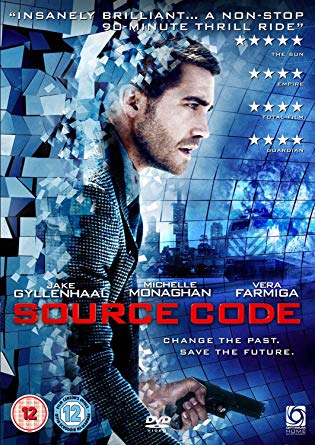
Source Code (Popular Choice: Close Encounters of the Third Kind)


I think Source Code is a great example of a modern science fiction movie, one that a lot of movies and TV shows going forward are going to use as a template, consciously or unconsciously. It’s one of the few movies to have a credible, realistic take on something resembling time travel, and it uses concepts of VR, digital consciousness, and similar ideas that are sure to shape our world in the years to come. Close Encounters is a movie that I think was great for its time, but doesn’t quite hold up. I think movies like Contact and Arrival do a better job at expressing a realistic depiction of our first encounter with alien life.

Total Recall (Popular Choice: Blade Runner)


Listen, I am a sucker for any movie based on Philip K. Dick’s work. Minority Report, Impostor, Paycheck, I dig ‘em all. And I know Blade Runner is considered by many to be the greatest science fiction film of all time. But I think a lot of that comes from the visuals more than the story. And after having seen the overwrought, garbled, Ryan Gosling sequel, I actually like it a lot less.

Seeing the shitty remake of Total Recall, on the other hand, only reminded me how great the original was. Total Recall is Pure PKD, complete with mindfucking, bizarre adventures and non-stop action. It’s ‘80s Arnie at his finest and a timeless sci fi classic.

Robocop (Popular Choice: Metropolis)


Robocop is a movie from the same era and of the same ilk as Total Recall. What makes Robocop special, however, is how effortlessly it mixes political satire with over the top humor with cool cyborg action. What was so horrifying about the shitty remake of this one is that it wasn’t funny. Like, not even a little. Like, it makes you want to hang yourself.

Metropolis may have been funny, but I couldn’t tell you, because I had no idea what the hell was going on for most of it. It seems like mainly a mashup of science fiction tropes that were popular in 1927, and I think it’s just the idea of a “science fiction art film” that has people so seduced by it.

The One (Popular Choice: 2001 A Space Odyssey)

When it comes to cultural cachet, “The One” and “2001: A Space Odyssey” are on opposite ends of the spectrum. 2001 is hailed as Kubrick’s masterpiece, while a lot of people think that “The One,” belongs in the discount bin at Walmart. To these people I say:


Are you fucking kidding me? A science fiction martial arts movie that dealt with parallel universes before that was even really a thing in movies and that ends (SPOILERS) with the hero’s evil twin playing a literal game of King of the Hill in a Hell Dimension warding off countless waves of kung fu fighting doppelgangers? How is that not on EVERYONE’S “best” list?


Star Trek VI: The Undiscovered Country (Popular Choice: Star Trek II: The Wrath of Khan)


I’m not going to make the argument that VI is an objectively better movie than II. I don’t expect I could ever win. What I’ll say is that I think Star Trek II embodied the best of what Star Trek was, while Star Trek VI embodied the best of what it could be. That, and the cultural relevance of the Cold War parallels that were so meaningful at the time VI was released is what puts it over the top for me. I think both movies are head and shoulders above every other Star Trek movie before or since.

Edge of Tomorrow (Popular Choice: E.T.)


The science fiction movie I loved most in the last ten years (maybe more) has to be Edge of Tomorrow. Based on a Japanese novel with the lost in translation name of “All You Need is Kill,” Edge of Tomorrow is fun, it’s funny, it deals with alternate realities/time travel in a convincing way, the characters are compelling and easy to sympathize with and the characters’ goal is noble and relatable. If you have not seen this movie because you hate Tom Cruise, or because you thought the premise was silly, or just because it escaped your notice, do yourself a favor and go see it (I think it has been retitled: Live, Die, Repeat)


Oh. It has no relationship to E.T. other than the initials and, you know, aliens. E.T. is a fine movie and you all should see that one too if you haven’t.


Tron (Popular Choice: The Matrix)


Full disclosure: The Matrix and I got off on the wrong foot. I saw it for the first time after being up all night studying for something or other and did not even really follow the story. I have seen it since and I get the premise, which does not make a lot of sense (why do the machines need to create this elaborate fantasy world for people just to feed on them? Doesn’t this take more energy than it provides?). I admire the Wachowskis for having and presenting a unique vision of a sci-fi world, but again, in a time where virtual reality machines are par for the Sci Fi course, it doesn’t really hold up.

Tron, with its “digital” world of 8 bit graphics doesn’t quite hold up either, but it fails to do so in an incredibly charming way, and Tron is a classic adventure story that doesn’t even really need the sci fi element, but it’s great that it has it because light cycles and identity discs are fucking cool.

Return of the Jedi (Popular Choice: The Empire Strikes Back)

Second full disclosure: I am a terrible Star Wars fan. One, I liked the Phantom Menace, also, when I played with my Star Wars action figures I always pretended they were characters from other franchises, and worst of all, I liked Return of the Jedi better than Empire. I blame this on the fact that I saw these movies when I was a kid, and when I watched Empire, I still really didn’t understand the concept of sequels or trilogies.

At the end of Empire, I thought that was it, it was over, Darth Vader won and the heroes lived miserably ever after, and as a child, that was deeply unsatisfying. Return of the Jedi gave me the closure I desperately needed. The opening sequence on Tatooine, where all the heroes (save Han) are in their full leveled-up glory defeating Jabba the Hutt, is one that burned itself into my memory and inspired my love of sci fi all the more. If I had seen these movies when I was older and more cynical, I’d probably have a very different take, but, there it is.

Escape from New York (Popular Choice: The Terminator)


I have nothing bad to say about the Terminator. I love the Terminator. It’s just that it’s bound to appear on anyone’s top 10 list. Escape from New York might not, although it should. Snake Plissken may be the greatest sci-fi anti-hero of all time. He makes Han Solo look like Jar Jar Binks. Snake stares death in the face, laughs at authority, but in the end, still saves the day, albeit in his own inimitable fashion. The way in which the film turns 1990s New York into the hellscape everyone outside of New York seemed to think it already was is another reason this film is rightly considered a sci-fi classic.


There you have it! Comments about how totally off I am are always welcome!

Sunday, February 18, 2018

The New NRA: Solving the Gun Problem in America


The recent school shooting in Florida has given rise to renewed cries to address the growing gun problem in this country. The response is the same. Gun control advocates call for harsher gun regulations, anti-gun control factions panic that the government is coming for their guns, and politicians who accept millions from the NRA to make sure that kids like Nicholas Cruz have easy access to assault rifles either act confused and helpless, as if there is no solution to this problem, or find a scapegoat to deflect the blame to, like bad parenting, mental illness, or, most brazenly, lack of enough guns.

To those of us watching these politicians defy any standards of public decency and safety for reasons that openly and unabashedly boil down to their own greed, the situation seems hopeless. The Republican party is firmly entrenched in the pocket of the NRA, who have millions upon millions of dollars to spend, and there’s nothing any of us can do about it.

I believe that there is a solution though, and it comes from the very conservatives from the state of California who likely support the NRA.

The Solution


If there’s one thing corrupt politicians are great at, it is distorting and obfuscating the truth. So, for the safety of our children, let’s put aside our ethics and take a page from their book.

California suffers from what some might call an excess of democracy. Every Election Day, multiple propositions are put on the ballot for Californians to vote on. These are real policy changes, like allowing gay marriage or tightening environmental regulations. Since many of these propositions are overwhelmingly good for the people and would easily pass if that were clear, each year, corporations create counter propositions and use their influence to get them on the ballot.

These counter propositions look exactly like the good propositions, except that if you manage to get to the end of them, the policy change they would enact is exactly the opposite of the original prop.

The idea is not to get these counter propositions to pass; they rarely do. The goal is to confuse voters so much that too many of them either vote for the wrong proposition, or become so uncertain that they don’t vote for either, so neither pass. This almost always works.

So what does this have to do with the NRA? Well, here is my proposal, and I hope someone with the time and resources reads this and decides to try it.

The New NRA


I propose we create a new organization. Call it the New National Rifle Association, or NNRA. We create a fancy logo with a nice big automatic weapon on it, maybe a majestic bald eagle, and state as our mission to protect the ownership of guns and responsible gun use. We then send newsletters to as many voting gun supporters as we can find.

The NNRA can even set up programs to encourage good marksmanship and responsible gun ownership, just like the real NRA used to almost exclusively. However, when it comes time to elect a pro-gun politician, the NNRA will blanket the electorate with reasons why that politician shouldn’t be elected. 

The NNRA wouldn’t need to have the money and influence the NRA does, because the goal is not to win—its just to confuse the electorate enough so that they won’t vote for NRA cronies. If the NRA tries to fight us, we won’t fight back. We’re all on the same side, responsible gun ownership, right? So, nothing to fight about. Meanwhile, we keep diluting the NRA’s influence and there’s nothing they can do about it.

The Coalition to Stop Gun Violence is great, but it's David without his slingshot vs.Goliath. We can't win by taking on the NRA head-on.


I am sure this would work, so I really hope someone tries it. The only way to beat the NRA is by fighting fire with fire—A philosophy I’m sure its members will appreciate.

Monday, January 01, 2018

In Defense of Captain Daly


Warning: Major Spoilers for Black Mirror Season 4 Episode 1: USS Callister. I’m going to reveal the whole plot. If you haven’t seen it and you plan to, come back after. And if you don’t watch Black Mirror, start immediately (I would start with S1: Episode 2: “Fifteen Million Merits” but it’s your call).

Okay, now that that’s out of the way. “USS Callister” is the eagerly awaited first episode of season 4 of Charlie Brooker’s unparalleled “Black Mirror” series. All we knew going in is that it was some kind of Star Trek parody, so no one knew quite what to expect.

What we got was a classic Sci Fi trope of the weak, mild-mannered, bullied guy who suddenly is gifted with great power and uses it to terrorize everybody. It’s poetically appropriate as it’s the kind of idea that was seen in genre shows of this era, like “The Twilight Zone,” and the original “Star Trek” itself, but of course, with that Black Mirror twist that it’s modern technology that is causing all the problems.

In “U.S.S. Callister,” Jesse Plemons, who really is a tremendously, tremendously gifted actor, plays Robert Daly, a former digital wunderkind who has created the INFINITY game engine, a state-of-the-art MMORPG (Massive multiplayer online role-playing game), which is all the rage. Think “World of Warcraft,” but Sci-Fi and better. Of course, being the creative type, he is mostly relegated to the background of his company “Callister,” which is built around the game, while his partner, the marketing genius, CEO and face of the company, James Walton, played by Jimmi Simpson, gets all the credit and glory. While Walton is worshipped, Daly gets little respect from his employees, who don’t seem to understand that all of their jobs only exist because of his genius.

But this is not how we first meet Robert Daly. The story cleverly opens in a Star Trek-style pastiche scenario, where “Captain” Daly, sporting a classic Shatner-esque Captain Kirk accent, is leading his crew on a bridge that looks suspiciously like that of the Starship Enterprise through a perilous conflict. Captain Daly naturally wins the day, to the considerable admiration of the crew, at which point, Captain Daly says “Exit Game,” and we are in Robert Daly’s apartment, where we learn that the entire scenario took place in a special “Space Fleet (this world’s version of the actual Star Trek)” mod of the Infinity engine that Daly has sealed off from the online game universe for his own private amusement.

So far so good, right? Our introverted tech genius spends his spare time pretending to be a space hero in a virtual world video game, no harm, no foul. But of course, in Black Mirror, like The Twilight Zone before it, things are not always as they seem.

We get another look at Daly’s real life, and it’s easy to see why he prefers the game. At one point, a new coder arrives, in the form of Cristin Milioti’s Nanette Cole, who is in awe of Daly and his own coding genius. Daly’s awkward appreciation of Cole’s adulation is short lived, as Walton quickly arrives to sweep Cole off her feet, and Daly later overhears another co-worker, Lowry (Michaela Coel) basically telling Cole to give Daly a wide berth because he’s a bit of a creeper (don’t worry, she’ll get hers later. Sort of.)

Frustrated by his impotence, Daly steals a bit of Nanette’s DNA from a coffee cup. Why? To create a digital doppelganger to put in his game, where he has ultimate control. We then meet the digital Cole, who, like Jon Hamm’s hapless victim in “The Black Mirror Christmas Special,” seems to feel as if she is just as real as the IRL original.

As “Lieutenant Cole” meets the other residents of the digital U.S.S. Callister, we learn that everyone in the game feels just like their real life counterparts, being forced by Daly to role play for his amusement, on penalty of being subjected to horrible punishments like being forced to asphyxiate but never die, or being turned into a horrible, slobbering monster trapped on a barren planet.

Cole, who we soon come to realize is our hero, is undaunted by the godlike threat, and devises a plan to save the stalwart crew, involving communicating with and blackmailing her real world self (who has no way of understanding her digital counterpart’s predicament), into aiding them by threatening to expose the sensitive photos on her hacked “PhotoCloud,” account.

After some harrowing detours, Cole’s plan, to steer the ship into a “wormhole” (actually an update patch) and join the isolated game mod with the rest of the online Infinity universe, not only works, but frees the digital copies to explore the new universe on their own, while trapping the real Daly in his rogue mod, which is deleted by the system with him in it, leaving the real Daly a comatose, drooling mess at his computer chair at home, locked into the game, where he will no doubt be long dead before he is discovered, as everyone is away on Christmas holiday.

So, a fairly upbeat conclusion for a Black Mirror story, right? The heroes escape with their lives and freedom, while the villain is condemned to a horrible fate. Early praise for the episode touches not only on how expertly the creators poke fun at some classic sci-fi tropes, but in the way the episode allows a female character who is normally resigned to just what her digital copy was meant to be, an object designed to reflect the glory of the main, male character, to actually break out and be the hero of the story.

The few critics of the episode so far seem to have complaints with the same issue. They don’t care for the portrayal of Star Trek as simply another vehicle for predatory, white males to self-aggrandize, and feel that turning the nerdy coder into an immoral, evil bully inside is just bringing us back to the pre-Bill Gates days when smart introverts were mercilessly picked on.

I would like to set all that aside, however, and ask this question: 

Is Robert Daly really the villain of this piece? That assumption is predicated on the idea that the digital Cole and all the characters in the virtual world have real consciousness, and there’s no real reason for Daly to believe that this is the case. 

If the “Callister” characters really are just digital copies, what’s the harm in what Daly is doing? After all, Grand Theft Auto players allegedly beat prostitutes by the score on a daily basis and no one seems to think they are evil. Allegedly. I’ve played my fair share of open-world crime action games and I don’t even think it’s possible to beat prostitutes in most of them. I’ve certainly never seen a situation where it had any game utility. But the fact remains that there are many video games where you are encouraged to explore your dark side, killing, beating, stealing and generally doing bad stuff to digital people, and everyone understands that it’s just a game. When I was a kid playing with action figures, I would on occasion have them do horrible things to each other, and I never gave much thought to what the consequences were for the figures themselves. Of course, the action was all taking place in my mind, but in a way, the same is true for Daly. Granted, stealing people’s DNA to make a game copy of them for your personal use is an inappropriate invasion of privacy, but I wouldn’t exactly elevate it to the level of monstrous behavior.

How is excoriating Daly for his actions any different from the old crusaders who said that kids who played Dungeons & Dragons were budding Satanists, or, more recently, detractors of games like Grand Theft Auto claiming it encourages violence? If you want to be a son of a bitch in your virtual world so you can be nice to everyone in the real one, isn’t that preferable to the alternative?

Again, it comes down to whether the characters in the digital world are real, and the idea of artificial intelligence being sentient is not a new one. I’ve actually addressed it before. And for we, the audience, to perceive the crew of the U.S.S. Callister as “real” is inescapable. After all, no one in the stories we see on T.V. dramas are actually “real.” When Negan bashes in the head of our favorite character on “The Walking Dead,” we are horrified. We want that character to escape their fate, even though we know at the end of the day that the physical entity who received that killing blow is now sitting comfortably on their couch at home, or filling out the skin of a new character on some other drama. So out of the nature of the play-watching experience, we feel that digital Cole and her counterparts are real, we want them to succeed, we fear they will fail.

But it is fair to hold Robert Daly to the same standard? Yes, his digital characters behave with autonomy. They “believe” they are real. Walton even makes a reference to “sentient code.” But might that not just be a reflection of how great Daly is at his job? His is after all, a rogue program, a sandbox; the characters are not meant to behave the way characters in the live online game behave. If he believes, as he has every right to, that his characters are still nothing more than very clever bits of digital code, is he really such a monster?

Submitted for your approval: Computer genius Robert Daly, who tried to create a closed-off game world in which he could sublimate his baser influences, and instead became a victim of accidentally self-created malware, a Trojan Horse program that hacks people’s online photos unbidden, introduces unapproved code into the main game and then deletes itself without a trace, trapping its creator inside, leaving him to a horrible fate, “buried alive” in his own body, the kind of nightmare that could only happen through a Black Mirror. Or perhaps, in the Twilight Zone.


Tuesday, November 14, 2017

Thou Shalt Not Use the Bible to Defend Your Abortion Stance


Congress is currently hearing H.R. 490, the “Heartbeat Protection Act,” a bill introduced by Republican Steve King of Ohio that would Federally ban all abortions after six weeks.

It is widely accepted that the bill is not intended to pass, but is another great Republican use of the taxpayers’ money, to wit: poking Roe v. Wade. The right wing is very excited about the prospect of The Donald stacking the Supreme Court with a bunch of activist Bible-thumpers, and this is their first shot across the bow. As usual, it’s a bunch of men proposing restrictions on the rights of women.

Now, the right wing, especially the religious right, but even your average gay-bashing, Confederacy apologist Republican politician, loves to cite the Bible to justify their grossly inappropriate and inhumane behavior. For example, when the recent allegations about Roy Moore’s propensity to chase underage girls emerged, Alabama State Auditor Jim Ziegler brushed them off with “Joseph was an adult carpenter and Mary was a teenager, and they became the parents of Jesus.”


The Bible on Abortion
But since Pro-Birth activists are so quick to wave the Bible, let’s see what the Bible has to say about abortion. Hmm…

Let’s see here….

Oh! I see! Nothing! Since it’s the Bible, the words can be twisted to say anything the reader wants, but there is nothing explicit in the Bible about abortion, early termination of pregnancy (other than a verse stating that if someone causes your pregnant wife to miscarry, they owe you restitution, just as if they dented your fender, Exodus 21:22), or frankly, anything about children really at all, besides the fact that’s important to give them a good beating now and then to keep them in line (Proverbs 13:24).

And WHY, do you suppose it is, that God, who had so much to say about what you should wear, what you can eat and who you can have sex with, was completely mum on the subject of abortion? Well, I’ll tell you why. Because 2000 years ago, if you didn’t want your baby, you would take it up a mountain right after it was born and leave it there. It was called exposure, and it was a very effective form of birth control, and no one gave a shit. Not God. Not anybody. “Hey, Jim, what happened to that little one you had on the way?” “Oh, it turned out to be a girl, so I had to go up the mountain,” “Ah, hard luck. You’ll get ‘em next time, old boy!”

So, any Pro-Birther who tries to shove a Bible in your face has no idea what they’re talking about. Shockingly. The war by the Right against abortion is about one thing, and one thing only: The subjugation of women.


Is Abortion Murder?

Now, if you are Pro-Birth, you may personally feel that this does not reflect your opinion. You genuinely believe those clumps of cells are human beings being murdered. But let me ask you to participate in this thought experiment:

There is a virus raging through the country, killing everyone. There is a vaccine, but supplies are limited. You are six weeks pregnant with twins and have a four-year-old son. Do you give your one dose of vaccine to yourself or your four-year-old child?

If you choose to take the injection yourself and save your unborn twins in the process, you are a good, utilitarian, pro-birth mother. Three is better than one. If, on the other hand, you choose to give the medicine to your four year old, it means you actually have children.

Well, you don’t have to have children to make the right choice, obviously, but I have a hard time imagining any real mother opting to sacrifice her son in this scenario. So, at the very least, the life of a fetus and the life of a living human are not equivalent. The Republicans in Congress know this. They do not care. It’s about subjugation. Don’t believe me? I have three words for you: “Baird v. Eisenstadt.”


What Is Baird v. Eisenstadt?


We hear a lot about the Roe v. Wade decision in 1973 that affirmed that it is unconstitutional to criminalize abortion. We hear very little about the decision the previous year, Baird v. Eisenstadt. That’s the one that legalized birth control.

Yes, that’s right. Even though the birth control pill reached the public consciousness in the 1960s, and some form of birth control had existed pretty much since civilization began before that, unmarried women did not have a Federally protected right to birth control until 1972, the year before Roe. And you read that right, unmarried women. It was just fine for married couples to use birth control, presumably because that meant the man was sick of his wife pumping out rugrats.

Attacks on abortion, just like attacks on birth control, are about keeping women out of the workforce, out of politics, out of anything but the kitchen and the bedroom, just like “the good old days.”


Abortion may be a tragedy, you may find it distasteful, but if it occurs before a fetus is viable, it is not murder, and if you support legislation that implies that it is, you are betraying the female gender. The next time a Pro-Birther reaches for a Bible to defend their position, save them some time. There ain’t nothing in there for them. Perhaps you can convince them to pick up a book on gender politics in the 21st century instead.

Tuesday, January 17, 2017

10 Food Rules for TV Characters (satire)


Image result for ncis thanksgiving

1. Your characters may never finish a meal, unless on a date at a restaurant. If they are at a Thanksgiving dinner, the show will end as someone is first cutting into the turkey. If they order a hot dog on the street, half of that hot dog is going in the trash.

2. Chinese food may only be eaten directly out of the carton and with chopsticks, and never during the day. Someone should always ask someone else to “pass the Kung Pao Chicken.”


3. Despite the glorious array of pizza enhancements available to us in the modern world, the only pizza topping your character may ever ask for is “extra cheese.”

4. The only fruit your character may ever eat is an apple. They never wash it, and, pursuant to Rule One, never finish it, unless they show up to the scene with one bite left, in which case they can take that bite and forcefully discard the core in a nearby wastepaper basket.


5. If your character leaves food labeled with their name on it in a communal refrigerator, another character will always eat it with no remorse whatsoever.

6. If one character is cooking for another, that meal will always include a large pot of some kind of sauce that the other character must taste with a wooden spoon and announce “needs salt/too much salt.”

7. If your characters visit a morgue, the Medical Examiner must always be eating to show us how immune he is to being surrounded by corpses. The sloppier the meal, the better.

8. In Sci Fi shows, alien food must always be disgusting.


9. “Chekov’s Peanut.” If a character announces he or she has a food allergy, he or she will always accidentally ingest that food before the end of the show..

10. The more distasteful a food is to 9 out of 10 of the characters on a show, the more that 10th character will love it.