
Like many people of my generation, I eagerly awaited the debut of ABC's "reimagining" of the classic 1980s T.V. miniseries "V." When "V" came out, it was a member of a now dead breed: The watercooler show. These were shows that everyone had to make an appointment to watch, because they would be what everyone was discussing at the water cooler (or in my case, the water fountain) the next day. In the modern era of DVRs and On Demand programming, of course, such events no longer exist.
"V" came out during a time that was starved for good science fiction on television. The Next Generation of Star Trek was still five or so years away, and the idea of a "Sci Fi Channel" was in itself science fiction at the time, so "V" drew huge audiences, expecting to see some cool aliens and maybe a space battle or two.
What they got was a well-crafted allegory of the dangers of allowing too much power to authority. To be precise, it was a Nazi story. If you'll look at the Visitors classic symbol, you'll notice it's really just a swastika with a couple of the lines removed:
 The original "V" developed slowly. In fact, even the marketing campaign developed slowly, beginning with advertisements depicting amicable Visitors above the tagline "The Visitors Are Your Friends" which, as the weeks progressed towards the debut, became "tagged" with the classic V sign. With the new "V", we pretty much know right away that the Visitors are trouble, even before the final act when we get to see a bit of reptile flesh.
The new V also tries to get political. With Nazism no longer the hot button political issue of the day (the original was a mere four decades removed from World War II, today we are about as far from the Nazi heyday as those in WWII were from the Civil War), V tries to include more relevant issues, including terrorism (the FBI is tracking a Visitor "sleeper cell") and universal health care (The Visitors are offering it, taking Congress off the hook).
The problem, I think, is that the creators of the new "V" aren't looking at the big picture. The first "V" was warning us not to put too much faith and confidence in authority and government (particularly appropriate for the time it was released). That is hardly any danger today. One can only imagine what Glenn Beck would have to say on his program about the Visitors, or worse yet, Lou Dobbs. Today's message of warning should be not to allow ones' actions to be governed by fear. Fear is what has been the greatest threat to economic recovery and it is behind a message of fear that America has gotten embroiled in two costly wars. Fear is the Nazi bugaboo of today.
This is the opportunity that the new "V" missed. Why not have the Visitors promise to protect us against terrorism? Maybe even have Anna, the Visitor's leader, round up a few Al Qaedas for us. That would be the way to gain our trust and make us ripe for the slaughter. Perhaps even have the Visitors convince us that they have come to protect us from an even greater threat that lies beyond the stars. By failing to do this, I think "V" has missed the mark.
Another way they missed the mark is through their use (or lack thereof) of modern technology. The Visitors announce themselves through a giant broadcast on the bottom of their spaceships. But why not use Twitter? or Facebook, or MySpace? Especially if you're looking to recruit young people. I'm sure there are already in real life "V" social media pages, but they are for multimedia promotion, not as part of the story. How about have the Visitor speeches come in podcasts downloadable on iTunes? It's hard to imagine that the Visitors would not be aware of and be able to take advantage of this technology.
Comparing a single one hour episode to an entire miniseries is not fair, I'll admit, but I'm afraid that we are already seeing a few signs that "V" is going to be just another average sci fi show. And in a world where "SyFy" the channel (not to mention 100 other channels) is no far-off futuristic fantasy but a genuine, ratings share-siphoning reality, average sci fi is not good enough.


 The Nobel Prize for Peace is supposed to go “to the person who shall have done the most or the best work for fraternity among nations, for the abolition or reduction of standing armies and for the holding and promotion of peace congresses,” during the preceding year. Ok, I don’t really know of anyone who is doing a ton of work for the reduction of standing armies or the promotion of peace congresses these days, so it really comes down to this “fraternity among nations,” which could mean anything. You could argue that Obama has done a tremendous amount for fraternity among nations just by not being
 5. Positive Reinforcement Is Good
 When someone is given a prize for doing something, expectations rise. Given that Obama still has two wars to extricate us from and the work restoring our standing with the International community after the disastrous Bush years may not be quite finished, shouldn’t this guy be getting all the encouragement the world can give him?


 A wormhole functions according the idea that spacetime is curved, and there can essentially be a situation where a bridge is created cutting right through that curve, a sort of tunnel between an earlier and later time. In other words, if time were a straight line ----, it would take you a certain amount of time to get from point A to point B. But if time were more of a “C” shape, you could get from one end of the C to the other much faster by cutting through it rather than going around the curve.
 This still does not address my aesthetic objection, which you’ll remember was that time travel stories are simply messy: Specifically, it 1. disrupts continuity and makes it difficult to invest in the characters, and 2. creates the slippery slope: You go back and change something, I go back and fix it, you go back and unfix it, ad infinitum. To close out this extended rant, I’d like to take a look at how some time travel stories handle all this and how effective I think it has been.
  I frankly think that time travel has made Star Trek a pretty big mess. You can argue with the last movie that the Romulan time trip created a new, alternate timeline, and that the initial timeline is moving forth as it always had (albeit without a Spock). That’s okay, I guess, but I suspect we will never see our “real” timeline again, and even that timeline has been removed by so many jumps it hardly matters (for example in Star Trek, First Contact, the Borg go back in time and take over Earth, radically changing its history. The Enterprise crew goes back and fixes it. However according to the Many Worlds theory, the initial timeline was unchanged by the Borg, and the Borg’s new timeline was unchanged by the Enterprise; we simply have three different universes in effect. Yes I have a headache now too).
 Back to the Future alludes to the Many Worlds theory, but not quite effectively. Dr. Brown does explain how moving through time creates an alternate timeline. However, he creates a sticky situation when he does a test run by sending his dog three minutes into the future. The dog has clearly reappeared in the same timeline, which forces us to confront the possibility that somehow moving ahead in time does not create new timelines while moving backwards does. Marty also finds that changing the past is affecting his original present (the picture with his siblings disappearing as they are “uncreated”), which gives rise to the “grandfather paradox” anew.
 Sliders handles the wormhole idea pretty well, but its protagonists are jumping through dimensions, not moving through time and space. There are no paradoxes because they never encounter the same timeline twice, although Quinn Mallory’s quest to return to his home dimension may prove impossible.
 Members of the Legion of Superheroes travel freely back and forth through time with little concern about the consequences. The mainstream DC universe has not created a very sophisticated look at time travel although they used to have an interesting conceit where if you went back to a time where you already existed, you would appear as a wraith, since the same person cannot “be in two places at once.”
  Terminator time travel isn’t too unwieldy for a number of reasons. The first is that only a handful of people go back before the time travel device is destroyed, and they can’t travel the other way. There are still some paradox issues, but since time travel is used so sparingly, it doesn’t interfere with the story too much.

 The Novikov Self-Consistency Principle simply states that anything that cannot happen, will not happen. In other words, if you go back in time and try to kill your grandfather, you will always fail. Your gun will misfire at the last minute, you will have shot the wrong person, or the right person but it will turn out that he wasn’t your grandfather after all, etc. The television show
 The many worlds theory, popularized in D.C. Comics with their “multiverse,” and based on the


 Again, the physical objection is no big deal. Superman shouldn’t be able to fly either and I’m fine with that. I’m also not too caught up in the metaphysical problems, but I should address them as well.
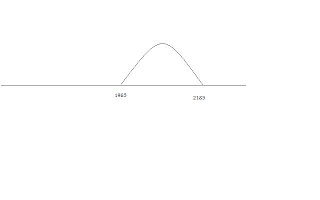
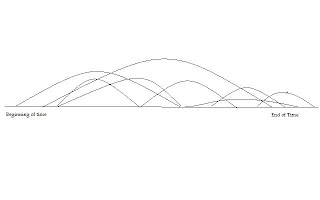 For as long as human beings exist in time, people will be going back, making anachronistic holes in the time line like so much swiss cheese. With an infinite number of travelers, eventually one will make time travel technology possible at an earlier time, which will then lead to infinitely more travelers between that earlier time and other times, until time travelers are EVERYWHERE. And as far as I can tell, they are not.


 and I don't think that it has any bearing on her position on gay marriage. I don't really think Miss Prejean is a bigot, I think she's a kid who was taught bigotry by her family and friends and just doesn't know any better. Perhaps this controversy will help her learn. Then maybe something useful will have come out of a beauty pageant for once.

