
Rupert Murdoch has managed to do what years of American foreign policy could not. THEY WIPED IRAQ OFF THE MAP!!!
Let's hope Israel stays on Bill O'Reilly's good side...


 In celebration of its 233rd birthday, here are a few fun facts about the United States:

 In the first blog in this series, I talked about the many reasons that I felt time travel stories don’t work. I specifically mentioned the main physical, metaphysical, logical and aesthetic objections. In the second blog, I bravely took up the other side, and discussed how the Many Worlds Theory effectively rebuts the metaphysical objections, and to some extent, the logical ones. However, the physical, aesthetic, and to some extent, the logical objections remain. What’s a time travel advocate to bring up in his defense now? Answer: Wormholes.
 A wormhole functions according the idea that spacetime is curved, and there can essentially be a situation where a bridge is created cutting right through that curve, a sort of tunnel between an earlier and later time. In other words, if time were a straight line ----, it would take you a certain amount of time to get from point A to point B. But if time were more of a “C” shape, you could get from one end of the C to the other much faster by cutting through it rather than going around the curve.
 This still does not address my aesthetic objection, which you’ll remember was that time travel stories are simply messy: Specifically, it 1. disrupts continuity and makes it difficult to invest in the characters, and 2. creates the slippery slope: You go back and change something, I go back and fix it, you go back and unfix it, ad infinitum. To close out this extended rant, I’d like to take a look at how some time travel stories handle all this and how effective I think it has been.
  I frankly think that time travel has made Star Trek a pretty big mess. You can argue with the last movie that the Romulan time trip created a new, alternate timeline, and that the initial timeline is moving forth as it always had (albeit without a Spock). That’s okay, I guess, but I suspect we will never see our “real” timeline again, and even that timeline has been removed by so many jumps it hardly matters (for example in Star Trek, First Contact, the Borg go back in time and take over Earth, radically changing its history. The Enterprise crew goes back and fixes it. However according to the Many Worlds theory, the initial timeline was unchanged by the Borg, and the Borg’s new timeline was unchanged by the Enterprise; we simply have three different universes in effect. Yes I have a headache now too).
 Back to the Future alludes to the Many Worlds theory, but not quite effectively. Dr. Brown does explain how moving through time creates an alternate timeline. However, he creates a sticky situation when he does a test run by sending his dog three minutes into the future. The dog has clearly reappeared in the same timeline, which forces us to confront the possibility that somehow moving ahead in time does not create new timelines while moving backwards does. Marty also finds that changing the past is affecting his original present (the picture with his siblings disappearing as they are “uncreated”), which gives rise to the “grandfather paradox” anew.
 Sliders handles the wormhole idea pretty well, but its protagonists are jumping through dimensions, not moving through time and space. There are no paradoxes because they never encounter the same timeline twice, although Quinn Mallory’s quest to return to his home dimension may prove impossible.
 Members of the Legion of Superheroes travel freely back and forth through time with little concern about the consequences. The mainstream DC universe has not created a very sophisticated look at time travel although they used to have an interesting conceit where if you went back to a time where you already existed, you would appear as a wraith, since the same person cannot “be in two places at once.”
  Terminator time travel isn’t too unwieldy for a number of reasons. The first is that only a handful of people go back before the time travel device is destroyed, and they can’t travel the other way. There are still some paradox issues, but since time travel is used so sparingly, it doesn’t interfere with the story too much.
  In my last post, I complained about time travel as it appears in television, movies and fiction in general. I felt that there were a number of inconsistencies about time travel as to make it so implausible as to render any story based on it completely unenjoyable.
 The Novikov Self-Consistency Principle simply states that anything that cannot happen, will not happen. In other words, if you go back in time and try to kill your grandfather, you will always fail. Your gun will misfire at the last minute, you will have shot the wrong person, or the right person but it will turn out that he wasn’t your grandfather after all, etc. The television show LOST makes use of the self-consistency principle. Daniel Faraday repeatedly explains that no matter what they try to do, the future will not change, because whatever happened is immutable and has already happened, even if the time-traveling protagonists are at an earlier place in the timeline. Ben cannot be killed as a child, the Dharma Initiative cannot be saved, simply because it didn’t happen.
 The many worlds theory, popularized in D.C. Comics with their “multiverse,” and based on the Heisenberg Uncertainty Principle which says that the states of certain particles at the quantum level are not fixed until observed, and that until they are observed they exist in multiple states at once, is much more compelling. It is referenced in Back to the Future and used in comic book literature and other works of fiction, including the television show Sliders and the Michael Crichton book “Timeline.”
 The summer blockbuster season has arrived and it seems that the words of the day are “time travel.” Time travel is all the rage, and appears prominently in the latest “Star Trek” installment, as well as being a key element of Terminator: Salvation. Time travel was also a frequent theme of the Terminator television series, and of course is crucial to ABC’s ever popular LOST.


 Again, the physical objection is no big deal. Superman shouldn’t be able to fly either and I’m fine with that. I’m also not too caught up in the metaphysical problems, but I should address them as well.
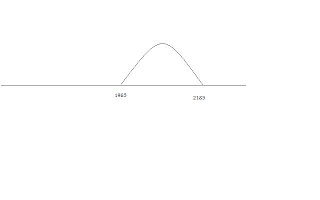
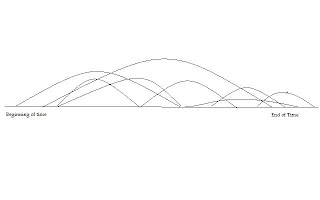 For as long as human beings exist in time, people will be going back, making anachronistic holes in the time line like so much swiss cheese. With an infinite number of travelers, eventually one will make time travel technology possible at an earlier time, which will then lead to infinitely more travelers between that earlier time and other times, until time travelers are EVERYWHERE. And as far as I can tell, they are not.


 and I don't think that it has any bearing on her position on gay marriage. I don't really think Miss Prejean is a bigot, I think she's a kid who was taught bigotry by her family and friends and just doesn't know any better. Perhaps this controversy will help her learn. Then maybe something useful will have come out of a beauty pageant for once.


 The second main event ever, what makes this one notable is how it ended. Back in 1972, poker was a game of smokey backrooms, and unlike today, no one was interested in becoming a celebrity, save one: Amarillo Slim Preston. When it reached the final three, Doyle Brunson simply took his money and withdrew, an option not available today, and Puggy Pearson dumped to Slim to avoid the spotlight. Slim made the most of the win though, and by appearing on programs like the Tonight Show, became the first poker celebrity and helped to improve the game's image, decades before the poker boom.
 What's memorable about 1998 is it was one of the most watched finals before the poker boom. Scotty's goading comment to runner up Kevin McBride, causing him to go all in when he could only play the board, is one of the enduring memories of older poker fans, and Scotty remains one of the most well-known and top pros in the game today.
 Two years before Chris Moneymaker and hole card cameras put the WSOP on the map was a final table that ESPN would drool at the prospect of televising today. In addition to eventual champion and future WPT main event champion Carlos Mortensen, the final six featured two time 2nd place finisher Dewey Tomko, former champion and all time bracelet holder Phil Hellmuth, two time final tablist and well-known poker celebrity Mike Matusow and popular player and commentator Phil Gordon. Even more amazingly, probably the most recognizable face in poker today, Daniel Negreanu, just missed the final table, finishing 11th.


 If eagerness to see it is any indication, Watchmen is going to be a monster success. I saw it an hour after its official release and felt like a latecomer, as several people had already reported to me having seen it. Anyway, here is my review, which will have spoilers at the end, so read carefully.
  Off the bat, Jackie Earle Haley, who plays Rorschach, was simply amazing, on the order of Heath Ledger's Joker, in my opinion. From his opening grunt to his final stand in the snow, I thought Haley captured Rorschach perfectly. Who knew Kelly Leak had it in him?
 The movie looked cool. There was no doubt about it. Modern technology enables the filmmaker the ability to bring this material to life in a way that no one could have ever dreamed possible in 1985, and its great to have the opportunity to see it.


