
This year marks the 30th anniversary of the Back to the Future franchise. It’s a very important anniversary. Why? Because, as
Doc Brown says “it seems like a nice, round number,” and it is the period of
time that the protagonists leap over from their base time of 1985, either into
the past, or the future (give or take 100 years for Back to the Future III).
Yes, fanboys and friends, we have arrived at the future,
2015, and have the benefit of being able to compare our current lives with what
was predicted by Robert Zemeckis. Zemeckis claims, by the way, that he had no intention of trying to accurately predict what life would be like 30 years in the future, he was just trying to be funny. But Zemeckis doesn’t need to
backpedal. Yes, we have no flying cars, hoverboards (well, just barely), mass
produced sneakers that tie themselves, double-knotted neckties, popular clothing in holographic colors,
or 18 Jaws sequels, but there is a good reason for this.
Marty McFly Changes the Future

As we see in Back to the Future II when Biff escapes into the past with the Sports Almanac, changing events in the past can massively affect the present (and the future). Biff goes from being a sap to kingpin and back again due to the characters’ various mucking about in past events. What we conveniently forget when Back to the Future II opens is that a massive change to the past has already happened.
George McFly: World Maker

If you’ll recall, in Back to the Future, Marty helps his dad learn to stand up to Biff, and as a result, George becomes a cool, successful guy rather than the milquetoast he was before. Given the McFly family’s psychotic reaction to being called “chicken,” one might have thought that Marty would have exploited this weakness to make a man out of George in 1955 and saved himself a lot of time and trouble, but perhaps this weakness skipped a generation, or Marty simply isn’t that bright and hadn’t thought of it.*
However, what we do not realize is that Marty’s changes
extended far beyond making his family a success. As a result of Marty’s
actions, George McFly becomes a (presumably successful) science fiction author.
Now we all know that science fiction authors often provide the ideas and
framework for what later becomes science fact. Star Trek gave us the model for
cell phones. Isaac Asimov conceived of the e-Reader and much of the way we
think about robots. I submit that the future technology that we see in Back to
the Future II’s 2015 that we do not have today come as a direct result of ideas from George McFly’s novels.
Why Fax machines instead of the internet?
Perhaps one of McFly’s adventures glorified this now-archaic device,
encouraging scientists to put their efforts into perfecting it rather than
other, less reliable-seeming types of wireless technology. Why were there 18
Jaws sequels? (A better question, why weren’t there 18 Jaws sequels?) Did you catch that latest George McFly best seller about the man-eating shark from space?
How did the Cubs win the World Series? Well, that one I can’t explain, but you
get the idea.
Back to the Present

The conclusion is inescapable. Before Marty McFly went back to 1955 to escape the Libyan terrorists, his 2015 looked exactly as ours does today, with the internet, cars and skateboards that stay rooted firmly to the ground, and a hapless Cubs franchise that will never get it quite right. By going back in time and affecting the timeline, he created the awesome 2015 that we in this world will never get to enjoy.
*And sorry, fans, but Marty McFly is not particularly intelligent. Observe how many times in the first Back to the Future he makes comments that suggest he does not realize that he is in the past although it should be abundantly clear at this point that this is what has happened. Also, Marty acts surprised when Doc Brown suggests his mother is romantically interested in him despite the fact that she has already overtly hit on him. In addition, he’s not creative enough to think of any fake names for himself that don’t already belong to existing famous people, and even at middle age he is able to be manipulated psychologically with tactics typically used on children.


 A wormhole functions according the idea that spacetime is curved, and there can essentially be a situation where a bridge is created cutting right through that curve, a sort of tunnel between an earlier and later time. In other words, if time were a straight line ----, it would take you a certain amount of time to get from point A to point B. But if time were more of a “C” shape, you could get from one end of the C to the other much faster by cutting through it rather than going around the curve.
 This still does not address my aesthetic objection, which you’ll remember was that time travel stories are simply messy: Specifically, it 1. disrupts continuity and makes it difficult to invest in the characters, and 2. creates the slippery slope: You go back and change something, I go back and fix it, you go back and unfix it, ad infinitum. To close out this extended rant, I’d like to take a look at how some time travel stories handle all this and how effective I think it has been.
  I frankly think that time travel has made Star Trek a pretty big mess. You can argue with the last movie that the Romulan time trip created a new, alternate timeline, and that the initial timeline is moving forth as it always had (albeit without a Spock). That’s okay, I guess, but I suspect we will never see our “real” timeline again, and even that timeline has been removed by so many jumps it hardly matters (for example in Star Trek, First Contact, the Borg go back in time and take over Earth, radically changing its history. The Enterprise crew goes back and fixes it. However according to the Many Worlds theory, the initial timeline was unchanged by the Borg, and the Borg’s new timeline was unchanged by the Enterprise; we simply have three different universes in effect. Yes I have a headache now too).
 Back to the Future alludes to the Many Worlds theory, but not quite effectively. Dr. Brown does explain how moving through time creates an alternate timeline. However, he creates a sticky situation when he does a test run by sending his dog three minutes into the future. The dog has clearly reappeared in the same timeline, which forces us to confront the possibility that somehow moving ahead in time does not create new timelines while moving backwards does. Marty also finds that changing the past is affecting his original present (the picture with his siblings disappearing as they are “uncreated”), which gives rise to the “grandfather paradox” anew.
 Sliders handles the wormhole idea pretty well, but its protagonists are jumping through dimensions, not moving through time and space. There are no paradoxes because they never encounter the same timeline twice, although Quinn Mallory’s quest to return to his home dimension may prove impossible.
 Members of the Legion of Superheroes travel freely back and forth through time with little concern about the consequences. The mainstream DC universe has not created a very sophisticated look at time travel although they used to have an interesting conceit where if you went back to a time where you already existed, you would appear as a wraith, since the same person cannot “be in two places at once.”
  Terminator time travel isn’t too unwieldy for a number of reasons. The first is that only a handful of people go back before the time travel device is destroyed, and they can’t travel the other way. There are still some paradox issues, but since time travel is used so sparingly, it doesn’t interfere with the story too much.

 The Novikov Self-Consistency Principle simply states that anything that cannot happen, will not happen. In other words, if you go back in time and try to kill your grandfather, you will always fail. Your gun will misfire at the last minute, you will have shot the wrong person, or the right person but it will turn out that he wasn’t your grandfather after all, etc. The television show
 The many worlds theory, popularized in D.C. Comics with their “multiverse,” and based on the


 Again, the physical objection is no big deal. Superman shouldn’t be able to fly either and I’m fine with that. I’m also not too caught up in the metaphysical problems, but I should address them as well.
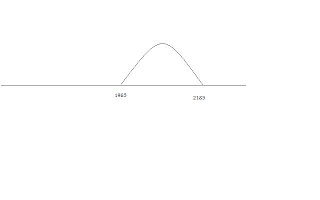
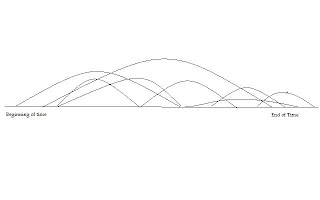 For as long as human beings exist in time, people will be going back, making anachronistic holes in the time line like so much swiss cheese. With an infinite number of travelers, eventually one will make time travel technology possible at an earlier time, which will then lead to infinitely more travelers between that earlier time and other times, until time travelers are EVERYWHERE. And as far as I can tell, they are not.