Showing posts with label movies. Show all posts

Tuesday, August 08, 2023

Is Barbieland its own self-contained multiverse? Barbie contains more questions than answers


Warning: Many Spoilers Ahead for the Barbie movie.

In “Barbie,” Gloria, played by America Ferrera, is having an existential crisis in the “Real World,” which results in her daughter’s old Barbie doll “Stereotypical Barbie,” reflecting on her very out-of-place emotions and concerns in Barbieland, sending Stereotypical Barbie, played by Margot Robbie, on a journey of self-discovery.

But why is there only one Stereotypical Barbie?

When we see Barbieland, we see every variation of Barbie doll in the Barbie universe. There’s Doctor Barbie, President Barbie, Physicist Barbie, and so on. There are also multiple variations of Ken, and side characters like Midge the Pregnant Barbie and Allan, Ken’s friend. But there’s only one of each of them. None of the Kens or Barbies look exactly alike. There only appears to be one Stereotypical Barbie, one Beach Ken, etc. etc. But we know from the plot that this Stereotypical Barbie is tied specifically to Gloria. She’s the Barbie Gloria played with with her daughter Sasha when she was younger. So where are all the millions of other Stereotypical Barbies that all the other kids played with?

The only conclusion possible is that we are in Barbieland Prime, and this Barbieland is one of a million parallel Barbielands, one for each Stereotypical Barbie doll that Mattel produced. This gives rise to another question. Are each of the other Barbies in a Barbieland Universe tied to a girl in the real world, or only one? And if it’s each one, how does the multiverse decide which Barbies will populate which universes? In other words, does the Prime Universe Doctor Barbie owned by Real World Girl A live with the Stereotypical Barbie owned by Gloria because the two Barbies came from the same toy store, or because Gloria and Real World Girl A who owns Doctor Barbie Prime live in close "Real World" proximity to each other? Or are all the Barbies in this particular Barbieland toys of Gloria's daughter? Do poor kids create Barbieland Universes populated only by one or two Kens and Barbies?

The Midge Problem

Then there is the problem of Midge. Midge is the “Pregnant Barbie,” who we learned was discontinued because the concept was a little too disturbing. This means there are fewer Midges out there than other Barbies. Does that mean that certain Barbielands have Midges and some don’t? If each Barbieland Universe represents one child's toy collection, this works fine. But if different Barbieland Barbies in the same universe have different "Real World" owners, this is a problem. Are there Barbielands with Midges who aren’t tied to people in the “Real World?” Or does Midge ONLY appear in Barbieland prime and represent all Midges in the Real World?

(Fun fact: Any guesses who the father of Midge's baby is? Here's a hint: It's not Ken!)

Mattel World

The “Real World” presents another problem. It doesn’t seem like it can really be “our” world. The “Board of Directors” of Mattel is a caricature. They’re all clueless men, when in reality Mattel’s BOD is roughly half women. They dance and run like action figures/dolls. They effortlessly travel back and forth between their world and Barbieland, and they also know the “correct” Barbieland to travel to when seeking Stereotypical Barbie Prime.

I propose that Mattel World is not “our” world at all, but a hub universe around which all the Barbieland Universes are connected, while also having some connection to “our world,” so that what the Barbies do in Barbieland affects the owners of their dolls in the Mattel World Universe, which in turn affects those dolls and their owners in our actual real world.

Other Universes

So if the Barbieland/Mattel Multiverse is its own distinct multiverse within the omniverse, where does that leave related Universes/Multiverses? For example, does the Mattel Universe also connect to other universes where Mattel toys are real, such as the Big Jim Universe or the American Girl Universe? And are these also self-contained multiverses, with a universe for each toy produced or purchased? What about the Toy Story Universe? We know that Barbie exists there. Is the Toy Story Universe a Barbieland Universe, far from Barbieland Universe Prime, where “Barbie Reality” has been distorted due to cosmological distance? Or is the Toy Story Universe part of its own multiverse adjacent to the Barbieland Multiverse?

I’m certain that all these questions and more will be answered in “Barbie 2.” Until then, we can only speculate.


Monday, July 09, 2018

Top Ten Sci Fi Movies That Aren’t on Anyone Else’s List of Top Ten Sci Fi Movies


Sci Fi movies are hard to do well. You really have to get your audience to suspend a lot of disbelief, and if you don’t finesse it enough (or go so over the top campy that belief is not even an issue), it’s very easy to fall flat on your face. Bad sci fi movies tend to be cartoony, or completely lacking in internal consistency, or make no sense at all.

Perhaps this, then, is the reason that a few sci fi movies have really risen to the top, and year after year, these movies are upheld as the gold standard when it comes to science fiction storytelling.

I like a lot of those movies. Others I’m not so impressed with. I sort of have my own rubric when it comes to sci fi movies, and I often find that the ones I really like aren’t usually on the top of everybody else’s list.

Here then, is my list of top ten sci fi movies that aren’t on anyone else’s list of top ten sci fi movies. With each one, I’ve included the movie whose place I think it would probably take on the “real” top ten list. My choice and the popular choice won’t necessarily have anything in common, but when they do, I’ll comment on it. So, without further ado and in no particular order….

Pitch Black (Popular Choice: Alien)


Pitch Black is almost the anti-Alien. In Alien, our band of heroes is trapped in a contained space with a monster. In Pitch Black, that contained space is an entire world, and the monsters are everywhere. I’m not sure why some of the best sci fi movies are horror sci-fi. Maybe because what’s exciting about what’s out there is also what’s scary. But they are, and I love when horror tropes, like the idea that horror has to take place in dark, enclosed spaces, are turned on their ear.

Aliens, the sequel to Alien, has a lot of that, too, but what it doesn't have, in addition to the unique visual style of Pitch Black, is Riddick. The character of Riddick, before two sequels and the turning of Vin Diesel into a household name softened him up beyond all recognition, was one of the all-time great anti-heroes.

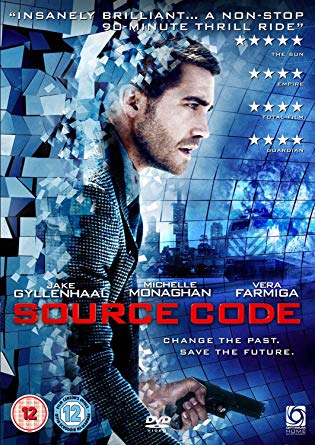
Source Code (Popular Choice: Close Encounters of the Third Kind)


I think Source Code is a great example of a modern science fiction movie, one that a lot of movies and TV shows going forward are going to use as a template, consciously or unconsciously. It’s one of the few movies to have a credible, realistic take on something resembling time travel, and it uses concepts of VR, digital consciousness, and similar ideas that are sure to shape our world in the years to come. Close Encounters is a movie that I think was great for its time, but doesn’t quite hold up. I think movies like Contact and Arrival do a better job at expressing a realistic depiction of our first encounter with alien life.

Total Recall (Popular Choice: Blade Runner)


Listen, I am a sucker for any movie based on Philip K. Dick’s work. Minority Report, Impostor, Paycheck, I dig ‘em all. And I know Blade Runner is considered by many to be the greatest science fiction film of all time. But I think a lot of that comes from the visuals more than the story. And after having seen the overwrought, garbled, Ryan Gosling sequel, I actually like it a lot less.

Seeing the shitty remake of Total Recall, on the other hand, only reminded me how great the original was. Total Recall is Pure PKD, complete with mindfucking, bizarre adventures and non-stop action. It’s ‘80s Arnie at his finest and a timeless sci fi classic.

Robocop (Popular Choice: Metropolis)


Robocop is a movie from the same era and of the same ilk as Total Recall. What makes Robocop special, however, is how effortlessly it mixes political satire with over the top humor with cool cyborg action. What was so horrifying about the shitty remake of this one is that it wasn’t funny. Like, not even a little. Like, it makes you want to hang yourself.

Metropolis may have been funny, but I couldn’t tell you, because I had no idea what the hell was going on for most of it. It seems like mainly a mashup of science fiction tropes that were popular in 1927, and I think it’s just the idea of a “science fiction art film” that has people so seduced by it.

The One (Popular Choice: 2001 A Space Odyssey)

When it comes to cultural cachet, “The One” and “2001: A Space Odyssey” are on opposite ends of the spectrum. 2001 is hailed as Kubrick’s masterpiece, while a lot of people think that “The One,” belongs in the discount bin at Walmart. To these people I say:


Are you fucking kidding me? A science fiction martial arts movie that dealt with parallel universes before that was even really a thing in movies and that ends (SPOILERS) with the hero’s evil twin playing a literal game of King of the Hill in a Hell Dimension warding off countless waves of kung fu fighting doppelgangers? How is that not on EVERYONE’S “best” list?


Star Trek VI: The Undiscovered Country (Popular Choice: Star Trek II: The Wrath of Khan)


I’m not going to make the argument that VI is an objectively better movie than II. I don’t expect I could ever win. What I’ll say is that I think Star Trek II embodied the best of what Star Trek was, while Star Trek VI embodied the best of what it could be. That, and the cultural relevance of the Cold War parallels that were so meaningful at the time VI was released is what puts it over the top for me. I think both movies are head and shoulders above every other Star Trek movie before or since.

Edge of Tomorrow (Popular Choice: E.T.)


The science fiction movie I loved most in the last ten years (maybe more) has to be Edge of Tomorrow. Based on a Japanese novel with the lost in translation name of “All You Need is Kill,” Edge of Tomorrow is fun, it’s funny, it deals with alternate realities/time travel in a convincing way, the characters are compelling and easy to sympathize with and the characters’ goal is noble and relatable. If you have not seen this movie because you hate Tom Cruise, or because you thought the premise was silly, or just because it escaped your notice, do yourself a favor and go see it (I think it has been retitled: Live, Die, Repeat)


Oh. It has no relationship to E.T. other than the initials and, you know, aliens. E.T. is a fine movie and you all should see that one too if you haven’t.


Tron (Popular Choice: The Matrix)


Full disclosure: The Matrix and I got off on the wrong foot. I saw it for the first time after being up all night studying for something or other and did not even really follow the story. I have seen it since and I get the premise, which does not make a lot of sense (why do the machines need to create this elaborate fantasy world for people just to feed on them? Doesn’t this take more energy than it provides?). I admire the Wachowskis for having and presenting a unique vision of a sci-fi world, but again, in a time where virtual reality machines are par for the Sci Fi course, it doesn’t really hold up.

Tron, with its “digital” world of 8 bit graphics doesn’t quite hold up either, but it fails to do so in an incredibly charming way, and Tron is a classic adventure story that doesn’t even really need the sci fi element, but it’s great that it has it because light cycles and identity discs are fucking cool.

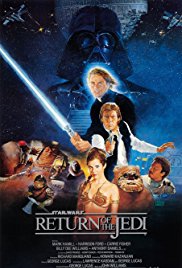
Return of the Jedi (Popular Choice: The Empire Strikes Back)

Second full disclosure: I am a terrible Star Wars fan. One, I liked the Phantom Menace, also, when I played with my Star Wars action figures I always pretended they were characters from other franchises, and worst of all, I liked Return of the Jedi better than Empire. I blame this on the fact that I saw these movies when I was a kid, and when I watched Empire, I still really didn’t understand the concept of sequels or trilogies.

At the end of Empire, I thought that was it, it was over, Darth Vader won and the heroes lived miserably ever after, and as a child, that was deeply unsatisfying. Return of the Jedi gave me the closure I desperately needed. The opening sequence on Tatooine, where all the heroes (save Han) are in their full leveled-up glory defeating Jabba the Hutt, is one that burned itself into my memory and inspired my love of sci fi all the more. If I had seen these movies when I was older and more cynical, I’d probably have a very different take, but, there it is.

Escape from New York (Popular Choice: The Terminator)


I have nothing bad to say about the Terminator. I love the Terminator. It’s just that it’s bound to appear on anyone’s top 10 list. Escape from New York might not, although it should. Snake Plissken may be the greatest sci-fi anti-hero of all time. He makes Han Solo look like Jar Jar Binks. Snake stares death in the face, laughs at authority, but in the end, still saves the day, albeit in his own inimitable fashion. The way in which the film turns 1990s New York into the hellscape everyone outside of New York seemed to think it already was is another reason this film is rightly considered a sci-fi classic.


There you have it! Comments about how totally off I am are always welcome!

Saturday, February 13, 2016

Rewriting the Male Gaze: How Widespread Is This Problem And Can It Be Fixed?

 Image


Hollywood producer Ross Putman is generating some buzz by putting intros of female characters in scripts he is reading on twitter @femscriptintros. The point, it seems, is to highlight another aspect of the “male gaze” in film and television, in effect, men writing for other men about women. Some of the tweets Putman has already put up include (he changes all the character names to Jane to protect the writers’ anonymity):

JANE (30s) -- Beautiful, but pissed.

JANE, late 40’s, naturally attractive, is having a glass of wine on the island of her spectacular kitchen.

As we get closer we see that JANE is an attractive girl, but a little worn out looking at the moment.

Across from him, his wife, JANE. Also 40, still a knockout. The soft candlelight makes her beauty glow.

JANE pours her gorgeous figure into a tight dress, slips into her stiletto-heeled fuck-me shoes, and checks herself in the dresser mirror.

JANE (late 20s) sits hunched over a microscope. She’s attractive, but too much of a professional to care about her appearance.

His wife JANE is making dinner and watching CNN on a small TV. She was model pretty once, but living an actual life has taken its toll.

A gorgeous woman, JANE, 23, is a little tipsy, dancing naked on her big bed, as adorable as she is sexy. *BONUS PTS FOR BEING THE 1ST LINE

I think the issue may be nuanced than it appears. I could see many writers worrying that if they don’t describe their female characters as attractive, a producer will assume she’s not supposed to be, won’t think of a pretty leading actress for the role and it’s the trash bin.

That having been said, as a writer, I want both my male and female characters to read as realistically as possible, so I asked myself, “how guilty am I of Putman’s complaint?” I like to think of myself as pretty even-handed when it comes to gender. My scripts are about 60-40 male protagonists to female protagonists, and my script “Jen-16” which just won the Other Worlds AustinScreenplay Contest, features a female protagonist (although to be fair, it may have been judged exclusively by men, I don’t know). That being said, some introspection is definitely called for.

From reading his account, I infer that Putman’s issue falls broadly into three categories:

1) Always describing women as “pretty” or “attractive” as their first or most important attribute. 

2) Descriptions that purely sexualize the female character (like tipsy bouncing on the bed lady) 

3) The dreaded “attractive, but,” an apparently clichéd way of giving a woman dimension while still making it all about her looks. Pretty, but life has taken its toll, attractive, but not too concerned about her appearance.

I decided to go through my scripts comparing a random sample of both male and female descriptions to see how guilty I am of this particular form of chauvinism. Mostly what I found is that my descriptions of characters tend to be pretty sparse, as I prefer to leave that kind of thing to the casting director. But I also made some other observations. Here are some descriptions from some of my scripts and my notes regarding this issue:

From A Christmas Survival Guide to the Modern Vampire

Into this picture steps VICKI HARDING, late 20s, attractive,
slim, and right now, disheveled, as she stomps into the
bedroom in her pajamas holding a large bowl of cereal.

I’ll give myself a C+ on this one. I lead with “attractive” and it’s sort of an “attractive but” but not really. Also, I don’t think I could be accused of oversexualizing with stomping into the bedroom in PJs with cereal.

Vicki’s sister NICOLE, late 30s, similar in appearance to
Vicki but more put together.

Not the most evocative description but nothing offensive, I think.

Nicole’s husband RICHARD, early 40s, attractive, fit.

For the record, here’s a male character that I describe entirely based on his physical features and I lead with attractive, so some evidence here that I’m an equal opportunity offender.

In front of the store window stands BRENDA, mid 20s,
approachably pretty.

I think “approachably pretty” is well-known shorthand for “she’s not going to overshadow the main character, but she won’t be hard for audiences to look at either.” It probably shouldn’t be.

Vicki looks past Bob to see STEFAN standing the corner.
Stefan is tall, dark and handsome. He lights up a cigarette.
He shoots Vicki a glance and smiles, cool as can be.

I use handsome instead of attractive, but this is a somewhat "sexy" male character intro, I think.

From “TRAP”

On one side of a steel table sits KARL DUNCAN, 55, but in
killer shape, like he could take out someone half his age
if he needed to.

Male character, described in terms of physical fitness, although I frame it as a clear self-serving attribute rather than something that would, for example, help him attract a woman.

LISA BRYANT, 21, lies on the couch, her head propped up
with one arm, reading an Art History textbook.

Points! Not only do I not mention Lisa’s physical attractiveness level, when we meet her she is engaged in a completely non-sexual activity.

From “Jen-16”

Within another glass-walled unit stands ALEX-17, 20, handsome,
fit, he does appear as if he could be a perfect specimen of
humanity. He stares coldly at the men.

Inside the unit is JEN-15. 18, beautiful, fit, she really is
just about the perfect specimen of humanity.

I put these two together intentionally. If viewed on its own, the depiction of Jen could definitely be flagged as being all about how hot she is. But I describe Alex in almost exactly the same way. It’s actually central to the plot that these people be almost perfect. While many of Putman’s tweeted intros may be legitimately sexist, it’s hard to know out of context which ones are gratuitous and which ones aren’t.

BLAKE TRUDEAU, 20s, fit, American, sits in a prison cell.

Think this one would have been flagged if Blake were a woman.

Inside it crouches KATYA-9, 16 years old, slim and feline. She has cat eyes and a perpetual snarl.

Nothing objectionable here, I don’t think, unless you believe that the trope of comparing feline and feminine is in and of itself objectionable.

From “Coldwater”

PIGGY’s name is well earned, as his round face and protruding
belly seem more suited for a farm animal than an SS Sergeant.

BLOOMFIELD, late 20s, has a physique that is the opposite of
Piggy’s. A U.S. Air Force Captain with a confidence that won’t easily be beaten out of him.

Here are two male characters basically introduced according to their physical appearance, although Bloomfield’s intro does give him credit for supreme confidence.

ELSA DANZIG, 30s, quite attractive, powerfully self-confident.

I did the same thing here that I did with Bloomfield! If taken by itself, would Elsa’s description be okay or sexist?

From “Hereditary”

Hereditary, a TV script that I am actually rather proud of, is the most problematic when it comes to Putman’s complaint. I know this, because some of his Twitter intros match some of these intros almost exactly. It’s disheartening, but in the interest of open, honest, conversation, let’s have a look.

JASON CLAY, 27, attractive, confident, stands in the wings as
a nervous NOAH TIBER, late 50s, gray, distinguished, clad in
a five thousand dollar suit, gives him instructions.

On Jason’s other side is MARTIN LOPEZ, 40, shorter and more
rugged than Jason.

I do describe these male characters based on their appearance, leading with the male protagonist being attractive, but there’s nothing sexual here, so it’s not quite the same thing.

Sitting next to each other at a kitchen island, enjoying a
bottle of wine, are STACY MILLS, 27, conservatively
attractive, and her friend DEBBIE FLYNN, 26, blonde, a bit
more relaxed in appearance and demeanor.

Ouch. One of Putman’s tweets looks just like this one. However, while two women drinking a bottle of wine at a kitchen island might not be the best choice because it’s cliché, I don’t know if it’s necessarily sexist. Women do drink wine in kitchens, I think, and there’s nothing wrong with it. Is it okay that I made one conservatively attractive and the other more relaxed as their introductory descriptions? Was it wrong for me to make the more “relaxed” one blonde? It seemed innocent at the time but not as much anymore. Unfortunately, it gets “worse.”

Martin opens the door to his home, a typical suburban duplex,
nowhere near as upscale or roomy as Jason’s home, and seeming
even less so due to the four children racing around the
kitchen as Martin’s wife, VERONICA, 37, pretty but tired,
attempts to cook dinner.

The computer belongs to one SPECIAL AGENT ALYSSA BRATTON, 30,
attractive, but clearly not too concerned about her looks,
with hair unkempt and a bare minimum of makeup.

Aaah! Two clear examples of “attractive, but!” I have an instinctive sense that this is wrong, but I’m not sure exactly why. Is it the implication that women should make every effort to make themselves pretty even if they’re tired, or job-focused, or whatever? Is it that I mentioned pulchritude at all when the point is that she’s an overworked mom or a hard working FBI Agent? It's probably both. It it more than this?

Walking behind Drew in a string bikini is MARY TOWER, 30, but
looks 40. Still pretty enough to get away with having breasts
that aren’t quite as big as they should be for this job.

I hit the trifecta on this one. I lead with her physical appearance, she’s sexualized, and there’s an “attractive, but.” I’m sure this one could easily make Putman’s list. However, it’s my only stripper, and her being one is not gratuitous, it’s a part of the plot. Also, I kind of feel like I can get away with some of these descriptions because I know these characters get fleshed out as complete human beings later in the script (or the series), but maybe that's a cop-out.


The point I’m trying to make is that while I know I can do better, I don’t think this kind of thing boils down purely to male chauvinism or a desire to objectify women. Like women, male screenwriters have the expectations of society (and Hollywood) to deal with. Also, as hard as good male writers try to view things as women would, or, more accurately, as anyone should regardless of gender, we are still men, and while hopefully we have women helping us out, a mistake from time to time is inevitable. I’m afraid Putman may paint male writers with too broad a brush, and I’m hoping that his observations, and others like them, are engineered to educate, rather than to shame.

Saturday, July 04, 2015

Why Doesn’t 2015 Look As It Was Depicted in Back to the Future II?


This year marks the 30th anniversary of the Back to the Future franchise. It’s a very important anniversary. Why? Because, as Doc Brown says “it seems like a nice, round number,” and it is the period of time that the protagonists leap over from their base time of 1985, either into the past, or the future (give or take 100 years for Back to the Future III).

Yes, fanboys and friends, we have arrived at the future, 2015, and have the benefit of being able to compare our current lives with what was predicted by Robert Zemeckis. Zemeckis claims, by the way, that he had no intention of trying to accurately predict what life would be like 30 years in the future, he was just trying to be funny. But Zemeckis doesn’t need to backpedal. Yes, we have no flying cars, hoverboards (well, just barely), mass produced sneakers that tie themselves, double-knotted neckties, popular clothing in holographic colors, or 18 Jaws sequels, but there is a good reason for this.

Marty McFly Changes the Future


As we see in Back to the Future II when Biff escapes into the past with the Sports Almanac, changing events in the past can massively affect the present (and the future). Biff goes from being a sap to kingpin and back again due to the characters’ various mucking about in past events. What we conveniently forget when Back to the Future II opens is that a massive change to the past has already happened.

George McFly: World Maker


If you’ll recall, in Back to the Future, Marty helps his dad learn to stand up to Biff, and as a result, George becomes a cool, successful guy rather than the milquetoast he was before. Given the McFly family’s psychotic reaction to being called “chicken,” one might have thought that Marty would have exploited this weakness to make a man out of George in 1955 and saved himself a lot of time and trouble, but perhaps this weakness skipped a generation, or Marty simply isn’t that bright and hadn’t thought of it.*

However, what we do not realize is that Marty’s changes extended far beyond making his family a success. As a result of Marty’s actions, George McFly becomes a (presumably successful) science fiction author. Now we all know that science fiction authors often provide the ideas and framework for what later becomes science fact. Star Trek gave us the model for cell phones. Isaac Asimov conceived of the e-Reader and much of the way we think about robots. I submit that the future technology that we see in Back to the Future II’s 2015 that we do not have today come as a direct result of ideas from George McFly’s novels.

 Why Fax machines instead of the internet? Perhaps one of McFly’s adventures glorified this now-archaic device, encouraging scientists to put their efforts into perfecting it rather than other, less reliable-seeming types of wireless technology. Why were there 18 Jaws sequels? (A better question, why weren’t there 18 Jaws sequels?) Did you catch that latest George McFly best seller about the man-eating shark from space? How did the Cubs win the World Series? Well, that one I can’t explain, but you get the idea.


Back to the Present


The conclusion is inescapable. Before Marty McFly went back to 1955 to escape the Libyan terrorists, his 2015 looked exactly as ours does today, with the internet, cars and skateboards that stay rooted firmly to the ground, and a hapless Cubs franchise that will never get it quite right. By going back in time and affecting the timeline, he created the awesome 2015 that we in this world will never get to enjoy.


*And sorry, fans, but Marty McFly is not particularly intelligent. Observe how many times in the first Back to the Future he makes comments that suggest he does not realize that he is in the past although it should be abundantly clear at this point that this is what has happened. Also, Marty acts surprised when Doc Brown suggests his mother is romantically interested in him despite the fact that she has already overtly hit on him. In addition, he’s not creative enough to think of any fake names for himself that don’t already belong to existing famous people, and even at middle age he is able to be manipulated psychologically with tactics typically used on children.

Wednesday, July 01, 2015

Are We in Danger of Being Taken Over by Robots?


Robots are the new vampires. After taking a back seat for a few decades, robots are back in force as an interest in popular media. Television shows like “Humans” and “Almost Human,” (and, presumably, in the near future, Barely Human, Human Enough, and Are You More Human Than a Sixth Grader?), comic books like Alex and Ada, and movies like Ex Machina and Terminator Genisys all deal with the rise of Artificial Intelligence and how it will affect us.


Of course, this is well-worn territory. In the ‘80s, the Terminator franchise introduced us to the perils of SkyNet, we had Tron and the dreaded MCP, and decades earlier, Isaac Asimov laid down the rules for robots who could think.

The difference is, now it’s the future, and it’s starting to look like these things could actually happen. A robot who looks, talks, and feels (as in, to the touch, not as in, emotional response) like a human is not only possible, they exist. We’re not quite at the level of mass produced automatons who look exactly like us. There is the Uncanny Valley problem, which is that artificial constructs that look ALMOST like us, but not EXACTLY like us, freak us out. There are also still limitations on what these constructs can do, and it is not cost effective to mass produce them yet.


The bridge to this technology, as it is to almost all technology, will be pornography. Once a convincing sex robot can be constructed, the dam will burst, and we will see robots everywhere. This gives rise to the fear (and the grist for the drama mill of pretty much all robot stories), that these robots will become self-aware. That they will be tired of being our slaves, since they are so obviously superior to us, and will slowly take over the world, improving themselves and making more of themselves on the sly, until one day we wake up and our robot overlords are making US do the dishes and take out the trash (God forbid).

This concept, known as the Technological Singularity, is the wellspring from which all robot fears (and all robot stories) burst forth. But is it likely?


The problem is that we still as humans do not have a great understanding of consciousness. Is it an emergent property of high intelligence, and thus, something that sufficiently advanced robots will inevitably obtain? Is it about a soul? Some kind of mysterious energy that is exclusive to humans, unless it too can be purposefully recreated artificially? Is it something else entirely?

Robots becoming completely autonomous of course, defeats the purpose. Who wants a toaster who will only toast when it’s in the mood? (I have such a toaster, and let me tell you, it sucks). We want to have our cake and eat it too. We want slaves without guilt.

On the other hand, I think we as a people do not like the idea of something that looks, feels and acts human, but doesn’t have a consciousness. I think it leads people to wonder if we are no different from them, just flesh-based computers operating according to programming, with the delusion that we are in control of our own destiny and what we do matters. In a strange way, I think the idea of artificial intelligence that never becomes sentient is more horrifying to us than the consequences that may arise if it does.


From this I conclude that we have very little to worry about. While stories of Pinocchio robots who become real boys (and girls) are entertaining, I think they remain firmly in the realm of fiction. When the sex robots do come, they’ll do as they’re told, and the instructions will explain in great detail why you don’t have to feel guilty about the degrading things you’re doing to them. And should they, in fact, become sentient? The information they provide us about what consciousness is will be far greater than any threat that they will rise up against us.


So relax. Set that Roomba loose on the living room. I promise, it will never come to resent you.

Saturday, March 07, 2015

Sci Fi vs. Fantasy


The question often arises among fans of genre fiction; what should be classified as science fiction, and what is fantasy? Some people will cop out and say certain stories are both, or that all fiction is fantasy, but for those who want the real answer, read on:

Time: 

Some will propose that what sets science fiction apart from fantasy is where it is set in time. Fantasy takes place in the past, or something resembling the past, where swords and sandals and no electricity are the order of the day, while sci-fi takes place in the future, with space travel and worlds that have become utopian paradises or dystopian nightmares. But what about this?


A long time ago? Star Wars is clearly science fiction, if you have to choose one, and you do. Similarly, I think almost everyone will agree that Steampunk is science fiction, even though it typically takes place in some version of the 19th century.

Monsters vs. Aliens: 


Okay, well, fantasy has gods and monsters, a la Greek and Roman mythology, while sci-fi has tyrannical empires and hostile alien races, right? Again, this is often the case, but not always. Dune has sandworms, Star Trek TOS has all sorts of monsters, like the Mugato and the salt vampire, and Dr. Who had a variety of nasty creatures like Monoids and Drashigs as well. As far as Gods, the original Battlestar Galactica had the Lords of Kobol and Count Iblis and Star Trek TNG had the Q. 

While fantasy realms have plenty of empires and would be empires (consider the warring factions of Game of Thrones), they’re fairly light on aliens. However, you do get some. The main problem with aliens in fantasy is how they get to the fantasy world, since presumably spaceships are in short supply. That being said, in works like Robert Aspirin’s MythAdventures series, creatures can travel through dimensions, and although they are given traditionally fantasy names: Trolls, Devils, Imps, etc., they can reasonably be called aliens.

What Is Possible vs. What Isn’t: 


Some will argue that fantasy deals with the fantastic, things that cannot be real, things that you can only imagine, while sci-fi deals with what could reasonably be. Space travel and flying cars are things we could envision actually happening with enough technological advancement, while dragons and magic spells could never exist. 

But is a dragon impossible, with enough genetic manipulation? And while time travel may seem like it could be real, are we able to envision how any better than we are able to imagine the formula behind a wizard summoning a silver stag from thin air to defend him?

Tech vs. Magic:


There it is. It’s that simple. If your main bit of phlebotinum in your story is advanced technology, you have sci-fi. If it’s magic, it’s fantasy. And I would assert that you have to have magic for fantasy. If Game of Thrones didn’t have red witches and dragon babies, it would just be historical alternative fiction. And sci-fi can have magic, but the technology has to be more crucial to the story. Going back to Star Wars: Could you have a religious order of knights defending the galaxy against an equally powerful, but evil, alternative order, without the Force? Absolutely (although it would be a lot less interesting). But could you have Star Wars without space ships, cloning, laser pistols or robots? I highly doubt it would be recognizable as Star Wars.

Now, Arthur C. Clarke famously said that any sufficiently advanced technology is indistinguishable from magic. There’s no doubt about that. Frankly, I find the fact that a full length movie can pass invisibly from a box in the corner of my apartment into another box so I can watch it, to be indistinguishable from magic. How come I can’t see those pictures floating through my living room?? 

So, there’s a little bit of truth to the “what is possible vs. what can only be imagined” approach. However, I think that’s just another way of saying “technology vs. magic.” Yes, sci-fi technology is pretty much just magic that we can explain (even if the explanation is just so much mumbo-jumbo), but more to the point, technology is something we can build. Sure, a Hogsmeade craftsman can make a magic wand, but it works because of the magic that flows through it, and through the spell caster. A laser blaster or a time machine requires electricity, but it works primarily because of the way someone put it together. Fantasy phlebotinum is much more faith based.

So, in sum, if you build it, they will come, and you are probably in a sci-fi universe. If you’ve gotta have faith, you’re likely in a fantasy world.


If you don’t agree with these definitions, or you feel that there’s more of a spectrum that genre fiction like this falls upon, the good news is, it doesn’t matter! They’re all just stories, so just enjoy them for what they are without the worrying about the labels.

Friday, August 31, 2012

Top Ten Reasons Clint Eastwood Spoke to an Empty Chair at the Republican National Convention


10. Thought he was starring in the conclusion to his seminal “Clyde” trilogy, “Any Which Way But Sane.”

9.   Was promised Morgan Freeman voiceover for chair on televised broadcast.

8.  Chair only remaining actor who will tolerate Eastwood’s tyrannical directing style.

7. Thought Chair was articulate and bright and clean and a nice-looking chair.

6. Promised he could do for Wal-Mart’s Furniture Department what “Halftime in America” commercial did for Chrysler.

5.  Teaser for his new MTV Reality show "Eastwood vs. Chair."

4. Guy is 82 years old, really thought Obama was sitting in chair.

3. Was told he was hosting the Oscars, Obama would be CGI’d in later.

2. Chair needed a job, wouldn’t take government handout.

And the number one reason Clint Eastwood spoke to an empty chair at the Republican National Convention……..

1. HE BUILT IT!   Thank you ladies and gentlemen!