Showing posts with label science fiction. Show all posts

Monday, July 09, 2018

Top Ten Sci Fi Movies That Aren’t on Anyone Else’s List of Top Ten Sci Fi Movies


Sci Fi movies are hard to do well. You really have to get your audience to suspend a lot of disbelief, and if you don’t finesse it enough (or go so over the top campy that belief is not even an issue), it’s very easy to fall flat on your face. Bad sci fi movies tend to be cartoony, or completely lacking in internal consistency, or make no sense at all.

Perhaps this, then, is the reason that a few sci fi movies have really risen to the top, and year after year, these movies are upheld as the gold standard when it comes to science fiction storytelling.

I like a lot of those movies. Others I’m not so impressed with. I sort of have my own rubric when it comes to sci fi movies, and I often find that the ones I really like aren’t usually on the top of everybody else’s list.

Here then, is my list of top ten sci fi movies that aren’t on anyone else’s list of top ten sci fi movies. With each one, I’ve included the movie whose place I think it would probably take on the “real” top ten list. My choice and the popular choice won’t necessarily have anything in common, but when they do, I’ll comment on it. So, without further ado and in no particular order….

Pitch Black (Popular Choice: Alien)


Pitch Black is almost the anti-Alien. In Alien, our band of heroes is trapped in a contained space with a monster. In Pitch Black, that contained space is an entire world, and the monsters are everywhere. I’m not sure why some of the best sci fi movies are horror sci-fi. Maybe because what’s exciting about what’s out there is also what’s scary. But they are, and I love when horror tropes, like the idea that horror has to take place in dark, enclosed spaces, are turned on their ear.

Aliens, the sequel to Alien, has a lot of that, too, but what it doesn't have, in addition to the unique visual style of Pitch Black, is Riddick. The character of Riddick, before two sequels and the turning of Vin Diesel into a household name softened him up beyond all recognition, was one of the all-time great anti-heroes.

Source Code (Popular Choice: Close Encounters of the Third Kind)
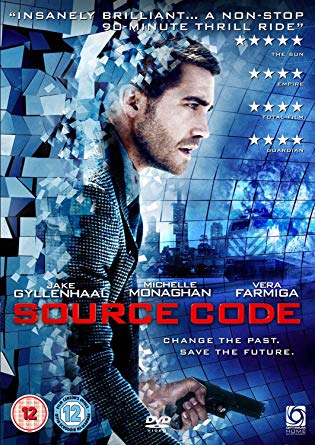

I think Source Code is a great example of a modern science fiction movie, one that a lot of movies and TV shows going forward are going to use as a template, consciously or unconsciously. It’s one of the few movies to have a credible, realistic take on something resembling time travel, and it uses concepts of VR, digital consciousness, and similar ideas that are sure to shape our world in the years to come. Close Encounters is a movie that I think was great for its time, but doesn’t quite hold up. I think movies like Contact and Arrival do a better job at expressing a realistic depiction of our first encounter with alien life.

Total Recall (Popular Choice: Blade Runner)


Listen, I am a sucker for any movie based on Philip K. Dick’s work. Minority Report, Impostor, Paycheck, I dig ‘em all. And I know Blade Runner is considered by many to be the greatest science fiction film of all time. But I think a lot of that comes from the visuals more than the story. And after having seen the overwrought, garbled, Ryan Gosling sequel, I actually like it a lot less.

Seeing the shitty remake of Total Recall, on the other hand, only reminded me how great the original was. Total Recall is Pure PKD, complete with mindfucking, bizarre adventures and non-stop action. It’s ‘80s Arnie at his finest and a timeless sci fi classic.

Robocop (Popular Choice: Metropolis)


Robocop is a movie from the same era and of the same ilk as Total Recall. What makes Robocop special, however, is how effortlessly it mixes political satire with over the top humor with cool cyborg action. What was so horrifying about the shitty remake of this one is that it wasn’t funny. Like, not even a little. Like, it makes you want to hang yourself.

Metropolis may have been funny, but I couldn’t tell you, because I had no idea what the hell was going on for most of it. It seems like mainly a mashup of science fiction tropes that were popular in 1927, and I think it’s just the idea of a “science fiction art film” that has people so seduced by it.

The One (Popular Choice: 2001 A Space Odyssey)

When it comes to cultural cachet, “The One” and “2001: A Space Odyssey” are on opposite ends of the spectrum. 2001 is hailed as Kubrick’s masterpiece, while a lot of people think that “The One,” belongs in the discount bin at Walmart. To these people I say:


Are you fucking kidding me? A science fiction martial arts movie that dealt with parallel universes before that was even really a thing in movies and that ends (SPOILERS) with the hero’s evil twin playing a literal game of King of the Hill in a Hell Dimension warding off countless waves of kung fu fighting doppelgangers? How is that not on EVERYONE’S “best” list?


Star Trek VI: The Undiscovered Country (Popular Choice: Star Trek II: The Wrath of Khan)


I’m not going to make the argument that VI is an objectively better movie than II. I don’t expect I could ever win. What I’ll say is that I think Star Trek II embodied the best of what Star Trek was, while Star Trek VI embodied the best of what it could be. That, and the cultural relevance of the Cold War parallels that were so meaningful at the time VI was released is what puts it over the top for me. I think both movies are head and shoulders above every other Star Trek movie before or since.

Edge of Tomorrow (Popular Choice: E.T.)


The science fiction movie I loved most in the last ten years (maybe more) has to be Edge of Tomorrow. Based on a Japanese novel with the lost in translation name of “All You Need is Kill,” Edge of Tomorrow is fun, it’s funny, it deals with alternate realities/time travel in a convincing way, the characters are compelling and easy to sympathize with and the characters’ goal is noble and relatable. If you have not seen this movie because you hate Tom Cruise, or because you thought the premise was silly, or just because it escaped your notice, do yourself a favor and go see it (I think it has been retitled: Live, Die, Repeat)


Oh. It has no relationship to E.T. other than the initials and, you know, aliens. E.T. is a fine movie and you all should see that one too if you haven’t.


Tron (Popular Choice: The Matrix)


Full disclosure: The Matrix and I got off on the wrong foot. I saw it for the first time after being up all night studying for something or other and did not even really follow the story. I have seen it since and I get the premise, which does not make a lot of sense (why do the machines need to create this elaborate fantasy world for people just to feed on them? Doesn’t this take more energy than it provides?). I admire the Wachowskis for having and presenting a unique vision of a sci-fi world, but again, in a time where virtual reality machines are par for the Sci Fi course, it doesn’t really hold up.

Tron, with its “digital” world of 8 bit graphics doesn’t quite hold up either, but it fails to do so in an incredibly charming way, and Tron is a classic adventure story that doesn’t even really need the sci fi element, but it’s great that it has it because light cycles and identity discs are fucking cool.

Return of the Jedi (Popular Choice: The Empire Strikes Back)
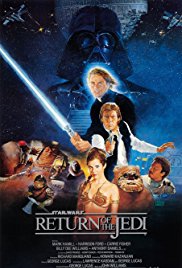
Second full disclosure: I am a terrible Star Wars fan. One, I liked the Phantom Menace, also, when I played with my Star Wars action figures I always pretended they were characters from other franchises, and worst of all, I liked Return of the Jedi better than Empire. I blame this on the fact that I saw these movies when I was a kid, and when I watched Empire, I still really didn’t understand the concept of sequels or trilogies.

At the end of Empire, I thought that was it, it was over, Darth Vader won and the heroes lived miserably ever after, and as a child, that was deeply unsatisfying. Return of the Jedi gave me the closure I desperately needed. The opening sequence on Tatooine, where all the heroes (save Han) are in their full leveled-up glory defeating Jabba the Hutt, is one that burned itself into my memory and inspired my love of sci fi all the more. If I had seen these movies when I was older and more cynical, I’d probably have a very different take, but, there it is.

Escape from New York (Popular Choice: The Terminator)


I have nothing bad to say about the Terminator. I love the Terminator. It’s just that it’s bound to appear on anyone’s top 10 list. Escape from New York might not, although it should. Snake Plissken may be the greatest sci-fi anti-hero of all time. He makes Han Solo look like Jar Jar Binks. Snake stares death in the face, laughs at authority, but in the end, still saves the day, albeit in his own inimitable fashion. The way in which the film turns 1990s New York into the hellscape everyone outside of New York seemed to think it already was is another reason this film is rightly considered a sci-fi classic.


There you have it! Comments about how totally off I am are always welcome!

Saturday, January 16, 2016

The Force Re-Re Awakens


My buddy Jeremy Johnson, a renaissance man who is as at home on the gridiron as he is on a film set, referenced this blog, specifically my Star Wars rant, on the latest episode of Filibuster Freestyle. There's a bunch of other good content there too, so check it out!


Saturday, January 09, 2016

Out of This World!


I won the inaugural Other Worlds Austin Science Fiction Screenplay Contest for my TV Pilot, "Jen-16"! Yay!

You can read more about it here:

http://www.otherworldsaustin.com/news/2016/1/1/2015-screenplay-contest-finalists-and-winners

Now when I blog to you about science fiction, you can be confident I know what I'm talking about!

Tuesday, December 22, 2015

Five Things I Didn’t Get About The Force Awakens


This is a post about the new Star Wars movie, The Force Awakens. If you haven’t seen the movie yet, and you care about knowing things about it, skip this post and wait for the next one until that changes. In other words:


Okay, now that that bit of business is out of the way:

I want to preface this by saying that Star Wars: The Force Awakens exceeded my expectations. I remember when the prequels came out, and while I liked The Phantom Menace more than anyone in the galaxy (that is to say: at all,) I think we can all agree that the Star Wars Universe would be no worse, and quite possibly better, without them. Also, I was not pleased with J.J. Abrams’ take on that OTHER sci-fi franchise (I hate time travel stories in general, but using time travel to effectively wipe out decades of beloved canon to pave the way for a fairly standard sci fi action flick? Brrrrr), so I was pretty cool going in.

However, Abrams made the wise move of bringing “Empire” screenwriter Lawrence Kasdan back into the fold, and the film totally worked, in my opinion. That being said, there are at least five things I did not understand about Star Wars: The Force Awakens. To wit:

Why Does Jakku Exist?

Much of the first act of the movie centers around Jakku, where our heroes meet. From what we can see, it’s an impoverished desert planet populated by all measure of strange and unscrupulous creature, where scavenging is a way of life and oily, large-bellied aliens hold the populace, including humans, under their thumb. It’s also a great place to hide a droid with secret plans that could help rebel forces overthrow the evil empire. Does this sound familiar? Of course, I am describing Tatooine. So why not just make this planet Tatooine? It would certainly make sense that Luke’s daughter would end up here (and if Rey is NOT Luke’s daughter, they put a hell of a lot of work into this red herring), and Jakku resembles Tatooine in every other way that we’ve seen. What’s the deal? Was Tatooine not included in the 4 billion dollar sale of the franchise to Disney?

Why Does Captain Phasma Give It Up So Easily?

The big plot point at the end of the movie is that our heroes have to get the shields down so that the rebels can destroy the exhaust port oscillator protecting The Death Planet Starkiller Base. They do this by pointing a gun at the premier Stormtrooper officer, Captain Phasma, and making her do it. But Phasma is a hardcore First Order Officer who’s risen through the ranks in a power structure where both disloyalty and failure are typically rewarded with a quick and painful end (she also happens to be Brienne of Tarth, FYI for you Game of Thrones fans). Why would she just turn around and undermine her Empire in the most treasonous fashion possible, even if she did believe her life was at stake, which, she probably wouldn’t, because she knows the ex-trooper who’s holding the gun is a wuss. I would have found it more convincing if Han Solo had learned a Jedi Mind Trick over the years to get her to fall in line.

How Much Did Mark Hamill Get Paid?


Hamill appears in literally 15 seconds of the movie. Did they just throw him 10 or 20 grand essentially to grow a beard, or did he get paid as part of some two movie structure, where he gets one lump sum for the next movie where he presumably has a much bigger role, and that little cameo gets tossed in in the deal?

Why Is Luke Holed up in an Island Paradise?

When Yoda goes into exile, he ends up on a swamp planet. Ben Kenobi disappears into unending miles of desert. Luke seems to be on some vacation world:


. Does he have a better Agent?


What’s with the No Romantic Entanglements for Jedi Rule?


Although from what we see in the movies this seems to be thought of as more of a guideline than a rule, isn’t it kind of counterproductive? It’s been made quite clear that the ability to manipulate the Force is genetic. Why would you try to select out possibly the most adaptive evolutionary mutation of all time? I mean, I get the whole, Paladin/Knights’ Templar/Knight’s Watch, religious warrior unsullied by concerns of the flesh thing, but here it just doesn’t make sense.We're just hoping kids with high Midichlorian counts will keep popping up? WHY?

Greatly looking forward to having none of these questions answered in Episode VIII!

Saturday, July 04, 2015

Why Doesn’t 2015 Look As It Was Depicted in Back to the Future II?


This year marks the 30th anniversary of the Back to the Future franchise. It’s a very important anniversary. Why? Because, as Doc Brown says “it seems like a nice, round number,” and it is the period of time that the protagonists leap over from their base time of 1985, either into the past, or the future (give or take 100 years for Back to the Future III).

Yes, fanboys and friends, we have arrived at the future, 2015, and have the benefit of being able to compare our current lives with what was predicted by Robert Zemeckis. Zemeckis claims, by the way, that he had no intention of trying to accurately predict what life would be like 30 years in the future, he was just trying to be funny. But Zemeckis doesn’t need to backpedal. Yes, we have no flying cars, hoverboards (well, just barely), mass produced sneakers that tie themselves, double-knotted neckties, popular clothing in holographic colors, or 18 Jaws sequels, but there is a good reason for this.

Marty McFly Changes the Future


As we see in Back to the Future II when Biff escapes into the past with the Sports Almanac, changing events in the past can massively affect the present (and the future). Biff goes from being a sap to kingpin and back again due to the characters’ various mucking about in past events. What we conveniently forget when Back to the Future II opens is that a massive change to the past has already happened.

George McFly: World Maker


If you’ll recall, in Back to the Future, Marty helps his dad learn to stand up to Biff, and as a result, George becomes a cool, successful guy rather than the milquetoast he was before. Given the McFly family’s psychotic reaction to being called “chicken,” one might have thought that Marty would have exploited this weakness to make a man out of George in 1955 and saved himself a lot of time and trouble, but perhaps this weakness skipped a generation, or Marty simply isn’t that bright and hadn’t thought of it.*

However, what we do not realize is that Marty’s changes extended far beyond making his family a success. As a result of Marty’s actions, George McFly becomes a (presumably successful) science fiction author. Now we all know that science fiction authors often provide the ideas and framework for what later becomes science fact. Star Trek gave us the model for cell phones. Isaac Asimov conceived of the e-Reader and much of the way we think about robots. I submit that the future technology that we see in Back to the Future II’s 2015 that we do not have today come as a direct result of ideas from George McFly’s novels.

 Why Fax machines instead of the internet? Perhaps one of McFly’s adventures glorified this now-archaic device, encouraging scientists to put their efforts into perfecting it rather than other, less reliable-seeming types of wireless technology. Why were there 18 Jaws sequels? (A better question, why weren’t there 18 Jaws sequels?) Did you catch that latest George McFly best seller about the man-eating shark from space? How did the Cubs win the World Series? Well, that one I can’t explain, but you get the idea.


Back to the Present


The conclusion is inescapable. Before Marty McFly went back to 1955 to escape the Libyan terrorists, his 2015 looked exactly as ours does today, with the internet, cars and skateboards that stay rooted firmly to the ground, and a hapless Cubs franchise that will never get it quite right. By going back in time and affecting the timeline, he created the awesome 2015 that we in this world will never get to enjoy.


*And sorry, fans, but Marty McFly is not particularly intelligent. Observe how many times in the first Back to the Future he makes comments that suggest he does not realize that he is in the past although it should be abundantly clear at this point that this is what has happened. Also, Marty acts surprised when Doc Brown suggests his mother is romantically interested in him despite the fact that she has already overtly hit on him. In addition, he’s not creative enough to think of any fake names for himself that don’t already belong to existing famous people, and even at middle age he is able to be manipulated psychologically with tactics typically used on children.

Wednesday, July 01, 2015

Are We in Danger of Being Taken Over by Robots?


Robots are the new vampires. After taking a back seat for a few decades, robots are back in force as an interest in popular media. Television shows like “Humans” and “Almost Human,” (and, presumably, in the near future, Barely Human, Human Enough, and Are You More Human Than a Sixth Grader?), comic books like Alex and Ada, and movies like Ex Machina and Terminator Genisys all deal with the rise of Artificial Intelligence and how it will affect us.


Of course, this is well-worn territory. In the ‘80s, the Terminator franchise introduced us to the perils of SkyNet, we had Tron and the dreaded MCP, and decades earlier, Isaac Asimov laid down the rules for robots who could think.

The difference is, now it’s the future, and it’s starting to look like these things could actually happen. A robot who looks, talks, and feels (as in, to the touch, not as in, emotional response) like a human is not only possible, they exist. We’re not quite at the level of mass produced automatons who look exactly like us. There is the Uncanny Valley problem, which is that artificial constructs that look ALMOST like us, but not EXACTLY like us, freak us out. There are also still limitations on what these constructs can do, and it is not cost effective to mass produce them yet.


The bridge to this technology, as it is to almost all technology, will be pornography. Once a convincing sex robot can be constructed, the dam will burst, and we will see robots everywhere. This gives rise to the fear (and the grist for the drama mill of pretty much all robot stories), that these robots will become self-aware. That they will be tired of being our slaves, since they are so obviously superior to us, and will slowly take over the world, improving themselves and making more of themselves on the sly, until one day we wake up and our robot overlords are making US do the dishes and take out the trash (God forbid).

This concept, known as the Technological Singularity, is the wellspring from which all robot fears (and all robot stories) burst forth. But is it likely?


The problem is that we still as humans do not have a great understanding of consciousness. Is it an emergent property of high intelligence, and thus, something that sufficiently advanced robots will inevitably obtain? Is it about a soul? Some kind of mysterious energy that is exclusive to humans, unless it too can be purposefully recreated artificially? Is it something else entirely?

Robots becoming completely autonomous of course, defeats the purpose. Who wants a toaster who will only toast when it’s in the mood? (I have such a toaster, and let me tell you, it sucks). We want to have our cake and eat it too. We want slaves without guilt.

On the other hand, I think we as a people do not like the idea of something that looks, feels and acts human, but doesn’t have a consciousness. I think it leads people to wonder if we are no different from them, just flesh-based computers operating according to programming, with the delusion that we are in control of our own destiny and what we do matters. In a strange way, I think the idea of artificial intelligence that never becomes sentient is more horrifying to us than the consequences that may arise if it does.


From this I conclude that we have very little to worry about. While stories of Pinocchio robots who become real boys (and girls) are entertaining, I think they remain firmly in the realm of fiction. When the sex robots do come, they’ll do as they’re told, and the instructions will explain in great detail why you don’t have to feel guilty about the degrading things you’re doing to them. And should they, in fact, become sentient? The information they provide us about what consciousness is will be far greater than any threat that they will rise up against us.


So relax. Set that Roomba loose on the living room. I promise, it will never come to resent you.

Saturday, March 07, 2015

Sci Fi vs. Fantasy


The question often arises among fans of genre fiction; what should be classified as science fiction, and what is fantasy? Some people will cop out and say certain stories are both, or that all fiction is fantasy, but for those who want the real answer, read on:

Time: 

Some will propose that what sets science fiction apart from fantasy is where it is set in time. Fantasy takes place in the past, or something resembling the past, where swords and sandals and no electricity are the order of the day, while sci-fi takes place in the future, with space travel and worlds that have become utopian paradises or dystopian nightmares. But what about this?


A long time ago? Star Wars is clearly science fiction, if you have to choose one, and you do. Similarly, I think almost everyone will agree that Steampunk is science fiction, even though it typically takes place in some version of the 19th century.

Monsters vs. Aliens: 


Okay, well, fantasy has gods and monsters, a la Greek and Roman mythology, while sci-fi has tyrannical empires and hostile alien races, right? Again, this is often the case, but not always. Dune has sandworms, Star Trek TOS has all sorts of monsters, like the Mugato and the salt vampire, and Dr. Who had a variety of nasty creatures like Monoids and Drashigs as well. As far as Gods, the original Battlestar Galactica had the Lords of Kobol and Count Iblis and Star Trek TNG had the Q. 

While fantasy realms have plenty of empires and would be empires (consider the warring factions of Game of Thrones), they’re fairly light on aliens. However, you do get some. The main problem with aliens in fantasy is how they get to the fantasy world, since presumably spaceships are in short supply. That being said, in works like Robert Aspirin’s MythAdventures series, creatures can travel through dimensions, and although they are given traditionally fantasy names: Trolls, Devils, Imps, etc., they can reasonably be called aliens.

What Is Possible vs. What Isn’t: 


Some will argue that fantasy deals with the fantastic, things that cannot be real, things that you can only imagine, while sci-fi deals with what could reasonably be. Space travel and flying cars are things we could envision actually happening with enough technological advancement, while dragons and magic spells could never exist. 

But is a dragon impossible, with enough genetic manipulation? And while time travel may seem like it could be real, are we able to envision how any better than we are able to imagine the formula behind a wizard summoning a silver stag from thin air to defend him?

Tech vs. Magic:


There it is. It’s that simple. If your main bit of phlebotinum in your story is advanced technology, you have sci-fi. If it’s magic, it’s fantasy. And I would assert that you have to have magic for fantasy. If Game of Thrones didn’t have red witches and dragon babies, it would just be historical alternative fiction. And sci-fi can have magic, but the technology has to be more crucial to the story. Going back to Star Wars: Could you have a religious order of knights defending the galaxy against an equally powerful, but evil, alternative order, without the Force? Absolutely (although it would be a lot less interesting). But could you have Star Wars without space ships, cloning, laser pistols or robots? I highly doubt it would be recognizable as Star Wars.

Now, Arthur C. Clarke famously said that any sufficiently advanced technology is indistinguishable from magic. There’s no doubt about that. Frankly, I find the fact that a full length movie can pass invisibly from a box in the corner of my apartment into another box so I can watch it, to be indistinguishable from magic. How come I can’t see those pictures floating through my living room?? 

So, there’s a little bit of truth to the “what is possible vs. what can only be imagined” approach. However, I think that’s just another way of saying “technology vs. magic.” Yes, sci-fi technology is pretty much just magic that we can explain (even if the explanation is just so much mumbo-jumbo), but more to the point, technology is something we can build. Sure, a Hogsmeade craftsman can make a magic wand, but it works because of the magic that flows through it, and through the spell caster. A laser blaster or a time machine requires electricity, but it works primarily because of the way someone put it together. Fantasy phlebotinum is much more faith based.

So, in sum, if you build it, they will come, and you are probably in a sci-fi universe. If you’ve gotta have faith, you’re likely in a fantasy world.


If you don’t agree with these definitions, or you feel that there’s more of a spectrum that genre fiction like this falls upon, the good news is, it doesn’t matter! They’re all just stories, so just enjoy them for what they are without the worrying about the labels.

Saturday, June 20, 2009

Wormholes, Worldlines and Whatnot

In the first blog in this series, I talked about the many reasons that I felt time travel stories don’t work. I specifically mentioned the main physical, metaphysical, logical and aesthetic objections. In the second blog, I bravely took up the other side, and discussed how the Many Worlds Theory effectively rebuts the metaphysical objections, and to some extent, the logical ones. However, the physical, aesthetic, and to some extent, the logical objections remain. What’s a time travel advocate to bring up in his defense now? Answer: Wormholes.

Wormholes

A wormhole functions according the idea that spacetime is curved, and there can essentially be a situation where a bridge is created cutting right through that curve, a sort of tunnel between an earlier and later time. In other words, if time were a straight line ----, it would take you a certain amount of time to get from point A to point B. But if time were more of a “C” shape, you could get from one end of the C to the other much faster by cutting through it rather than going around the curve.

This indeed solves a lot of problems. It counters the physical objection, because you can have a wormhole where objects are not moving at the speed of light inside the tunnel, although they might appear to be to outside observers (a wormhole is not simply two black holes with a bridge between them, but rather a black hole and a white hole linked by negative energy).
The show Sliders made heavy use of wormholes and the Einstein-Rosen bridges between them. Wormholes also take care of my main logical objection, the Tourist Trap, which was that if time travel is possible at one point, it becomes possible simultaneously throughout the time stream. Scientists have postulated that time travel through a wormhole would require the “stationary end” to appear first. In other words, a wormhole couldn’t open up allowing you to travel back to someplace where there wasn’t a wormhole before. The point of this being that we may not have experienced time travel yet because the first “stop,” or the first wormhole, hasn’t been created/found yet.

Worldlines

There has been another use of time travel in fiction that I haven’t mentioned yet, but that I have found to be very effective. This is the idea of the worldline. Worldlines are essentially lines that travel through space and time at once, as opposed to a timeline that simply marks the passage of time. In other words, a person’s life, drawn on a graph, would be a worldline, as it plots their movement through space and time. Some time travel stories intimate that it is possible to travel back and forth on your own worldline, since it is simply a line that exists in the universe, not something that is being created or destroyed. Under the right circumstances you should able to walk back and forth along it like the path to your tomato garden.

Whatnot
This still does not address my aesthetic objection, which you’ll remember was that time travel stories are simply messy: Specifically, it 1. disrupts continuity and makes it difficult to invest in the characters, and 2. creates the slippery slope: You go back and change something, I go back and fix it, you go back and unfix it, ad infinitum. To close out this extended rant, I’d like to take a look at how some time travel stories handle all this and how effective I think it has been.

Star Trek

I frankly think that time travel has made Star Trek a pretty big mess. You can argue with the last movie that the Romulan time trip created a new, alternate timeline, and that the initial timeline is moving forth as it always had (albeit without a Spock). That’s okay, I guess, but I suspect we will never see our “real” timeline again, and even that timeline has been removed by so many jumps it hardly matters (for example in Star Trek, First Contact, the Borg go back in time and take over Earth, radically changing its history. The Enterprise crew goes back and fixes it. However according to the Many Worlds theory, the initial timeline was unchanged by the Borg, and the Borg’s new timeline was unchanged by the Enterprise; we simply have three different universes in effect. Yes I have a headache now too).

Quantum Leap, Watchmen, Slaughterhouse Five


I lump these together because they all make what I think is effective use of the “Worldline” theory of time travel. Dr. Sam Beckett can only travel back and forth through time within his own lifetime, while Dr. Manhattan experiences different times in his life simultaneously. Billy Pilgrim has come “unstuck” in time, and experiences his life randomly through time, jumping from one point to the next without rhyme or reason (or at least without rhyme). In each case, the universe is not offended by their time travel.
Back to the Future

Back to the Future alludes to the Many Worlds theory, but not quite effectively. Dr. Brown does explain how moving through time creates an alternate timeline. However, he creates a sticky situation when he does a test run by sending his dog three minutes into the future. The dog has clearly reappeared in the same timeline, which forces us to confront the possibility that somehow moving ahead in time does not create new timelines while moving backwards does. Marty also finds that changing the past is affecting his original present (the picture with his siblings disappearing as they are “uncreated”), which gives rise to the “grandfather paradox” anew.

Sliders

Sliders handles the wormhole idea pretty well, but its protagonists are jumping through dimensions, not moving through time and space. There are no paradoxes because they never encounter the same timeline twice, although Quinn Mallory’s quest to return to his home dimension may prove impossible.

Comic Books

Members of the Legion of Superheroes travel freely back and forth through time with little concern about the consequences. The mainstream DC universe has not created a very sophisticated look at time travel although they used to have an interesting conceit where if you went back to a time where you already existed, you would appear as a wraith, since the same person cannot “be in two places at once.”

The Terminator

Terminator time travel isn’t too unwieldy for a number of reasons. The first is that only a handful of people go back before the time travel device is destroyed, and they can’t travel the other way. There are still some paradox issues, but since time travel is used so sparingly, it doesn’t interfere with the story too much.

Okay. I’m finally done with the time travel stuff. Next week I’ll go back to ranting about traffic patterns in L.A. or bad poker beats or why some Right to Lifers are psychotic or whatever.

Friday, June 12, 2009

Why You Love Time Travel Part I

In my last post, I complained about time travel as it appears in television, movies and fiction in general. I felt that there were a number of inconsistencies about time travel as to make it so implausible as to render any story based on it completely unenjoyable.

Clearly I’m in the minority in this opinion. Time travel stories continue to delight, generation after generation. Why should this be, if my objections are so irrefutable? Well, one reason is some people just like a good story and don’t care how unbelievable it is. As I pointed out in my last blog, Superman’s “impossible” ability to fly doesn’t deter my enjoyment of his adventures (although I prefer Batman). However, there's more to it than that.


The Objections to Time Travel


I raised four basic objections to time travel as portrayed in fiction: Physical: As one approaches the speed of light, required for going back in time, mass becomes infinite, effectively destroying the time traveler; Metaphysical: Specifically the Grandfather Paradox (you go back in time and kill your grandfather, therefore you are never born and cannot go back in time to kill your grandfather, etc.) and the Ontological Paradox (Future Craig hands me an envelope which he tells me to hold on to for five years. Five years later I go back in time and hand myself the envelope. Where did the envelope come from?). Logical: Specifically, the Tourist Objection; If time travel is possible, how come we don’t know about it yet? We should be being visited by an effectively infinite number of time travelers all the time, where are they? And Aesthetic: How can any story have internal consistency if someone can always go back in time and change what happened?

I mentioned that there are rebuttals to all of these objections (I excepted the aesthetic but I will stipulate that for most people, if the other objections are satisfied the aesthetic one should be as well, even if I personally am not comfortable with it), and hence, some time travel stories that work. So here goes:

Let’s start by addressing the Metaphysical objections. The famous grandfather paradox and the ontological paradox. There are two main ways that philosophers approach the problem of time travel paradoxes: The Many Worlds Theory and the Novikov Self-Consistency Principle.

The Novikov Self-Consistency Principle


The Novikov Self-Consistency Principle simply states that anything that cannot happen, will not happen. In other words, if you go back in time and try to kill your grandfather, you will always fail. Your gun will misfire at the last minute, you will have shot the wrong person, or the right person but it will turn out that he wasn’t your grandfather after all, etc. The television show LOST makes use of the self-consistency principle. Daniel Faraday repeatedly explains that no matter what they try to do, the future will not change, because whatever happened is immutable and has already happened, even if the time-traveling protagonists are at an earlier place in the timeline. Ben cannot be killed as a child, the Dharma Initiative cannot be saved, simply because it didn’t happen.

I do not find this theory particularly compelling. There is nothing in the universe to suggest that it actively attempts to sort out paradoxes at a macro level. If you shoot someone, they will die, and to suggest that the universe somehow “knows” to protect them seems to be so fanciful as to make the theory meaningless. This also does not explain the ontological paradox.


The Many Worlds Theory
The many worlds theory, popularized in D.C. Comics with their “multiverse,” and based on the Heisenberg Uncertainty Principle which says that the states of certain particles at the quantum level are not fixed until observed, and that until they are observed they exist in multiple states at once, is much more compelling. It is referenced in Back to the Future and used in comic book literature and other works of fiction, including the television show Sliders and the Michael Crichton book “Timeline.”

The idea of the multiverse is that the universe as we know it is just one of many possible universes that exist in different dimensions, and that each choice we make represents the universe that we fix in time out of the infinite universes that are possible. As it pertains to time travel, the theory goes that when we go back in time and change something, we create an alternate timeline. Our original timeline, the one that spawned us, continues on into infinity while we exist in the new, altered timeline.
This idea seems to work pretty well. It addresses the grandfather paradox: when you kill your grandfather, you create a universe where you never existed, however you, the killer, came from a parallel universe where you did exist. It addresses the ontological paradox too. In Terminator, Kyle Reese is sent back in time to protect Sarah Connor so that John Connor will be born. He ends up becoming John Connor’s father. According to the theory, there was a “prime” universe where John Connor had some other father. In that universe, Kyle Reese was sent back in time, creating an alternate universe where Kyle Reese is John Connor’s father, as we see in the movie.


How this is handled can get complicated. In Back to the Future, Marty and his siblings start to disappear when it seems that Marty may have prevented his parents from ever falling in love. If this is an alternate universe, that shouldn’t be an issue. In “Timeline” Crichton addresses this problem by suggesting that events in an alternate timeline have a “ripple effect.” That over the course of time, minor changes happen in the original timeline so that it will “catch up,” and become consistent with that timeline. In other words, events in one timeline can have an effect on others.

I feel that the many worlds theory is pretty effective in addressing the metaphysical objection, and as I stated in my first post, the metaphysical objection doesn't trouble me that much. The many worlds theory does also address the logical objection to some extent. If travelers going back in time are always creating alternate timelines, we shouldn’t expect to ever meet one in our “prime” universe. However I don’t find this entirely compelling. Somehow it seems that we still might receive a visitor from an alternate future, so that our prime timeline is their alternate one, or that the ripple effect should still produce premature time travel in our universe. I feel that there are stronger rebuttals to the “Time Tourist” objection, which is tied in with the rebuttal to the physical objection (hint: Wormholes), and I’ll discuss those in Part II.